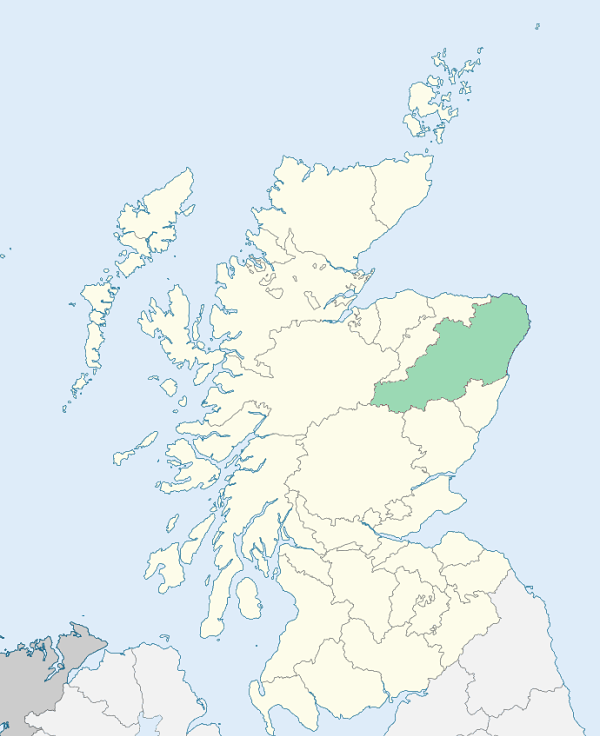
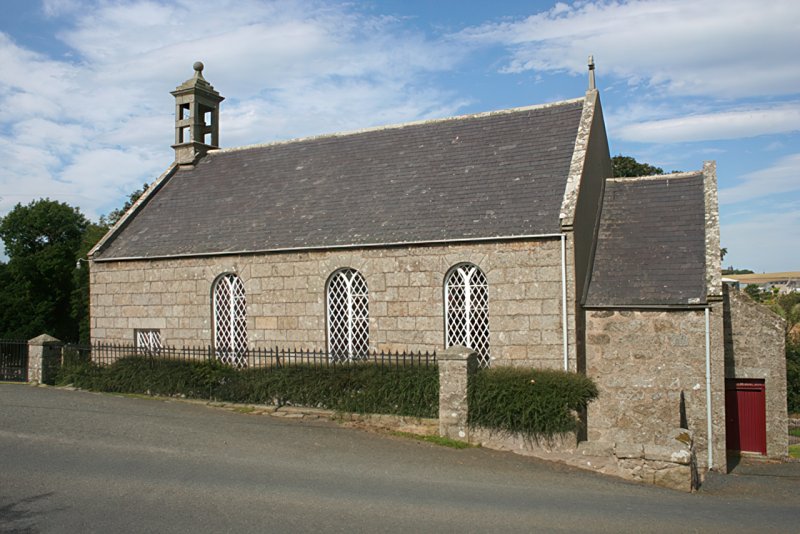
Tyrie is a parish near the north-east extremity of Aberdeenshire. It is bounded on the north by Aberdour and Pitsligo, on the north-east by Fraserburgh, on the east by Rathen, the detached districts of Aberdour and Fraserburgh, and by Strichen, on the south by New Deer, and on the west by Aberdour. (1867: The Imperial Gazetteer of Scotland, by John Marius Wilson).
New Pitsligo, Tyrie,
PRE-REFORMATION GOVERNANCE:
POST-REFORMATION GOVERNANCE:
The church of Tyrie was dedicated to St Andrew. It belonged to the Abbey of Arbroath.
Disjoined Quoad Sacra Parishes:
New Pitsligo. The village of New Pitsligo was founded on 12 September 1787 by Sir William Forbes of Pitsligo, Bart., who was superior of the lands. At Cavoch within the bounds, a chapel was built in 1799. The parish of New Pitsligo was disjoined from Tyrie, Aberdour, Strichen, and New Deer, 9 March 1853, mainly through the generous aid given by Sir John Stuart Forbes of Pitsligo, Bart.
Includes ministers, licentiates, assistants, readers, and clerks.
Tyrie (QO)
New Pitsligo (QS)
(1928: Fasti Ecclesiæ Scoticanæ, by Hew Scott, D. D.)
Parish registers turned over to the Registrar-General, as a result of the Registration of Births, Deaths, and Marriages (Scotland) Act of 1854. The letters B. D. and M. indicate Births (or Baptisms), Deaths (or Burials), and Marriages (or Proclamations of Banns) respectively. Numbers indicate separate volumes or books. Note: These records are by no means complete or without damage; consult the Detailed List of the Old Parochial Registers of Scotland (1872) to learn more about the condition of the records.
| OPR and RD Numbers | |||
|---|---|---|---|
| Date Range | Name | Number | Type |
| 1710-1854 | Tyrie | 248 | OPR |
| 1855-1967 | Tyrie | 248 | RD |
| 2009 | Aberdeenshire, Fraserburgh | 311 | RD |
| 2026 | Aberdeenshire Council; New Aberdour, Tyrie & Pennan Community Council | ||
(2009: Parishes and Registration Districts of Scotland - Old and New, National Records of Scotland)
Local community councils (2026) are provided as a potential source of additional information for settlements within the original boundaries of the parish. (Source)
Statistics from informal and official censuses
* Some figures include the population of New Pitsligo (RD 227b)
Clark, Duncan, Gordon, Milne, Murray, Park, Scott, Smith, Taylor, Whyte
Note: Names appearing in research materials, other than censuses. Simple names (First name, surname only) have been omitted unless they appear associated with large properties. All women's names, and men's names with occupations, military ranks, or peerage titles are included.
By the Reverend Mr William Fraser.
"The number of souls in 1790 was 864. There are 42 farmers, 10 smaller farmers, 110 subtenants, 2 manufacturers, 4 shopkeepers, 5 shoemakers, 1 innkeeper, 4 blacksmiths, 5 millers, 4 carpenters, 6 tailors, 18 weavers, 2 sheriff officers, 3 gardeners, 3 butchers, 59 male servants, and 46 female servants. There are 207 inhabited houses, and 7 uninhabited.
The parish can supply itself with meal, malt, butter, cheese, beef, mutton, lamb, poultry, potatoes, and other common vegetables. The principal exports are meal, cattle, sheep, hogs, butter, cheese, wool, potatoes, and fuel.
Several young men, at different periods, have become sailors and soldiers. Some, encouraged by people about Glasgow, have migrated to North America, where they have settled, and sent home money to their aged parents. By comparing (in their letters) their present with their former condition in this country, they have done much to excite others to follow their example. Such examples, and some late publications, may do much hurt, unless seasonably prevented. America is represented to be a wholesome and pleasant country, where the people, enjoying the rights of freemen, have a vote in the election of their legislators, pastors, and magistrates: a country provided by divine providence, to afford a comfortable habitation to those who are ill used at home; where the land is good in its quality, cheap, and gratuitously bestowed; and the passage to it unexpensive, and made in a few weeks. As migration is begun in this lowland country, something should be done to put a stop to its progress: something more effectual than giving premiums to pipers!."
(This section contains excerpts, at times restructured or paraphrased, from an article appearing in Statistical Account of Scotland, Sir John Sinclair, 1791-1799)
Primary Sources:
Statistical Account of Scotland (1791-1799), Volume 6, p. 138
New Statistical Account of Scotland (1834-1845), Volume 12, p. 717
See Parish Page Sources for all source information and links.