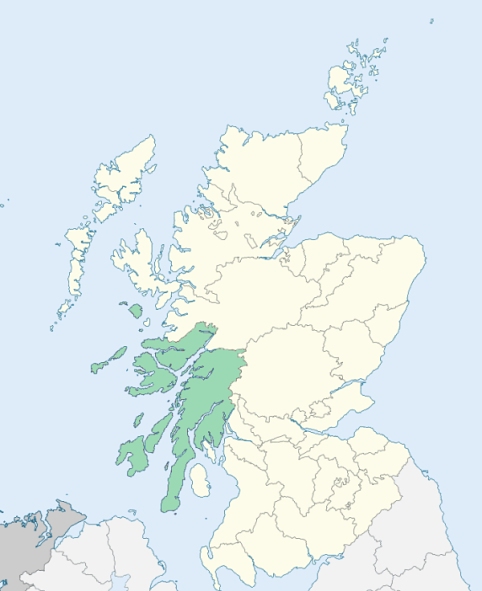
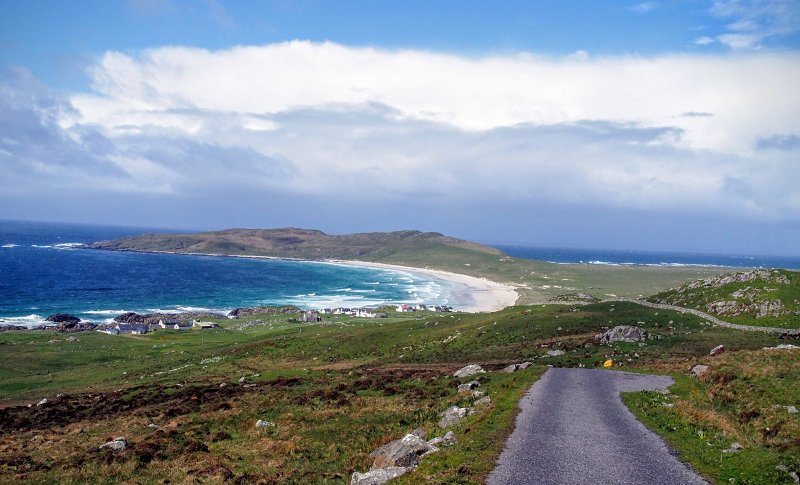
Tiree and Coll is a united parish in the Argyleshire Hebrides. It comprehends the islands of Tiree and Coll, and the islets of Gunna, Soay, Eilanmore, and Skerryvore. Coll lies seaward of Mull, and extends north-eastward in a line between Tiree and Muck. (1867: The Imperial Gazetteer of Scotland, by John Marius Wilson).
Arinangour, Arnabost, Ballevullin
Boyndlie
PRE-REFORMATION GOVERNANCE:
POST-REFORMATION GOVERNANCE:
In the sixth century St Breandan built a church at Kirkapol in the north-east of Tiree. After a time Tiree was divided into two parishes. Of these, Kirkapol contains all the north-eastern portion of the island, and the south-western part forms the parish of Sorobie. On 31 July 1618 the three parishes of Kirkapol, Sorobie, and Coll were united. On 11 March 1865 Coll was severed from the two parishes of Tiree. On 15 February 1875 Heylipol, or Sorobie, was disjoined from Kirkapol, the only remaining portion of the former united parishes of Tiree.
Tiree, or Kirkapol and Sorobie. Within the bounds of Tiree there were three chapels. The ruins of that of St Oran at Cladh Odhrain near Kirkapol still stand. The other chapels were St Bride's at Cill Bhride, and St Finaina's at Cill Fhinain.
Sorobie, or Heylipol. During the nineteenth century a chapel for the southern part of Tiree was built at Heylipol, a more accessible site than Sorobie. On 15 February 1875 the parish of Heylipol, or Sorobie, was severed quoad sacra from Kirkapol. There were within the bounds of Sorobie two chapels, St Kenneth's at Cill Choinnich, and St Luag's at Cill Mo Luaig. There are now mission chapels at Cornaig and Balevullin.
Coll. The church of Coll was dedicated to St Finan. Early in the nineteenth century a parliamentary chapel was built in Coll. On 15 March 1865 the parish of Coll was disjoined quoad omnia from Kirkapol and Sorobie. There were of old two chapels in Coll, St Bride's at Cill Bride and St Kenneth's at Cill Choinnich.
Includes ministers, licentiates, assistants, readers, and clerks.
Tiree, or Kirkapol (QO)
Sorobie, or Heylipol (QO)
Coll (QO)
(1928: Fasti Ecclesiæ Scoticanæ, by Hew Scott, D. D.)
Parish registers turned over to the Registrar-General, as a result of the Registration of Births, Deaths, and Marriages (Scotland) Act of 1854. The letters B. D. and M. indicate Births (or Baptisms), Deaths (or Burials), and Marriages (or Proclamations of Banns) respectively. Numbers indicate separate volumes or books. Note: These records are by no means complete or without damage; consult the Detailed List of the Old Parochial Registers of Scotland (1872) to learn more about the condition of the records.
| OPR and RD Numbers | |||
|---|---|---|---|
| Date Range | Name | Number | Type |
| 1766-1854 | Tiree and Coll | 551 | OPR |
| 1855-1969 | Tiree | 551-1 | RD |
| 1855-1969 | Coll | 551-2 | RD |
| 1970-1971 | Tiree | 551 | RD |
| 1970-1971 | Coll | 538 | RD |
| 1972-2006 | Tiree | 541 | RD |
| 1972-2006 | Coll | 540 | RD |
| 2009 | Argyll and Bute, Coll | 540 | RD |
| 2009 | Argyll and Bute, Tiree | 541 | RD |
| 2026 | (Tiree) Argyll and Bute Council; Tiree Community Council | ||
| 2026 | (Coll) Argyll and Bute Council; Coll Community Council | ||
(2009: Parishes and Registration Districts of Scotland - Old and New, National Records of Scotland)
Local community councils (2026) are provided as a potential source of additional information for settlements within the original boundaries of the parish. (Source)
Statistics from informal and official censuses
Tiree: Brown, Cameron, Campbell, Kennedy, Lamont, MacDonald, MacKinnon, MacLean, MacNeill, Sinclair
Coll: Alexander, Cameron, Campbell, Chapman, Fraser, Galbraith, Kennedy, Paterson, Smith, Weir
Note: Names appearing in research materials, other than censuses. Simple names (First name, surname only) have been omitted unless they appear associated with large properties. All women's names, and men's names with occupations, military ranks, or peerage titles are included.
By the Reverend Mr Archibald M'Coll.
"The number of souls in Tyrie in March 1792 was 2416, of whom 1184 were males, and 1232 were females; there were 663 souls under 10 years of age, and 467 families. In Coll there were 1041 souls, of whom 497 were males, and 544 were females; there were 322 under 10 years of age, and 199 families. Total population of both islands was 3457.
In Tyrie, there were 270 farmers, 66 workmen, and 131 cottars. In Coll there were 97 farmers, 37 workmen, and 65 cottars. There are not 40 natives of any other parish in the two isles.
Tradesmen are numerous, yet some good ones are much wanted. It is not easy to calculate their number, because, in general, they are not distinct from farmers. Many men and women work at the weaving business. There are very few bachelors or widowers.
The common people are not very attentive to the ordinances of religion, but are now reforming, as the gentlemen shew them a good example. They still retain some Roman Catholic sayings, prayers, and oaths. They are free of superstition, and make a considerable progress in knowledge. There is no schism from the established church; and none of any other persuasion, except now and then a few Roman Catholic servants from Barra.
For generations back, there has been no robbery, murder, or suicide. In general they are subtle, and not easily deceived. They are mannerly, lively, and ingenious, very hospitable to strangers, and kind to the distressed. And though it be impossible to answer for the behaviour of all the common people, if left at liberty, the shipwrecked have always found protection and safety from the best families."
(This section contains excerpts, at times restructured or paraphrased, from an article appearing in Statistical Account of Scotland, Sir John Sinclair, 1791-1799)
Primary Sources:
Statistical Account of Scotland (1791-1799), Volume 10, p. 551
New Statistical Account of Scotland (1834-1845), Volume 7, Section II, p. 195
See Parish Page Sources for all source information and links.