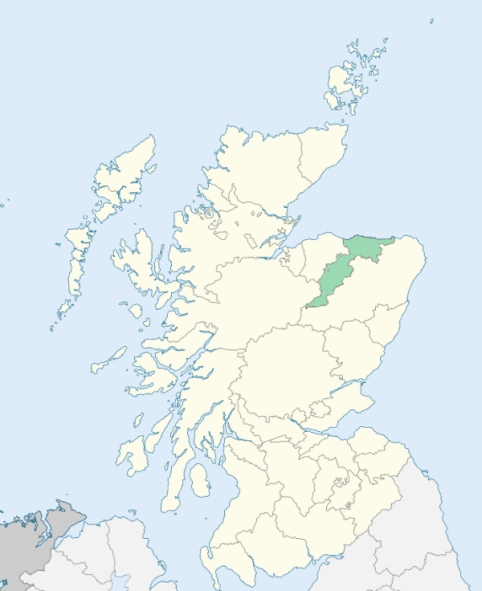
Forglen is a parish on the north-eastern border of Banffshire. It is bounded by Aberdeenshire, and by the parishes of Marnoch and Alvah. (1867: The Imperial Gazetteer of Scotland, by John Marius Wilson).
Auldtown, Bogton, Briggs, Burnside, Carnousie, Crannabog, Crossbrae, Forglen, Scotstown, Waukmill
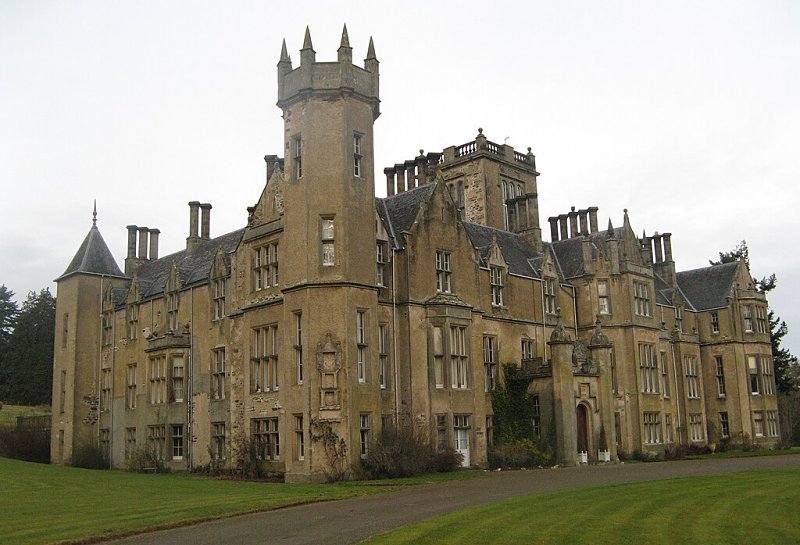
Carnousie
PRE-REFORMATION GOVERNANCE:
POST-REFORMATION GOVERNANCE:
The church of Forglen was dedicated to St Adamnan.
Includes ministers, licentiates, assistants, readers, and clerks.
(1928: Fasti Ecclesiæ Scoticanæ, by Hew Scott, D. D.)
Parish registers turned over to the Registrar-General, as a result of the Registration of Births, Deaths, and Marriages (Scotland) Act of 1854. The letters B. D. and M. indicate Births (or Baptisms), Deaths (or Burials), and Marriages (or Proclamations of Banns) respectively. Numbers indicate separate volumes or books. Note: These records are by no means complete or without damage; consult the Detailed List of the Old Parochial Registers of Scotland (1872) to learn more about the condition of the records.
| OPR and RD Numbers | |||
|---|---|---|---|
| Date Range | Name | Number | Type |
| 1647-1854 | Forglen | 154 | OPR |
| 1855-1961 | Forglen | 154 | RD |
| 2009 | Aberdeenshire, Portsoy | 293 | RD |
| 2026 | Aberdeenshire Council; Alvah and Forglen Community Council | ||
(2009: Parishes and Registration Districts of Scotland - Old and New, National Records of Scotland)
Local community councils (2026) are provided as a potential source of additional information for settlements within the original boundaries of the parish. (Source)
Statistics from informal and official censuses
Duncan, Hendry, Morrison, Paterson, Robertson, Ross, Smith, Taylor, Watson, Wilson
Note: Names appearing in research materials, other than censuses. Simple names (First name, surname only) have been omitted unless they appear associated with large properties. All women's names, and men's names with occupations, military ranks, or peerage titles are included.
By the Reverend Mr Robert Ballingall.
"In 1782, the number of souls was 577. The list at this time was exactly taken. Whether the following year's list was equally exact, I know not, but find it set down at 544. This being a year of particular scarcity of meal, perhaps the difference of 33 is to be accounted for by fewer servants being engaged by the smaller tenants and tradesmen, and by allowing their own children to go forth to service. The year following it is up again at 573, and continues about that till 1788, when I find 613; and since that time, it has been about 600.
There are but few tradesmen and mechanics in the parish. There are 5 square wrights, with about as many journeymen and apprentices, 3 wheel-wrights, 10 weavers, 4 shoemakers, 2 smiths, 1 tailor, and 2 good old soldiers, discharged and superannuated, enjoying each his pension, sober and industrious, and of course thriving. There is a smith, an elder of the church, and a miller fit to be one.
The people, excepting two or three of the Scottish Episcopal congregation at Turriff, are all of the Established Church. They are sober and industrious, and discreet in their behavior; respectful to their masters and superiors, and kind to their minister; and give regular attendance to the ordinances. The superstition of former times is now much worn out. There remains, however, still a little. Some charms are secretly used to prevent evil; and some omens looked to by the older people. There are happy and unhappy days for beginning any undertaking. Thus, few would choose to be married here on Friday, though it is the ordinary day in other quarters of the church."
(This section contains excerpts, at times restructured or paraphrased, from an article appearing in Statistical Account of Scotland, Sir John Sinclair, 1791-1799)
Primary Sources:
Statistical Account of Scotland (1791-1799), Volume 15, p. 530
New Statistical Account of Scotland (1834-1845), Volume 13, Section I, p. 83
See Parish Page Sources for all source information and links.