Kirkintulach, Leinyie, Wester Lenzie
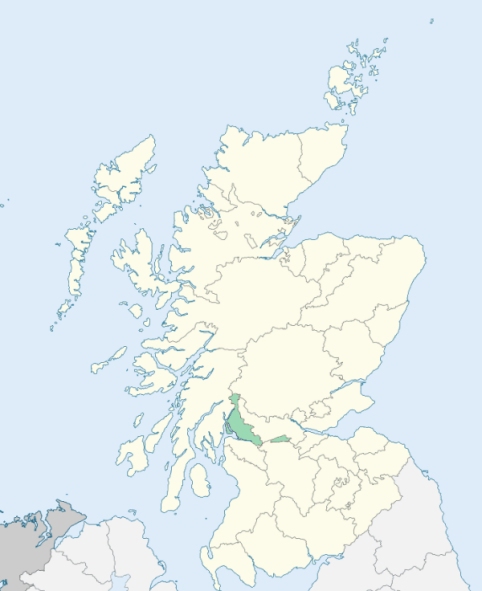
Kirkintilloch is a parish in the detached district of Dunbartonshire. It is bounded on the east by the parish of Cumbernauld, and on other sides by the counties of Lanark and Stirling. (1867: The Imperial Gazetteer of Scotland, by John Marius Wilson).
Achendavy or Auchendowie, Duntiblae, Kirkintilloch, Lenzie, Tintock, Twechar, Waterside
Bellfield, Gartshore
PRE-REFORMATION GOVERNANCE:
POST-REFORMATION GOVERNANCE:
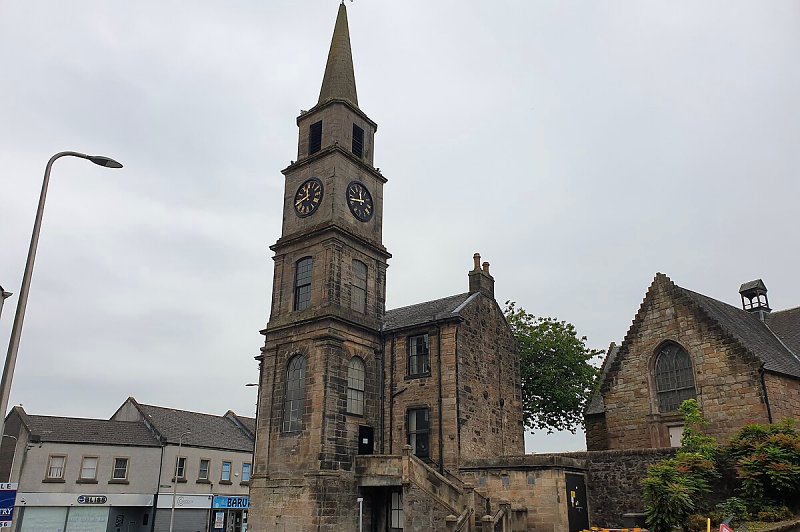
The church of Leinyie was dedicated to St Ninian. It belonged to the Abbey of Cambuskenneth. On 26 February 1607, the Presbytery ordered the kirk of Leinyie to be rebuilt. In 1649 the western part of this parish was disjoined to form the new parish of Cumbernauld. The church of Leinyie being included among the lands thus severed from the parish, the chapel of St Mary at Kirkintilloch was now made the parish church, and ever since the parish has been called Kirkintilloch. Besides St Mary's, there was within the bounds another chapel, which was dedicated to St Flannan. There was at Kirkintilloch a fair of St Andrew. In 1914 Kirkintilloch Church was rebuilt.
Disjoined Quoad Sacra Parishes:
Condorrat. This parish was disjoined from Cumbernauld, Kirkintilloch, and Chryston on 29 October 1883.
St David's. On 30 May 1836, the General Assembly granted a constitution for a church then being built here. It was opened on 8 June 1837. St David's Parish was disjoined from Kirkintilloch on 9 June 1873. There is a mission chapel within the bounds at Twechar.
Lenzie. The parish of Lenzie was disjoined from Kirkintilloch and Cadder on 5 June 1876.
Includes ministers, licentiates, assistants, readers, and clerks.
Kirkintilloch (QO)
Condorrat (QS)
St David's (QS)
Lenzie (QS)
(1928: Fasti Ecclesiæ Scoticanæ, by Hew Scott, D. D.)
Parish registers turned over to the Registrar-General, as a result of the Registration of Births, Deaths, and Marriages (Scotland) Act of 1854. The letters B. D. and M. indicate Births (or Baptisms), Deaths (or Burials), and Marriages (or Proclamations of Banns) respectively. Numbers indicate separate volumes or books. Note: These records are by no means complete or without damage; consult the Detailed List of the Old Parochial Registers of Scotland (1872) to learn more about the condition of the records.
| OPR and RD Numbers | |||
|---|---|---|---|
| Date Range | Name | Number | Type |
| 1656-1854 | Kirkintilloch | 498 | OPR |
| 1855-1971 | Kirkintilloch | 498 | RD |
| 1972-2001 | Kirkintilloch | 508 | RD |
| 2002-2008 | Kirkintilloch and Lennoxtown | 508 | RD |
| 2009 | East Dunbartonshire, Kirkintilloch and Lennoxtown | 508 | RD |
| 2026 | (Kirkintilloch) East Dunbartonshire Council; Lenzie Community Council, Kirkintilloch Community Council | ||
| 2026 | (Lennoxtown) East Dunbartonshire Council; Campsie Community Council | ||
(2009: Parishes and Registration Districts of Scotland - Old and New, National Records of Scotland)
Local community councils (2026) are provided as a potential source of additional information for settlements within the original boundaries of the parish. (Source)
Statistics from informal and official censuses
Brown, Campbell, Graham, Martin, Miller, Smith, Stark, Stewart, Stirling, Wilson
Note: Names appearing in research materials, other than censuses. Simple names (First name, surname only) have been omitted unless they appear associated with large properties. All women's names, and men's names with occupations, military ranks, or peerage titles are included.
By the Reverend Mr William Dunn.
"The whole inhabitants of this parish, have been found, upon a very accurate survey, to amount, at present, to the number of 2639. Of these 1536 reside in the town, among whom are 185 weavers, 11 stocking-makers, 15 smiths, 20 house carpenters and cabinet-makers, 10 masons, 10 shoemakers, 4 saddlers, 6 coopers, a good many tailors, and a few hairdressers. The families in the town are 195; in the country, 226.
Linens and cottons, of different sorts, are manufactured in the town of Kirkintilloch. The weavers are the most numerous class of mechanics in it. Many of the other mechanical employments, which supply the necessaries, and the ordinary conveniences of life, are likewise practised. A small cotton-mill was lately erected. Hand-machines for spinning cotton, were, at the same time, introduced.
The inhabitants of this parish are, in general, a virtuous and industrious people. They are of a middle stature; and, being free from hereditary diseases, while they enjoy the advantages of an open situation, and a pure, although rather moist air, they are, in general, vigourous and healthy."
(This section contains excerpts, at times restructured or paraphrased, from an article appearing in Statistical Account of Scotland, Sir John Sinclair, 1791-1799)
Primary Sources:
Statistical Account of Scotland (1791-1799), Volume 2, p. 275
New Statistical Account of Scotland (1834-1845), Volume 8, Section I, p. 168
See Parish Page Sources for all source information and links.