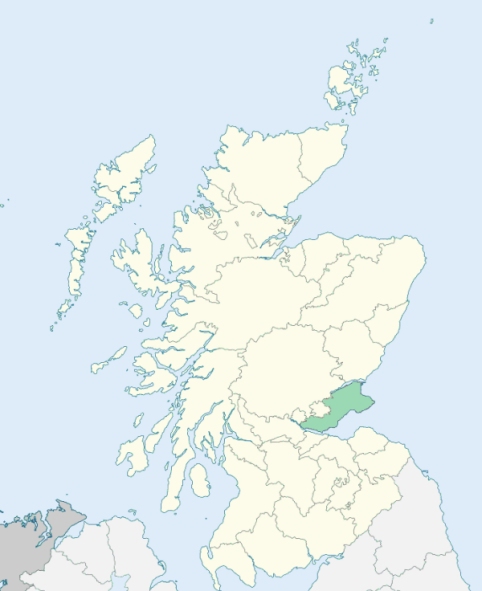
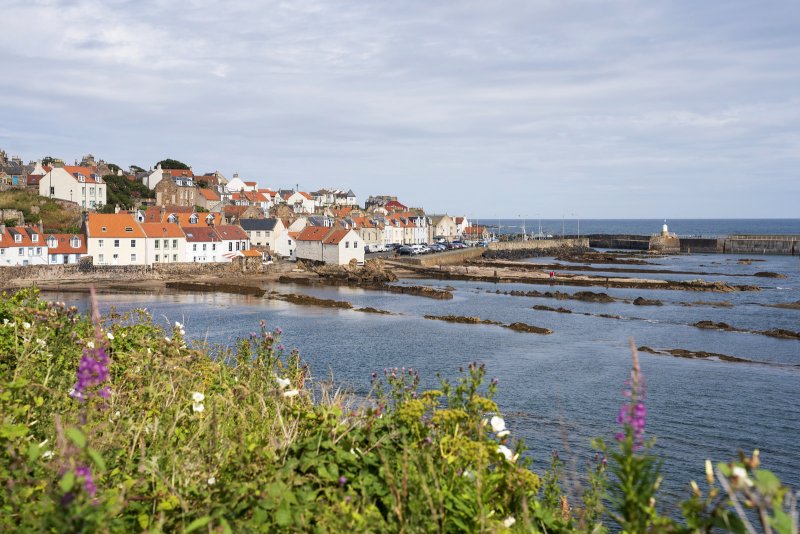
Pittenweem is a parish on the south-east coast of Fife. It is bounded by the Firth of Forth, and by the parishes of Abercrombie, Carnbee, and Anstruther Wester. (1867: The Imperial Gazetteer of Scotland, by John Marius Wilson).
Pittenweem
PRE-REFORMATION GOVERNANCE:
POST-REFORMATION GOVERNANCE:
The lands that form this parish were disjoined from Anstruther Wester by a Royal Charter of King James VI on 8 November 1588. The parish of Pittenweem was erected by Act of Parliament on 28 June 1633. In the parish are the ruins of St Mary's Augustinian Priory of Pittenweem. Fairs of St Clement and St Magdalene were held at Pittenweem. The church was restored and enlarged in 1883. (1928: Fasti Ecclesiæ Scoticanæ, by Hew Scott, D. D.)
Includes ministers, licentiates, assistants, readers, and clerks.
(1928: Fasti Ecclesiæ Scoticanæ, by Hew Scott, D. D.)
Parish registers turned over to the Registrar-General, as a result of the Registration of Births, Deaths, and Marriages (Scotland) Act of 1854. The letters B. D. and M. indicate Births (or Baptisms), Deaths (or Burials), and Marriages (or Proclamations of Banns) respectively. Numbers indicate separate volumes or books. Note: These records are by no means complete or without damage; consult the Detailed List of the Old Parochial Registers of Scotland (1872) to learn more about the condition of the records.
| OPR and RD Numbers | |||
|---|---|---|---|
| Date Range | Name | Number | Type |
| 1611-1854 | Pittenweem | 452 | OPR |
| 1855-1967 | Pittenweem | 452 | RD |
| 2009 | Fife, East Neuk | 414 | RD |
| 2026 | Fife Council; Royal Burgh of Pittenweem and District Community Council | ||
(2009: Parishes and Registration Districts of Scotland - Old and New, National Records of Scotland)
Local community councils (2026) are provided as a potential source of additional information for settlements within the original boundaries of the parish. (Source)
Statistics from informal and official censuses
Anderson, Black, Bowman, Duncan, Elder, Gay, Hugh, Lindsay, Robertson, Wilson
Note: Names appearing in research materials, other than censuses. Simple names (First name, surname only) have been omitted unless they appear associated with large properties. All women's names, and men's names with occupations, military ranks, or peerage titles are included.
By the Reverend Mr James Nairne.
"At present the population is 1157, all residing in the town, except 4 families. Males, 541; females 616. The disproportion between the number of males and females, may be owing to a number of the young men betaking themselves to a seafaring life; and there being no shipping here, although there is a seaport, many of them fix the residence for the families at the places from whence they sail, and so cease to appear on the parish-roll. Besides, no manufactures being carried on in this place and neighbourhood, induces another class of young men to repair to those towns where manufactures flourish, and to settle there. The females are generally stationary.
The number of handicraftsmen is 15 apprentices, 72 seamen, 12 fishermen, 36 miners and colliers, 49 household servants, and 18 labouring servants. There are about 400 persons born in other parishes, 10 persons born in England, and the British colonies, 1024 of the Established Church, 110 Seceders, and 23 Episcopals.
The people in general are economical. They enjoy the comforts of society, and are contented with their situation."
(This section contains excerpts, at times restructured or paraphrased, from an article appearing in Statistical Account of Scotland, Sir John Sinclair, 1791-1799)
Primary Sources:
Statistical Account of Scotland (1791-1799), Volume 4, p. 369
New Statistical Account of Scotland (1834-1845), Volume 9, Section I, p. 983
See Parish Page Sources for all source information and links.