Glammis
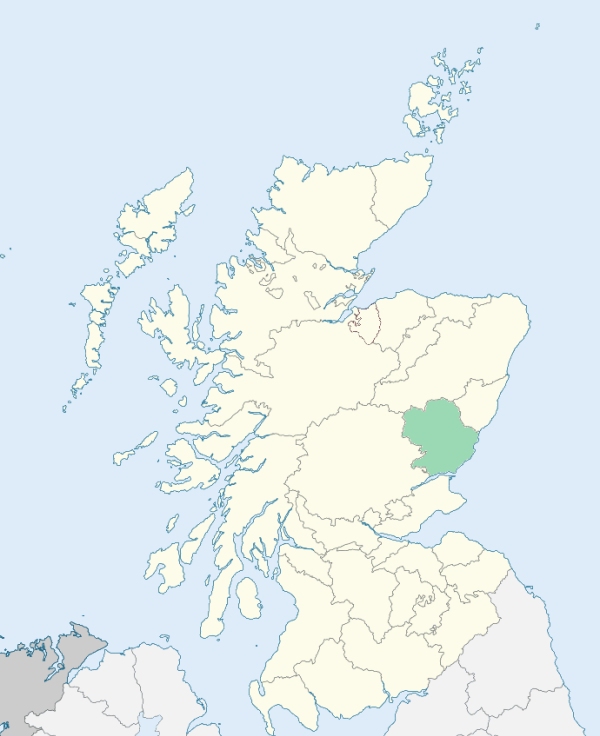
Glamis is a parish in the south-western parts of the Strathmore and Sidlaw district of Forfarshire. It is bounded by the parishes of Kirriemuir, Forfar, Kinnettles, Inverarity, Tealing, Auchterhouse, Newtyle, Eassie and Nevay, and Airlie. (1867: The Imperial Gazetteer of Scotland, by John Marius Wilson).
Arnifoul or Arniefoul, Charleston, Cossans, Denoon, Drumglay, Gateside, Glamis, Grasshouses, Hayston, Milton, Newton, Thornton
Glenogilvie
PRE-REFORMATION GOVERNANCE:
POST-REFORMATION GOVERNANCE:
In early Christian times, St Fergus made Glamis the seat of a mission of the Celtic Church. St Donald also carried on mission work here. The church of Glamis was dedicated to St Fergus. It belonged to the Abbey of Arbroath. There were here Wells of St Fergus, St Medan, and the Nine Maidens. A fair of St Fergus was held at Glamis.
Includes ministers, licentiates, assistants, readers, and clerks.
(1928: Fasti Ecclesiæ Scoticanæ, by Hew Scott, D. D.)
Parish registers turned over to the Registrar-General, as a result of the Registration of Births, Deaths, and Marriages (Scotland) Act of 1854. The letters B. D. and M. indicate Births (or Baptisms), Deaths (or Burials), and Marriages (or Proclamations of Banns) respectively. Numbers indicate separate volumes or books. Note: These records are by no means complete or without damage; consult the Detailed List of the Old Parochial Registers of Scotland (1872) to learn more about the condition of the records.
| OPR and RD Numbers | |||
|---|---|---|---|
| Date Range | Name | Number | Type |
| 1677-1854 | Glamis | 289 | OPR |
| 1855-1960 | Glamis | 289 | RD |
| 1961-1968 | Glamis and Eassie | 289 | RD |
| 1969-1971 | Friockheim | 289 | RD |
| 1972-1984 | Friockheim | 368 | RD |
| 2009 | (Glamis) Angus, Forfar | 364 | RD |
| 2009 | (Friockheim) Angus, Arbroath | 369 | RD |
| 2026 | (Glamis) Angus Council; Glamis and Area Community Council | ||
| 2026 | (Friockheim) Angus Council; Friockheim Community Council | ||
(2009: Parishes and Registration Districts of Scotland - Old and New, National Records of Scotland)
Local community councils (2026) are provided as a potential source of additional information for settlements within the original boundaries of the parish. (Source)
Statistics from informal and official censuses
Anderson, Brown, Findlay, Johnston, Milne, Robertson, Ross, Stewart, Thomson, Young
Note: Names appearing in research materials, other than censuses. Simple names (First name, surname only) have been omitted unless they appear associated with large properties. All women's names, and men's names with occupations, military ranks, or peerage titles are included.
By the Reverend Mr James Lyon.
"In the year 1783, the number of souls in the parish amounted to about 2040. In 1786, 47 baptisms, 38 burials, 17 marriages. From the 1st of October 1789, to the 1st of October 1790, there were 42 baptisms, 37 burials, and 16 marriages. There are a number of villages in this parish. The village of Glammis contains about 500 souls; the Newtown of Glammis about 140; Arnefont 80; Cotterton of Hayston 48; Nether-Handeck 39; Milltown of Glen-Ogilvie 67; and Cottertown of Drumglye 120. The number of farmers in the parish is about 80; some of their farms are extensive, and others but small. The number of weavers and manufacturers is about 70."
(This section contains excerpts, at times restructured or paraphrased, from an article appearing in Statistical Account of Scotland, Sir John Sinclair, 1791-1799)
Primary Sources:
Statistical Account of Scotland (1791-1799), Volume 3, p. 124
New Statistical Account of Scotland (1834-1845), Volume 11, Section I, p. 337
See Parish Page Sources for all source information and links.