Altyre
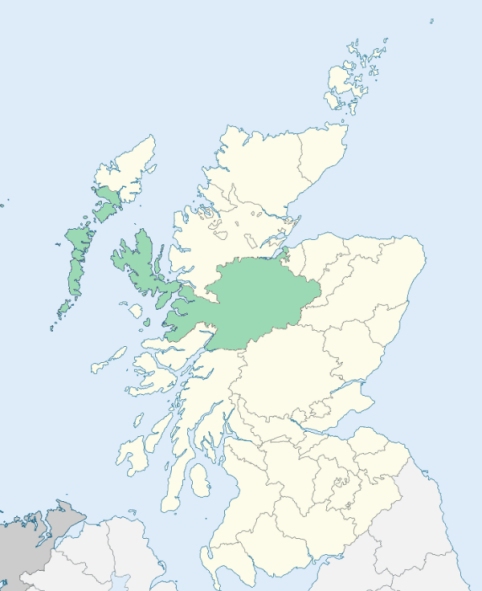
Kilmorack is a parish in the north-east of Inverness-shire. It is bounded on the west, the north, and the north-east by Ross-shire, and on other sides by the River Beauly and by the parishes of Kirkhill and Kiltarlity. (1867: The Imperial Gazetteer of Scotland, by John Marius Wilson).
Arcan, Beauly, Bridgend, Cannich, Crask, Fasnakyle, Inchrory, Inchvuilt, Invercannich, Kilmorack, Mauld, Struy, Tomich
Chisholm
(1) The Inverness-shire parish of Kilmorack had a detached part situated in that county near Muir of Ord, presenting the appearance of a narrow wedge of the county of Inverness driven into the county of Ross and Cromarty. This detached part was disjoined from the parish of Kilmorack and from the county of Inverness and annexed to the parish of Urray and to the county of Ross and Cromarty. See affected properties and landholders. (1892: Boundary of counties and parishes in Scotland as settled by the Boundary Commissioners under the Local Government Act, 1889, by Hay Shennan)
(2) The parish of Kiltarlity & Convinth was situated wholly in Inverness-shire and had one detached part. The detached part was separated from the main portion of the parish by an intervening portion of the parish of Kilmorack. This intervening portion of Kilmorack was transferred to Kiltarlity & Convinth, thus uniting the detached part of the latter parish with its main portion. See affected properties and landholders. (1892: Boundary of counties and parishes in Scotland as settled by the Boundary Commissioners under the Local Government Act, 1889, by Hay Shennan)
PRE-REFORMATION GOVERNANCE:
POST-REFORMATION GOVERNANCE:
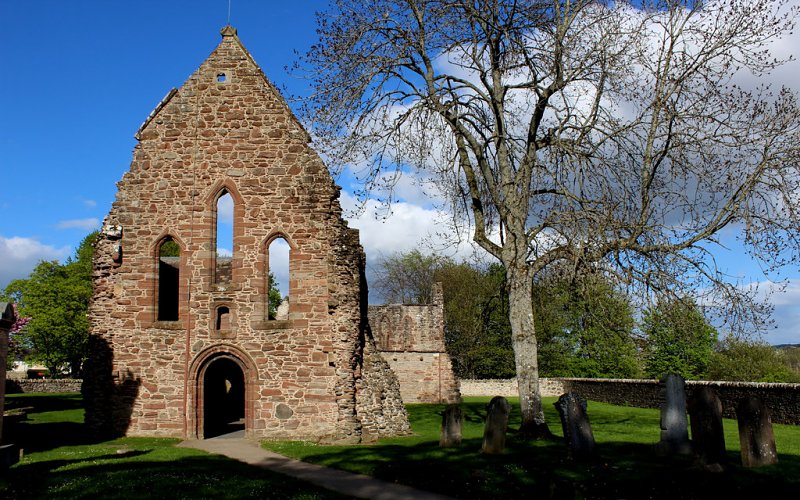
The church of this parish was dedicated to St Moroc. The Priory of St John the Baptist at Beauly, within the bounds, belonged to the Order of the Val de Choux. It was founded by John Bisset of Lovat in 1230. A side chapel recently re-roofed is the burying place of the Mackenzies of Gairloch. A fair of St Muireach was held at Kilmorack, and at Beauly there were four yearly trysts held at Roodmas, Lammas, Michaelmas, and Hallowmas. There is now a mission church of St Columba at Beauly.
Disjoined Quoad Sacra Parishes:
Erchless. The parish of Erchless was disjoined from Kiltarlity, Kilmorack, and Kintail, and erected on 17 March 1884.
Includes ministers, licentiates, assistants, readers, and clerks.
Kilmorack (QO)
Erchless (QS)
(1928: Fasti Ecclesiæ Scoticanæ, by Hew Scott, D. D.)
Parish registers turned over to the Registrar-General, as a result of the Registration of Births, Deaths, and Marriages (Scotland) Act of 1854. The letters B. D. and M. indicate Births (or Baptisms), Deaths (or Burials), and Marriages (or Proclamations of Banns) respectively. Numbers indicate separate volumes or books. Note: These records are by no means complete or without damage; consult the Detailed List of the Old Parochial Registers of Scotland (1872) to learn more about the condition of the records.
| OPR and RD Numbers | |||
|---|---|---|---|
| Date Range | Name | Number | Type |
| 1674-1854 | Kilmorack | 100 | OPR |
| 1855-1970 | Kilmorack | 100 | RD |
| 1971-1971 | Beauly | 100 | RD |
| 1972-2006 | Beauly | 230 | RD |
| 2009 | Highland | 230 | RD |
| 2026 | (Kilmorack) Highland Council; Kilmorack Community Council | ||
| 2026 | (Beauly) Highland Council; Beauly Community Council | ||
(2009: Parishes and Registration Districts of Scotland - Old and New, National Records of Scotland)
Local community councils (2026) are provided as a potential source of additional information for settlements within the original boundaries of the parish. (Source)
Statistics from informal and official censuses
Cameron, Campbell, Chisholm, Forbes, Fraser, Henderson, MacDonald, Mackenzie, MacRae, Ross
Note: Names appearing in research materials, other than censuses. Simple names (First name, surname only) have been omitted unless they appear associated with large properties. All women's names, and men's names with occupations, military ranks, or peerage titles are included.
By the Reverend Mr John Fraser.
"The inhabitants of this parish amount, at present, to 2318 souls; 1069 males and 1249 females. On the Chisholm's property, in the Highland part of the parish, there are from 600 to 700 Papists, all the rest of the inhabitants are of the Established Church. The only manufacture carried on in the parish is that of wood. Many thousand fir trees are annually cut in Lovat's, the Chisholm's, and Struie's woods. These are sawn into square timber, planes, deals, &c., for the home and English markets."
(This section contains excerpts, at times restructured or paraphrased, from an article appearing in Statistical Account of Scotland, Sir John Sinclair, 1791-1799)
Primary Sources:
Statistical Account of Scotland (1791-1799), Volume 20, p. 401
New Statistical Account of Scotland (1834-1845), Volume 14, Section I, p. 361
See Parish Page Sources for all source information and links.