
Plaidwerx


Features: Scottish Parishes » Historic Shires » Inverness-shire » Ardersier

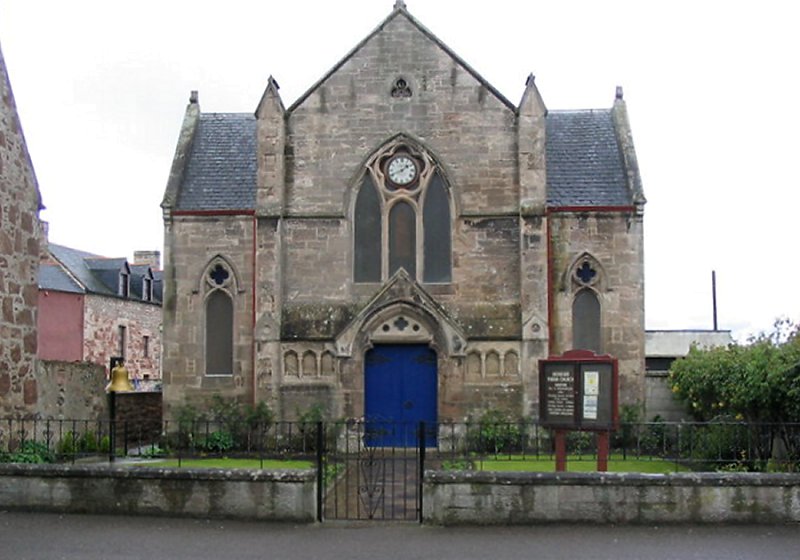
Ardersier Parish Church by John Lord
Ardersier Parish Church © 2007, John Lord

ARDERSIER PARISH

TABLE OF CONTENTS


ALTERNATE NAMES AND SPELLING:

Ardrosser


LOCATION

Location Description:

Ardersier is a parish on the east coast and north-east corner of Inverness-shire. The parish is bounded by the Moray Firth, Nairnshire, and the parish of Petty. (1867: The Imperial Gazetteer of Scotland, by John Marius Wilson).

Shire, District, and Region Timeline:

  • Shire: Inverness-shire (Before 1707)
  • County: Inverness (After 1707)
  • District: Inverness (Before 1930)
  • Landward District: Inverness (1930-1975)
  • Region: Highland (1975-1996)
  • District: Inverness (1975-1996)

Cities, Towns, Villages, and Hamlets:

Ardersier, Campbellton, Fort George


PARISH TIMELINE

PRE-REFORMATION GOVERNANCE:

  • Diocese: Ross

POST-REFORMATION GOVERNANCE:

  • Synod: Moray
  • Presbytery: Nairn

PAROCHIAL OVERVIEW:

The prebend of Ardersier in the Cathedral of Fortrose was held by the dean of Ross.

CHURCH OF SCOTLAND CLERGY:

Includes ministers, licentiates, assistants, readers, and clerks.

  • John Smith, 1569
  • Andrew Mill, 1572
  • Alexander Urquhart, 1576
  • William Pape (or Pope), 1580
  • James Lauder, 1597
  • Thomas Urquhart, 1599
  • Patrick Durham, 1630
  • John M'Culloch, 1660
  • John Dallas, 1665
  • Lachlan M'Bean, 1695
  • Hugh Campbell, 1707
  • Daniel (or Donald) Beaton, 1713
  • Alexander Falconar, 1718
  • Duncan M'Intosh, 1729
  • James Calder, 1740
  • Daniel Brodie, 1749
  • Harry Gordon, 1757
  • Walter Morrison, 1764
  • Pryse Campbell, 1781
  • John Matheson, 1839
  • Simon Fraser, 1843
  • William Forsyth, 1846
  • John Paton, 1884
  • William MacMaster Graham, 1920

(1928: Fasti Ecclesiæ Scoticanæ, by Hew Scott, D. D.)


RECORDS

Parochial Registers:

Parish registers turned over to the Registrar-General, as a result of the Registration of Births, Deaths, and Marriages (Scotland) Act of 1854. The letters B. D. and M. indicate Births (or Baptisms), Deaths (or Burials), and Marriages (or Proclamations of Banns) respectively. Numbers indicate separate volumes or books. Note: These records are by no means complete or without damage; consult the Detailed List of the Old Parochial Registers of Scotland (1872) to learn more about the condition of the records.

  • (1) B. 1719-1819; M. 1740-1819
  • (2) B. and M. 1820-54; B. and M. 1820-54 (Fort George)

OPR and RD Numbers
Date RangeNameNumberType
1719-1854Ardersier91OPR
1855-1899Ardersier91RD
1900-1970Ardersier91aRD
1900-1970Arisaig91bRD
1911-1927Ballachulish and Onich91cRD
2009Highland, Inverness240RD
2026Highland Council; Ardersier and Petty Community Council

(2009: Parishes and Registration Districts of Scotland - Old and New, National Records of Scotland)

Local community councils (2026) are provided as a potential source of additional information for settlements within the original boundaries of the parish. (Source)

Population:

Statistics from informal and official censuses

  • 1755: 428
  • 1831: 1,268
  • 1841: 1,475
  • 1861: 1,239
  • 1881: 2,092
  • 1901: 3,139 (Ardersier: 1,594; Arisaig: 1,079; Ballachulish & Onich: 466)
  • 1911: 3,403 (Ardersier: 1,913; Arisaig: 1,009; Ballachulish & Onich: 481)

RESIDENTS


Common Surnames:

Cameron, Campbell, Clark, Davidson, Fraser, Grant, Murray, Munro, Ross, Smith

Land-owners, teachers, and other professionals:

Note: Names appearing in research materials, other than censuses. Simple names (First name, surname only) have been omitted unless they appear associated with large properties. All women's names, and men's names with occupations, military ranks, or peerage titles are included.

  • John Frederick CAMPBELL, Earl of Cawdor

Other residents:

By the Reverend Mr Pryse Campbell.
"The number of inhabitants, according to the oldest people now alive, would not exceed 300, 60 or even 50 years ago. The amount of the inhabitants now is 802. Males 385; females 417. The number of fishermen, women and children included, males 66, females 61. None are under any necessity to leave the parish for want of employment, but many go south in summer and harvest, owing to the difference of wages. The parish has its advantages and disadvantages. Its vicinity to Fort George, where every thing may be sold, is a particular conveniency, and the ware obtained from the shore is of great value. The disadvantages are want of woods and stones. The Gaelic and English languages are spoken equally well."
(This section contains excerpts, at times restructured or paraphrased, from an article appearing in Statistical Account of Scotland, Sir John Sinclair, 1791-1799)


NOTES:

Primary Sources:
Statistical Account of Scotland (1791-1799), Volume 4, p. 88
New Statistical Account of Scotland (1834-1845), Volume 14, Section I, p. 462

See Parish Page Sources for all source information and links.
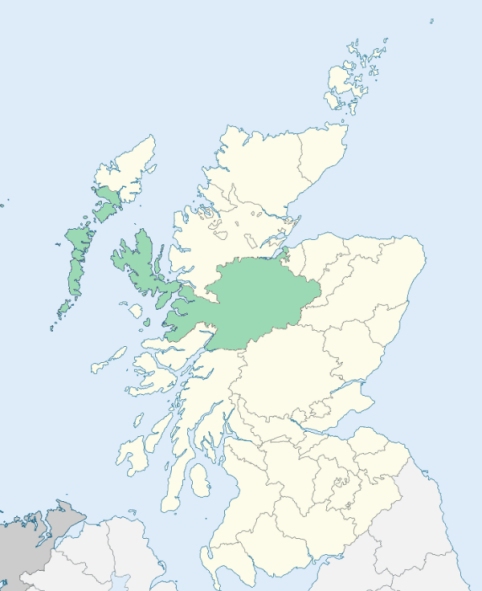

Photo credits: (Featured) Ardersier Parish Church, © 2007 John Lord, used under Creative Commons License CC BY-SA 2.0, (Related Resources) Inverness-shire Locator Map, © 2024, Elianfoo, used under Creative Commons License CC BY-SA 4.0.
Related Resources
Map of Scotland with Inverness-shire highlighted
Location of Inverness-shire
See more maps at Wikimedia Commons
Glossary
  • Burghs:
  • Royal - Towns on royal lands
  • Regality - Towns granted to noblemen/landowners
  • Barony - Towns granted to tenant-in-chief (laird)
  • Police - Towns with elected officials
  • Small - Population under 20,000
  • Large - Population over 20,000
  •  
  • Chapel-of-Ease: Small church for those living far from the main church
  • Collegiate church: See What is a Collegiate Church?
  • Commune kirk: Owned by a larger church
  • Court of Teinds: Controlled funds for support of clergy
  •  
  • Friars:
  • Black - Dominican
  • Grey - Franciscan
  • Red - Trinitarian
  • White - Carmelite
  •  
  • Iron chapel: Building made of corrugated galvanized iron
  •  
  • Landward District: Rural part of a district
  •  
  • Mensal: Source of income to support clergy member (Roman Catholic)
  •  
  • OPR: Old Parochial Register
  •  
  • Pre-Reformation: Before 1560
  • Prebend: Source of income to support a clergy member
  •  
  • QO: Quoad Omnia - Civil and church control
  • QS: Quoad Sacra - Church control only
  •  
  • RD: Registration District - Civil control
  •  
  • Tryst: Large-scale market or fair, particularly for livestock
  •