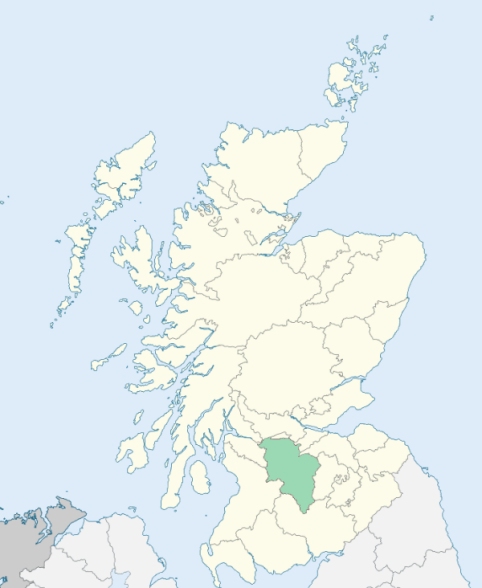
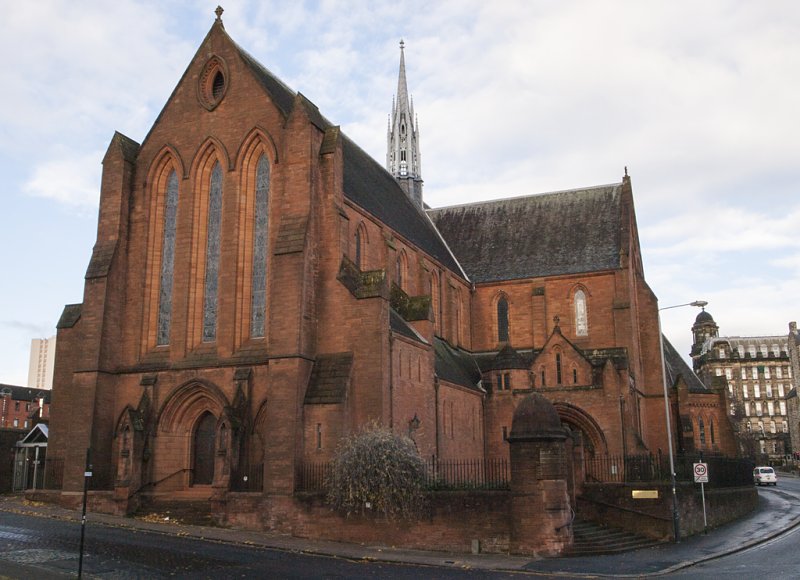
Barony is a suburb of the city of Glasgow, in the county of Lanark.
Barnhill, Camlachie, Hogganfield, Lambhill, Millerston, Provanhall, Shettleston
Easterhill, Haghill, Kenmure House
PRE-REFORMATION GOVERNANCE:
POST-REFORMATION GOVERNANCE:
Barony. In the sixteenth century the ancient parish of St Mungo included, along with the city of Glasgow, the adjoining large landed estate of the Archbishop. As a result of the Reformation, this landed property was granted by charter as a feudal holding called the Barony of Glasgow. In 1595 it was disjoined from St Mungo's, and erected as a new parish of the Barony of Glasgow.
Shettleston. A chapel was built here in 1750. The General Assembly granted a constitution for it on 31 May 1834. The parish of Shettleston was disjoined from the Barony parish and erected quoad omnia on 30 June 1847. A new church was built in 1903.
Springburn. Springburn was disjoined from the Barony Parish and erected quoad omnia on 14 June 1854.
Disjoined Quoad Sacra Parishes:
Bluevale. Mainly through the zealous exertions of Norman Macleod, minister of the Barony, a chapel was built here. It was opened on 21 April 1872. An endowment for it having been generously given by James Baird of Cambusdoon, the parish of Bluevale was disjoined from that of the Barony on 17 March 1873.
Buccleuch, previously Port Dundas. A chapel built at Port Dundas was opened for worship on 31 May 1868. On 21 February 1876 the parish of Port Dundas was disjoined from that of the Barony of Glasgow. On 10 March 1916, by authority of Parliament, the area of the parish of Port Dundas was annexed to that of Milton, and the parish of Buccleuch was formed by transferring to a new parochial district the endowment of Port Dundas.
Carntyne. A chapel was built here in 1900. The parish of Carntyne was disjoined from Shettleston on 14 January 1914.
Dennistoun. In 1902 religious services were begun here in an iron building. A church was built in May 1907. The parish was disjoined from Springburgn by the Court of Teinds, 19 March 1920.
Hogganfield. A church was built here in 1875. The parish of Hogganfield was disjoined from Springburn, Barony, Shettleston, Cadder, and Chryston on 12 January 1885.
Kelvinhaugh. In 1855 mission work was begun here, the services being carried on in a building called East Park Chapel. Mainly through the zeal and energy of Norman Macleod, minister of the Barony, a church was built in 1859. An endowment for it generously given by Alexander Whitelaw of Gartshore, the parish of Kelvinhaugh was disjoined from that of the Barony of Glasgow on 17 March 1873.
Kelvinside. A church was built here in 1873. The parish of Kelvinside was disjoined from Maryhill on 30 January 1888.
Macleod. Erected chiefly through the exertions of Norman Macleod in 1865, and endowed by Joseph Henry Houldsworth, merchant, Glasgow. Disjoined from The Barony, and erected by Court of Teinds, 17 March 1873, as a memorial to Dr Macleod.
St Margaret's, Tollcross. Mission work was begun here in 1898. The parish was disjoined from Shettleston and erected on 25 June 1920.
St Vincent. There was here a Reformed Presbyterian Church, whose minister and congregation petitioned to be admitted to the Church of Scotland. They were received on 14 August 1876. A new church was then built, and was opened in September 1877. St Vincent's was disjoined from the Barony Parish on 24 November 1879.
Stepps. A church was built here in 1901. The parish of Stepps was disjoined from Hogganfield and Chryston on 15 July 1906.
The Park. Religious work was begun here under the name of the West Park Mission in 1857. The Park Parish was disjoined from Kelvinhaugh in 1864.
Wilton. The parish of Wilton was disjoined from Kelvinside, 16 March 1917.
Includes ministers, licentiates, assistants, readers, and clerks.
Barony of Glasgow (QO)
Shettleston (QO)
Springburn (QO)
Bluevale (QS)
Buccleuch, or Port Dundas (QS)
Carntyne (QS)
Dennistoun (QS)
Hogganfield (QS)
Kelvinhaugh (QS)
Kelvinside (QS)
MacLeod (QS)
St Margaret's, Tollcross (QS)
St Vincent (QS)
Stepps (QS)
The Park (QS)
Wilton (QS)
(1928: Fasti Ecclesiæ Scoticanæ, by Hew Scott, D. D.)
Parish registers turned over to the Registrar-General, as a result of the Registration of Births, Deaths, and Marriages (Scotland) Act of 1854. The letters B. D. and M. indicate Births (or Baptisms), Deaths (or Burials), and Marriages (or Proclamations of Banns) respectively. Numbers indicate separate volumes or books. Note: These records are by no means complete or without damage; consult the Detailed List of the Old Parochial Registers of Scotland (1872) to learn more about the condition of the records.
| OPR and RD Numbers | |||
|---|---|---|---|
| Date Range | Name | Number | Type |
| 1672-1854 | Barony | 622 | OPR |
| 1855-1906 | Maryhill | 622-1 | RD |
| 1855-1874 | Springburn | 622-2 | RD |
| 1855-1874 | Shettleston | 622-3 | RD |
| 1875-1912 | Shettleston | 622-2 | RD |
| 1907-1934 | Maryhill | 644-14 | RD |
| 1907-1934 | Springburn | 644-6 | RD |
| 1913-1934 | Shettleston | 644-19 | RD |
| 1935-1955 | Shettleston | 644-1 | RD |
| 1935-1955 | Springburn | 644-5 | RD |
| 1935-1955 | Maryhill | 644-12 | RD |
| 1956-1963 | Springburn | 644-4 | RD |
| 2009 | Glasgow City, Central District | 601-624 | RD |
| 2026 | (Maryhill) Glasgow City Council; Maryhill and Summerston Community Council Ruchill Community Council | ||
| 2026 | (Shettleston) Glasgow City Council; Shettleston Community Council | ||
| 2026 | (Springburn) Glasgow City Council; Springburn Community Council | ||
(2009: Parishes and Registration Districts of Scotland - Old and New, National Records of Scotland)
Local community councils (2026) are provided as a potential source of additional information for settlements within the original boundaries of the parish. (Source)
Statistics from informal and official censuses
Barony: Anderson, Brown, Cameron, Campbell, Miller, Robertson, Smith, Stewart, Thomson, Wilson
Maryhill: Anderson, Brown, Campbell, Miller, Murray, Reid, Smith, Stewart, Thomson, Wilson
Note: Names appearing in research materials, other than censuses. Simple names (First name, surname only) have been omitted unless they appear associated with large properties. All women's names, and men's names with occupations, military ranks, or peerage titles are included.
By the Reverend Mr John Burns.
"This parish is both large and populous, extending from 2 to 5 or 6 miles around the city of Glasgow, except on the south side. At the beginning of the year 1791, there were living in the Barony parish of Glasgow, 18,451 persons. The population of the villages is: 6695 in Calton and Bridgeton, 896 in Grahamton, 3900 in Anderston, 1158 in Cowcadden and North-Woodside, 499 in Parkhouse, 977 in Camlachie, 678 in Parkhead and Westmuir, 766 in Shettleston and Middle-Quarter, 608 in Callendar and Dennistoun, and 341 in Sandyhills, &c.
The weaving manufacture is carried on to a great extent in this parish, there being at present upwards of 3000 looms employed. In the beginning of the year 1791, there were 169 public houses for retailing malt and spiritous liquors. The vast increase of these houses is one of the greatest injuries to the morals, the health, and the prosperity of the inhabitants.
The general character of the people, as yet, is that of sobriety and industry, though, by the cheapness of spiritous liquors, and the increasing use of them, many young people of both sexes are early corrupted and ruined."
(This section contains excerpts, at times restructured or paraphrased, from an article appearing in Statistical Account of Scotland, Sir John Sinclair, 1791-1799)
Primary Sources:
Statistical Account of Scotland (1791-1799), Volume 12, p. 109
New Statistical Account of Scotland (1834-1845), Volume 6, p. 101
See Parish Page Sources for all source information and links.