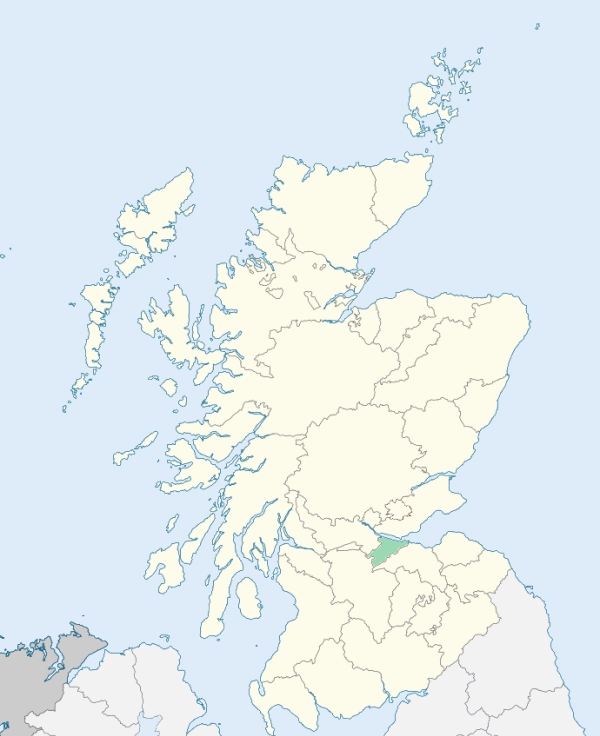
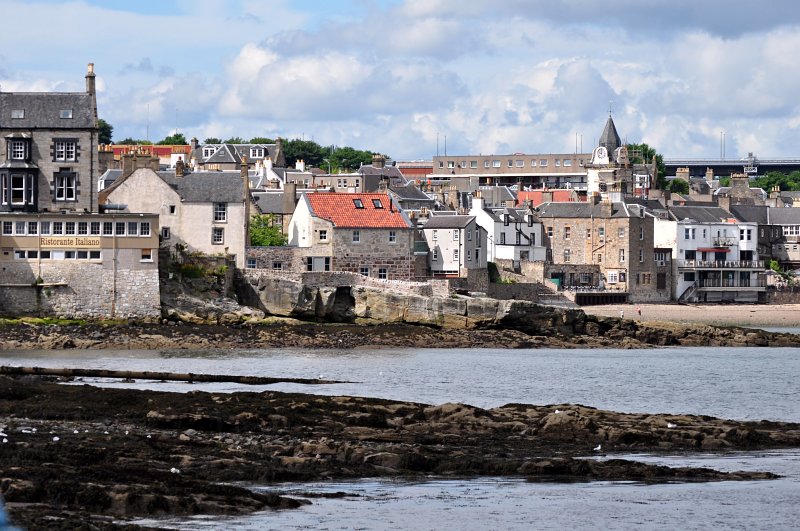
Queensferry is a small parish on the coast of Linlithgowshire. It is bounded on the north by the Firth of Forth, and on all other sides by the parish of Dalmeny. (1867: The Imperial Gazetteer of Scotland, by John Marius Wilson).
Butlaw, Queensferry, South Queensferry
PRE-REFORMATION GOVERNANCE:
POST-REFORMATION GOVERNANCE:
Disjoined from Dalmeny and erected by the Commissioners of Parliament, 1 July 1635, and ratified by Parliament, 17 November 1641.)
Includes ministers, licentiates, assistants, readers, and clerks.
(1928: Fasti Ecclesiæ Scoticanæ, by Hew Scott, D. D.)
Parish registers turned over to the Registrar-General, as a result of the Registration of Births, Deaths, and Marriages (Scotland) Act of 1854. The letters B. D. and M. indicate Births (or Baptisms), Deaths (or Burials), and Marriages (or Proclamations of Banns) respectively. Numbers indicate separate volumes or books. Note: These records are by no means complete or without damage; consult the Detailed List of the Old Parochial Registers of Scotland (1872) to learn more about the condition of the records.
| OPR and RD Numbers | |||
|---|---|---|---|
| Date Range | Name | Number | Type |
| 1635-1854 | Queensferry | 670 | OPR |
| 1855-1895 | Queensferry | 670 | RD |
| 1896-1941 | Queensferry | 665-2 | RD |
| 1942-1969 | Dalmeny and Queensferry | 665 | RD |
| 1970-1971 | Queensferry | 665 | RD |
| 1972-2002 | Queensferry | 701 | RD |
| 2003-2008 | Queensferry | 743 | RD |
| 2009 | City of Edinburgh, Queensferry | 743 | RD |
| 2026 | City of Edinburgh Council; Queensferry and District Community Council | ||
(2009: Parishes and Registration Districts of Scotland - Old and New, National Records of Scotland)
Local community councils (2026) are provided as a potential source of additional information for settlements within the original boundaries of the parish. (Source)
Statistics from informal and official censuses
Coull, Fairley, Garvie, Hamilton, Marshall, Roberts, Scott, Sinclair, Stewart, Wilson
Note: Names appearing in research materials, other than censuses. Simple names (First name, surname only) have been omitted unless they appear associated with large properties. All women's names, and men's names with occupations, military ranks, or peerage titles are included.
By Mr John Henderson, Minister.
"In 1791 an accurate list was taken of the population of this parish, when the number of souls amounted to 505. It has since varied little.
The principal manufacture of this place is that of soap. From the year 1783 to 1789, it was a flourishing and extensive trade. There were 4 large works, which employed from 20 to 30 labouring men. In the year 1789, the soap trade in Scotland met a considerable check; it was for some time almost annihilated here. It has since, however, happily revived, and is now carried on with a great deal of spirit.
This was originally a seafaring town; and a great proportion of its inhabitants are men who have been employed in this line, who having acquired a decent competency, and having always kept up a connection and attachment, have returned to their families and their friends, to settle and spend their days in the place of their nativity. Thus the society of a little town is continued, enlarged, and made more happy. During the late American war, there were from 30 to 40 sailors from this town in his Majesty's service. In the present war there are 35. Some of them officers in the army, or surgeons, or lieutenants and midshipmen in the navy; all of them employed in the service of their country."
(This section contains excerpts, at times restructured or paraphrased, from an article appearing in Statistical Account of Scotland, Sir John Sinclair, 1791-1799)
Primary Sources:
Statistical Account of Scotland (1791-1799), Volume 17, p. 489
New Statistical Account of Scotland (1834-1845), Volume 2, Section I, p. 1
See Parish Page Sources for all source information and links.