St Andrews and Deerness
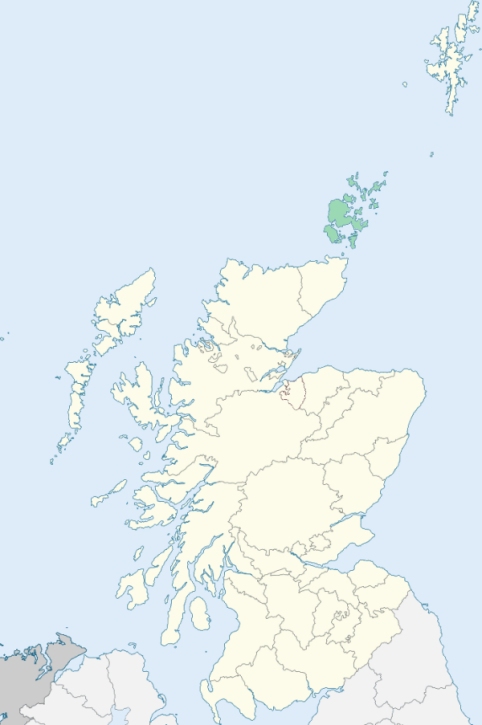
Deerness is a parish on the east side of Orkney. It comprises a district of Pomona (the mainland of Orkney) and three small islands. It comprises a peninsula of its own name, and the three islands of Copinshay, Cornholm, and Horse. The peninsula is the most easterly land of Pomona. (1867: The Imperial Gazetteer of Scotland, by John Marius Wilson).
Deerness, Gritley
PRE-REFORMATION GOVERNANCE:
POST-REFORMATION GOVERNANCE:
The church of Deerness was dedicated to St Mary. In the sixteenth century this parish was united to St Andrews or Tankerness. Before the middle of the nineteenth century a parliamentary chapel was built here. On 11th June 1845 Deerness was severed again quoad sacra from St Andrews.
Includes ministers, licentiates, assistants, readers, and clerks.
(1928: Fasti Ecclesiæ Scoticanæ, by Hew Scott, D. D.)
Parish registers turned over to the Registrar-General, as a result of the Registration of Births, Deaths, and Marriages (Scotland) Act of 1854. The letters B. D. and M. indicate Births (or Baptisms), Deaths (or Burials), and Marriages (or Proclamations of Banns) respectively. Numbers indicate separate volumes or books. Note: These records are by no means complete or without damage; consult the Detailed List of the Old Parochial Registers of Scotland (1872) to learn more about the condition of the records.
| OPR and RD Numbers | |||
|---|---|---|---|
| Date Range | Name | Number | Type |
| 1703-1854 | Deerness | 14 | OPR |
| 1855-1971 | Deerness | 14 | RD |
| 1972-1974 | Deerness | 147 | RD |
| 2009 | Orkney Islands, Kirkwall | 144 | RD |
| 2026 | Orkney Islands Council; St Andrews and Deerness Community Council | ||
(2009: Parishes and Registration Districts of Scotland - Old and New, National Records of Scotland)
Local community councils (2026) are provided as a potential source of additional information for settlements within the original boundaries of the parish. (Source)
Statistics from informal and official censuses
Note: Names appearing in research materials, other than censuses. Simple names (First name, surname only) have been omitted unless they appear associated with large properties. All women's names, and men's names with occupations, military ranks, or peerage titles are included.
By a Friend to Statistical Inquiries.
"There are five gentlemen proprietors in St Andrews, and five in Deerness, none of whom reside in the parish, which is manifestly against the improvement of the land, and general advantage and comfort of the people. Besides these, there are six Udallers* in Deerness, persons whose property, in some parts of Orkney is so small, as, if let to a tenant, would scarcely draw above a tub of bear (bere, barley), that is, about a firlot, of yearly rent. The inhabitants of both parishes, who are in general treated with great humanity by their landlords, are sober, regular, industrious, and being remarkably averse to drinking spiritous liquors, they are healthy, and live to the ordinary age of man."
(This section contains excerpts, at times restructured or paraphrased, from an article appearing in Statistical Account of Scotland, Sir John Sinclair, 1791-1799)
*Udal: Land without a feudal superior
Primary Sources:
Statistical Account of Scotland (1791-1799), Volume 20, p. 258
New Statistical Account of Scotland (1834-1845), Volume 15, Section III, p. 169
See Parish Page Sources for all source information and links.