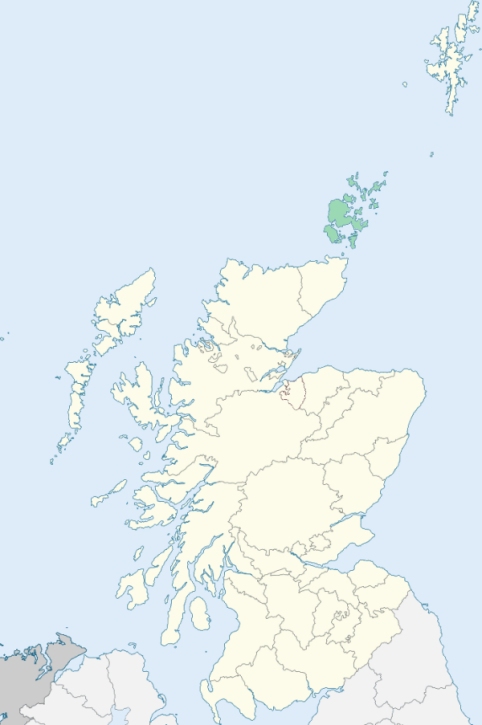
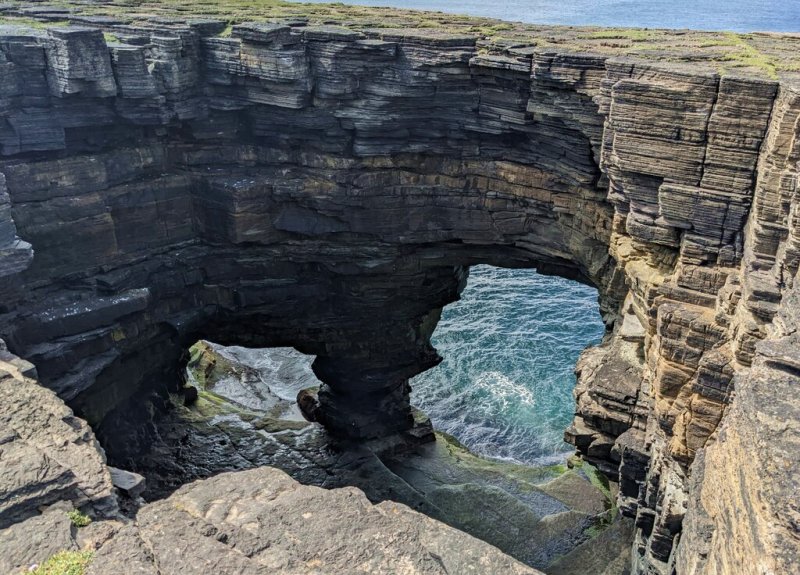
Rousay and Egilsay is a united parish in the North Isles of Orkney. It comprehends the inhabited islands of Rousay, Eagleshay, Weir, and Enhallow, and two small uninhabited islands of the kind called holms. (1867: The Imperial Gazetteer of Scotland, by John Marius Wilson).
Cobberow, Swendro
PRE-REFORMATION GOVERNANCE:
POST-REFORMATION GOVERNANCE:
The parishes of Rousay and Egilsay were united in the sixteenth century.
Rousay. The old church of Rousay still stands roofless at Swendro. At Cobberow, on the island of Weira, and in this parish, is the ancient chapel of St Peter, now without a roof. On the larger island of Enhallow (Eyin Helga = "The Holy Isle") there remain considerable ruins of a small Cistercian abbey founded about 1140.
Egilsay. The very ancient church of Egilsay is still fairly complete, though its roof is gone. It was dedicated to St Magnus, who was murdered in Egilsay in 1104.
Includes ministers, licentiates, assistants, readers, and clerks.
Parish (QO)
(1928: Fasti Ecclesiæ Scoticanæ, by Hew Scott, D. D.)
Parish registers turned over to the Registrar-General, as a result of the Registration of Births, Deaths, and Marriages (Scotland) Act of 1854. The letters B. D. and M. indicate Births (or Baptisms), Deaths (or Burials), and Marriages (or Proclamations of Banns) respectively. Numbers indicate separate volumes or books. Note: These records are by no means complete or without damage; consult the Detailed List of the Old Parochial Registers of Scotland (1872) to learn more about the condition of the records.
| OPR and RD Numbers | |||
|---|---|---|---|
| Date Range | Name | Number | Type |
| 1733-1854 | Rousay and Egilsay | 24 | OPR |
| 1855-1971 | Rousay and Egilsay | 24 | RD |
| 1972-2000 | Rousay and Egilsay | 135 | RD |
| 2001-2003 | Rousay, Egilsay and Wyre | 135 | RD |
| 2009 | Orkney Islands; Rousay, Egilsay and Wyre | 135 | RD |
| 2026 | Orkney Islands Council; Rousay, Egilsay, Wyre and Gairsay Community Council | ||
(2009: Parishes and Registration Districts of Scotland - Old and New, National Records of Scotland)
Local community councils (2026) are provided as a potential source of additional information for settlements within the original boundaries of the parish. (Source)
Statistics from informal and official censuses
Gibson, Grieve, Kirkness, Leonard, Logie, Mainland, Marwick, Reid, Robertson, Sinclair
Note: Names appearing in research materials, other than censuses. Simple names (First name, surname only) have been omitted unless they appear associated with large properties. All women's names, and men's names with occupations, military ranks, or peerage titles are included.
By the Reverend Mr James Leslie.
"There is no difference in manners and habits between the cottager and the master of the farm. The master often turns to cottager, and the cottager sometimes becomes the master. They all take social snuff together. Their houses and their furniture are exactly the same. They all, without distinction, sit at the oar in their boats; and at land they all jointly perform the same labour and work. Youth and old age constitute the only distinction of rank. The old often are so reduced, that they betake themselves to going from house to house for sustenance; and then they are well received; and it is not accounted beggary when they do so."
(This section contains excerpts, at times restructured or paraphrased, from an article appearing in Statistical Account of Scotland, Sir John Sinclair, 1791-1799)
Primary Sources:
Statistical Account of Scotland (1791-1799), Volume 7, p. 336
New Statistical Account of Scotland (1834-1845), Volume 15, Section III, p. 83
See Parish Page Sources for all source information and links.