
Plaidwerx


Features: Scottish Parishes » Historic Shires » Orkney » Sandwick

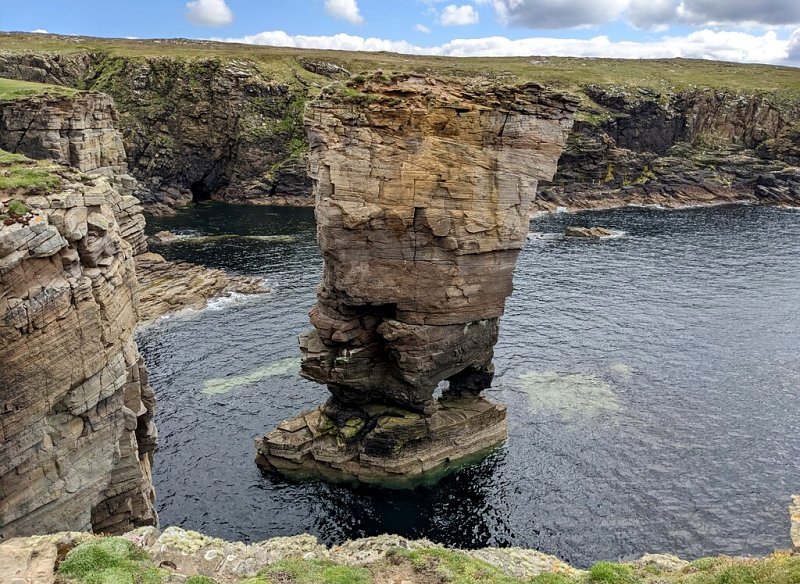
Yesnaby Castle, Sandwick by David Medcalf
Yesnaby Castle (Sea Stack), Sandwick © 2022, David Medcalf

SANDWICK PARISH

TABLE OF CONTENTS


ALTERNATE NAMES AND SPELLING:

Stromness and Sandwick


LOCATION

Location Description:

Sandwick is a parish on the west coast of the mainland of Orkney. It is bounded by the Atlantic Ocean, and by the parishes of Birsay, Harray, Stenness, and Stronmess. (1867: The Imperial Gazetteer of Scotland, by John Marius Wilson).

Shire, District, and Region Timeline:

  • Shire: Orkney (Before 1707)
  • County: Orkney (After 1707)
  • District: Mainland (Before 1930)
  • Landward District: Mainland (1930-1975)
  • Island Area: Orkney (1975-1996)

Cities, Towns, Villages, and Hamlets:

Breckness


PARISH TIMELINE

PRE-REFORMATION GOVERNANCE:

  • Diocese: Orkney

POST-REFORMATION GOVERNANCE:

  • Synod: Orkney
  • Presbytery: Cairston

PAROCHIAL OVERVIEW:

In the sixteenth century the parishes of Sandwick and Stromness were united. Stromness was severed again from Sandwick in 1832. There was a chapel within the bounds at Breckness. (1928: Fasti Ecclesiæ Scoticanæ, by Hew Scott, D. D.)

CHURCH OF SCOTLAND CLERGY:

Includes ministers, licentiates, assistants, readers, and clerks.

Sandwick and Stromness (QO)

  • John Duncanson, 1561
  • Jerome Tulloch, 1562
  • William Smyth, 1567
  • Thomas Fleming, 1594
  • Andrew Dishington, 1599
  • John Gardyne, 1624
  • George Grahame, 1635
  • James Guild, 1660
  • Alexander Pitcairn, 1666
  • George Honyman, 1673
  • James Nisbet, 1676
  • Alexander Keith, 1698
  • John Nisbet, 1715
  • James Tyrie, 1747
  • John Falconer, 1779
  • William Clouston, 1794

Sandwick (QO)

  • Charles Clouston, 1832
  • James Robertson Anderson, 1885
  • James Rae Murdoch, 1904

(1928: Fasti Ecclesiæ Scoticanæ, by Hew Scott, D. D.)


RECORDS

Parochial Registers:

Parish registers turned over to the Registrar-General, as a result of the Registration of Births, Deaths, and Marriages (Scotland) Act of 1854. The letters B. D. and M. indicate Births (or Baptisms), Deaths (or Burials), and Marriages (or Proclamations of Banns) respectively. Numbers indicate separate volumes or books. Note: These records are by no means complete or without damage; consult the Detailed List of the Old Parochial Registers of Scotland (1872) to learn more about the condition of the records.

  • (1) B. 1728-1819; M. 1727-1819
  • (2) B. 1819-54; M. 1818-54

OPR and RD Numbers
Date RangeNameNumberType
1727-1854Sandwick26OPR
1855-1971Sandwick26RD
1972-2003Sandwick140RD
2009Orkney Islands, Sandwick140RD
2026Orkney Islands Council; Harray and Sandwick Community Council

(2009: Parishes and Registration Districts of Scotland - Old and New, National Records of Scotland)

Local community councils (2026) are provided as a potential source of additional information for settlements within the original boundaries of the parish. (Source)

Population:

Statistics from informal and official censuses

  • 1755: 2,677 (Stromness and Sandwick)
  • 1801: 970
  • 1811: 822
  • 1821: 930
  • 1831: 973
  • 1841: 1,033
  • 1861: 1,225
  • 1881: 1,205
  • 1901: 1,071
  • 1911: 986

RESIDENTS


Common Surnames:

Brass, Flett, Garson, Harvey, Irvine, Johnston, Kirkness, Linklater, Sinclair, Spence

Land-owners, teachers, and other professionals:

Note: Names appearing in research materials, other than censuses. Simple names (First name, surname only) have been omitted unless they appear associated with large properties. All women's names, and men's names with occupations, military ranks, or peerage titles are included.

  • William Graham WATT, Esq., of Breckness

Other land-owners:

  • HEDDLE, of Clumly
  • ROBERTSON, of Lyking

Other residents:

By the Reverend Mr William Clouston.
"There are 45 male servants and 74 female servants in this parish; 1 shop-keeper, 7 weavers, 2 tailors, 7 shoemakers, 1 joiner, 1 mason, and 2 blacksmiths. Coarse woollen cloths and stuffs are made for household-use but in no great quanitty. Linen is also made for wearing apparel. The principal manufactures carried on here, are knitting stockings, and spinning linen yarn."
(This section contains excerpts, at times restructured or paraphrased, from an article appearing in Statistical Account of Scotland, Sir John Sinclair, 1791-1799)


NOTES:

Primary Sources:
Statistical Account of Scotland (1791-1799), Volume 16, p. 409
New Statistical Account of Scotland (1834-1845), Volume 15, Section III, p. 41

See Parish Page Sources for all source information and links.
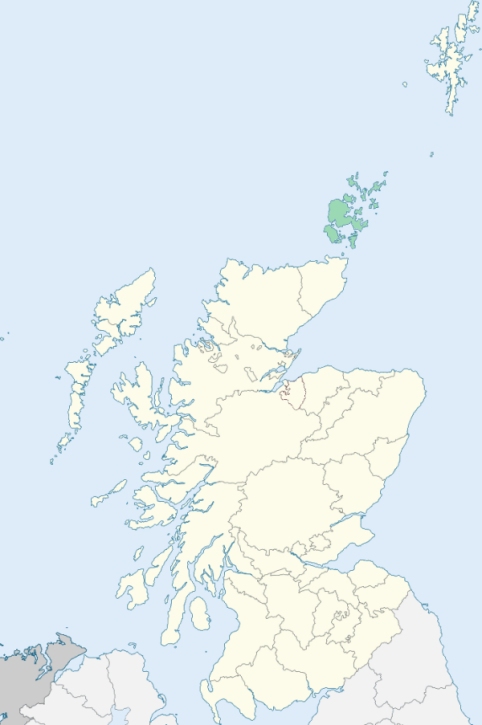

Photo credits: (Featured) Yesnaby Castle, Sandwick, © 2022 David Medcalf, used under Creative Commons License CC BY-SA 2.0, (Related Resources) Orkney Locator Map, © 2024, Susan Wallace, used under Creative Commons License CC BY-SA 4.0.
Related Resources
Map of Scottish highland clans and lowland families
Orkney locator map
See more maps at Wikimedia Commons
Glossary
  • Burghs:
  • Royal - Towns on royal lands
  • Regality - Towns granted to noblemen/landowners
  • Barony - Towns granted to tenant-in-chief (laird)
  • Police - Towns with elected officials
  • Small - Population under 20,000
  • Large - Population over 20,000
  •  
  • Chapel-of-Ease: Small church for those living far from the main church
  • Collegiate church: See What is a Collegiate Church?
  • Commune kirk: Owned by a larger church
  • Court of Teinds: Controlled funds for support of clergy
  •  
  • Friars:
  • Black - Dominican
  • Grey - Franciscan
  • Red - Trinitarian
  • White - Carmelite
  •  
  • Iron chapel: Building made of corrugated galvanized iron
  •  
  • Landward District: Rural part of a district
  •  
  • Mensal: Source of income to support clergy member (Roman Catholic)
  •  
  • OPR: Old Parochial Register
  •  
  • Pre-Reformation: Before 1560
  • Prebend: Source of income to support a clergy member
  •  
  • QO: Quoad Omnia - Civil and church control
  • QS: Quoad Sacra - Church control only
  •  
  • RD: Registration District - Civil control
  •  
  • Tryst: Large-scale market or fair, particularly for livestock
  •