Callander, Kilmachog, and Leny
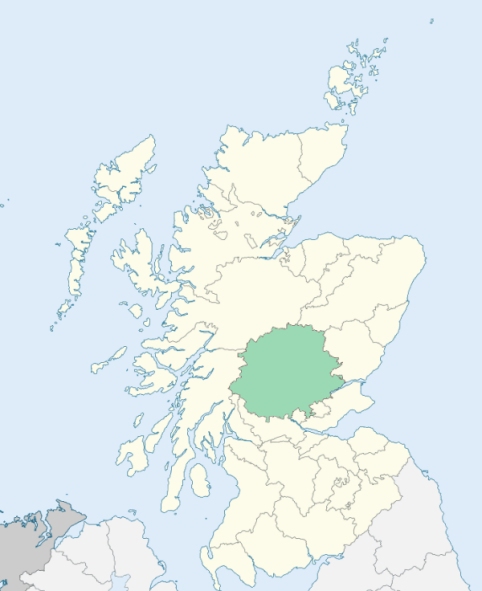
Callander is a parish in the Menteith district of Perthshire. It is bounded on the west by the Ben Lomond wing of Stirlingshire, and on other sides by the parishes of Balquhidder, Comrie, Kilmadock, Port-of-Menteith, and Aberfoyle. (1867: The Imperial Gazetteer of Scotland, by John Marius Wilson).
Callander, Duncraggan, Kilmahog
PRE-REFORMATION GOVERNANCE:
POST-REFORMATION GOVERNANCE:
The parishes of Callander, Kilmachog, and Leny were united in the sixteenth century.
Callander. The ancient church of Callander was dedicated to St Kessog. Its site is still called Tom Mo Cheassoig (St Kessog's Mound.) The local fair, held beside the church in March, was styled Feill Mo Cheassoig (St Kessog's Fair).
Kilmachog. The church of Kilmachog was dedicated to St Machuit.
Leny. The church of Leny belonged to the Priory of Inchmahome.
Disjoined Quoad Sacra Parishes:
Trossachs. The parish of Trossachs was disjoined from Callander, Aberfoyle, and Port of Menteith, and erected 6 June 1866.
Includes ministers, licentiates, assistants, readers, and clerks.
Callander (QO)
Kilmachog (QO)
Leny (QO)
Trossachs (QS)
(1928: Fasti Ecclesiæ Scoticanæ, by Hew Scott, D. D.)
Parish registers turned over to the Registrar-General, as a result of the Registration of Births, Deaths, and Marriages (Scotland) Act of 1854. The letters B. D. and M. indicate Births (or Baptisms), Deaths (or Burials), and Marriages (or Proclamations of Banns) respectively. Numbers indicate separate volumes or books. Note: These records are by no means complete or without damage; consult the Detailed List of the Old Parochial Registers of Scotland (1872) to learn more about the condition of the records.
| OPR and RD Numbers | |||
|---|---|---|---|
| Date Range | Name | Number | Type |
| 1710-1854 | Callander | 336 | OPR |
| 1855-1971 | Callander | 336 | RD |
| 1972-2003 | Callander | 393 | RD |
| 2004-2009 | Stirling, Callander | 393 | RD |
| 2026 | Stirling Council; Callander Community Council | ||
(2009: Parishes and Registration Districts of Scotland - Old and New, National Records of Scotland)
Local community councils (2026) are provided as a potential source of additional information for settlements within the original boundaries of the parish. (Source)
Statistics from informal and official censuses
Anderson, Brown, Buchanan, Cameron, Campbell, Ferguson, Grieve, MacFarlane, Robertson, Stewart
Note: Names appearing in research materials, other than censuses. Simple names (First name, surname only) have been omitted unless they appear associated with large properties. All women's names, and men's names with occupations, military ranks, or peerage titles are included.
By the Reverend Mr James Robertson, Minister of the Parish.
"The number of souls, at present (1791), in the parish, is about 2100. The village of Callander contains near 1000; of these, there are in Kilmahog, 250; and in the country about 750. The number of males is 1000, females 1100. There are 20 weavers, 8 smiths, 4 masons, 10 house carpenters and plough-wrights, 12 apprentices, 40 household servants, 160 labouring servants, 9 merchants, 14 shoemakers, 2 bakers, 20 tailors, 1 writer, 1 surgeon, and 3 schoolmasters. There are, of the Established Church 2030, 10 Seceders, 20 Episcopalians, and 40 Papists.
We have 2 lint mills, 4 meal mills, 1 for bruising lint and rapeseeds, 1 fulling mill for woollen cloth, and 1 threshing mill for grain, and 3 kilns with ast iron floors, for drying grain. Woollen and linen yarn is much spun by the poor, for sale. The carpet manufacturers in Stirling buy up the woollen, and the Glasgow manufacturers the linen yarn. The servants, and the children of farmers are all employed (when they have no labour in the fields), in spinning these kinds of yarn, partly for sale, and partly for their own use.
The language spoken by persons of rank and of liberal education, is English; but the language of the lower classes is Gaelic. The character of the people is various; but, in general, both here and along the eastern side of the Grampians, they are divested of the sullenness of those, in the same rank, who inhabit the champaign country farther E. and S., and of the idleness of those, farther N. and W. They have not perhaps arrived at the plodding industry of the former, while they have relinquished much of the pride of the latter. The people are humane, affectionate, and polite. The inhabitants of this district, are neither remarkable for the tallness nor the shortness of their stature. They are, in general, well shaped; and very few or none deformed from their birth."
(This section contains excerpts, at times restructured or paraphrased, from an article appearing in Statistical Account of Scotland, Sir John Sinclair, 1791-1799)
Primary Sources:
Statistical Account of Scotland (1791-1799), Volume 11, p. 574
New Statistical Account of Scotland (1834-1845), Volume 10, p. 349
See Parish Page Sources for all source information and links.