Assint
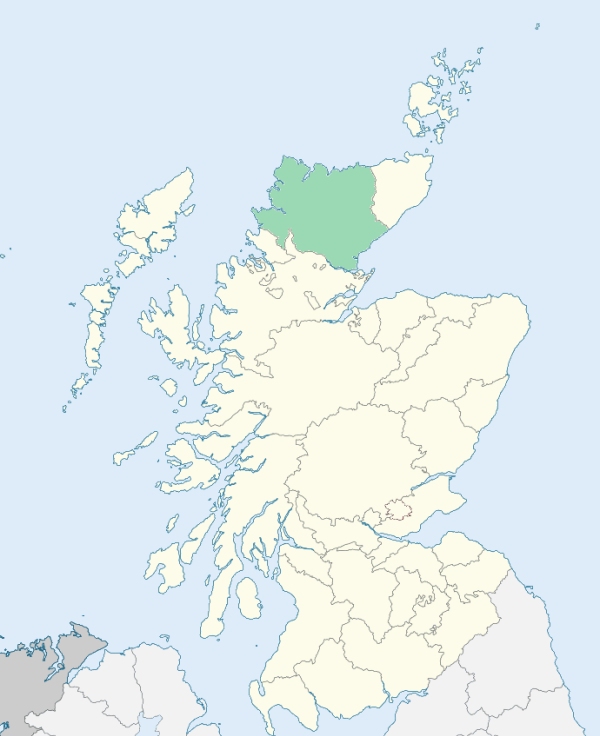
Assynt is a large highland parish in the southwest of Sutherlandshire. On the north it is bounded by the Minch, and by the Kylecuigh or Kyle Skon, and its extremities Loch Down and Loch Coul. Above two-thirds of the inhabitants of Assynt reside on the seashore. (1867: The Imperial Gazetteer of Scotland, by John Marius Wilson).
Assynt, Clashnessie, Elphine, Knockan, Lochinver
PRE-REFORMATION GOVERNANCE:
POST-REFORMATION GOVERNANCE:
In the Cathedral of Dornoch there was a prebend of Assynt. When the Presbytery of Tongue was founded, 11 May 1726, this parish was taken from the Presbytery of Dornoch and annexed to the new Court at Tongue. On 19 May 1736 the parish of Assynt was disjoined from the Presbytery of Tongue and placed again under the jurisdiction of the Presbytery of Dornoch. The old church stood at Inchnadamph, east end of Loch Assynt.
Disjoined Quoad Sacra Parishes:
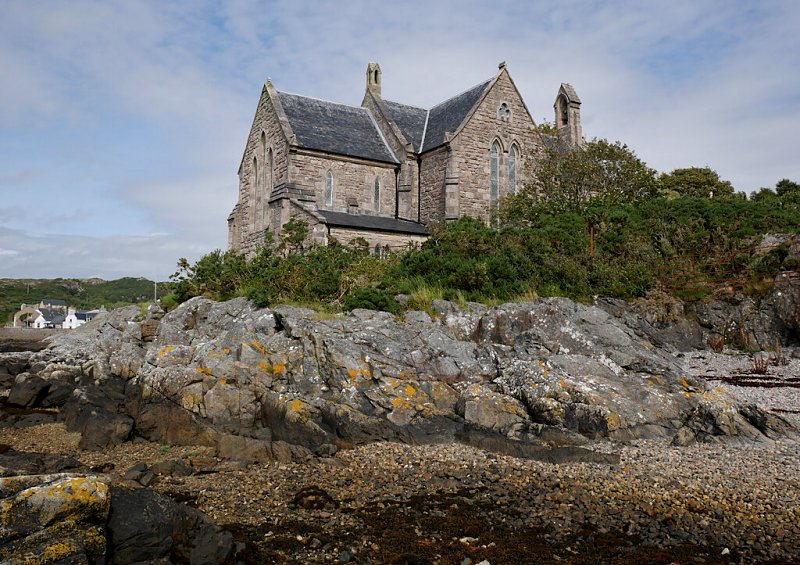
Stoer. There was of old a chapel at Stoer, which was then in the parish of Assynt. A parliamentary chapel was built here in 1829. The parish of Stoer was disjoined from Assynt, 18 March 1878.
Includes ministers, licentiates, assistants, readers, and clerks.
Assynt (QO)
Stoer (QS)
(1928: Fasti Ecclesiæ Scoticanæ, by Hew Scott, D. D.)
Parish registers turned over to the Registrar-General, as a result of the Registration of Births, Deaths, and Marriages (Scotland) Act of 1854. The letters B. D. and M. indicate Births (or Baptisms), Deaths (or Burials), and Marriages (or Proclamations of Banns) respectively. Numbers indicate separate volumes or books. Note: These records are by no means complete or without damage; consult the Detailed List of the Old Parochial Registers of Scotland (1872) to learn more about the condition of the records.
| OPR and RD Numbers | |||
|---|---|---|---|
| Date Range | Name | Number | Type |
| 1798-1854 | Assynt | 44 | OPR |
| 1855-1855 | Assynt | 44 | RD |
| 1856-1967 | Kirkton (Assynt) | 44-1 | RD |
| 1856-1967 | Stoer | 44-2 | RD |
| 1968-1971 | Assynt | 44 | RD |
| 1972-2006 | Assynt | 178 | RD |
| 2009 | Highland, Assynt | 178 | RD |
| 2026 | Highland Council; Assynt Community Council | ||
(2009: Parishes and Registration Districts of Scotland - Old and New, National Records of Scotland)
Local community councils (2026) are provided as a potential source of additional information for settlements within the original boundaries of the parish. (Source)
Statistics from informal and official censuses
Campbell, Graham, Kerr, MacLeod, Matheson, Morrison, Munro, Ross, Stewart, Wilson
Note: Names appearing in research materials, other than censuses. Simple names (First name, surname only) have been omitted unless they appear associated with large properties. All women's names, and men's names with occupations, military ranks, or peerage titles are included.
By the Reverend Mr William Mackenzie, Minister.
"Whatever occupation a man may follow here, he is more or less engaged in labouring the ground, tends a few cattle of one kind or other, which is the principal means of living. There is but one smith, and he can only fabricate iron as an edging to the crooked and straight spades, as also the few coulters and ploughshares used here; but he has no skill to shoe a horse, which, when any have business to go to the low countries, either Sutherland or Ross county, is vastly inconvenient.
Properly speaking, though many here are poor, they cannot be represented as a burden to the parish. The natives are all connected by alliance. When any one becomes old and feeble, their nearest relations build a little comfortable house for them, close to their own residence; and even there the distaff and spindle is well managed. These old matrons nurse the children of their relations; the songs and airs of Fingal, and ancient heroes, are sung in the Gaelic tongue, to which the little children dance. Old men are prudently engaged in some domestic affair, such as repairing the houses of the neighbouring tenants, &c. In short, they share with their relatives all the viands of the family.
The Highland girls of this parish for the most part marry at the age of betwixt 16 and 21 years; the lads at that of betwixt 20 and 25. There are some instances of women bearing children to the age of 50 years at least. It is no uncommon sight to see a grandmother give her breast to her own grandchild to suckle."
(This section contains excerpts, at times restructured or paraphrased, from an article appearing in Statistical Account of Scotland, Sir John Sinclair, 1791-1799)
Primary Sources:
Statistical Account of Scotland (1791-1799), Volume 16, p. 163
New Statistical Account of Scotland (1834-1845), Volume 15, Section I, p. 105
See Parish Page Sources for all source information and links.