Davachyndore, Auchindoir and Kearn
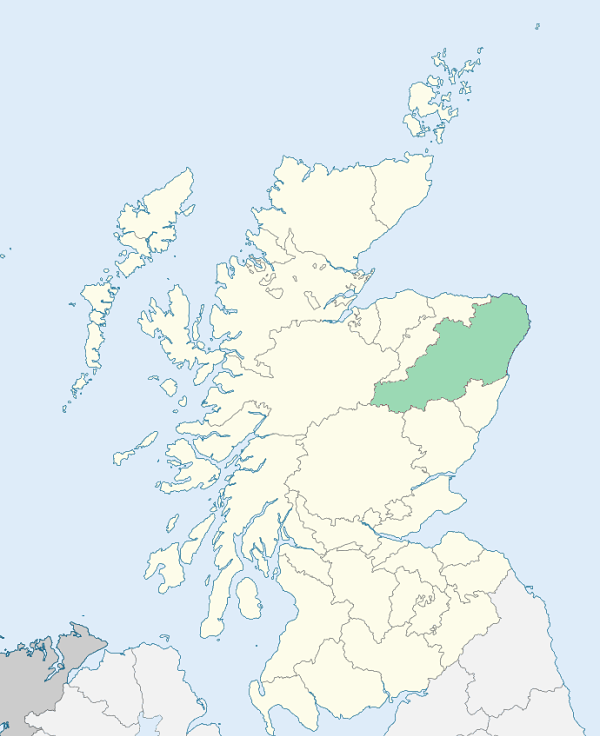
Auchindoir and Kearn is a mountainous parish in the western part of Aberdeenshire, bounded on the north by the parish of Rhynie, on the east by the parish of Tullynessle, on the south and west by Kildrummy and Cabrach parishes. (1867: The Imperial Gazetteer of Scotland, by John Marius Wilson)
Cotton, Creack, Lumsden
PRE-REFORMATION GOVERNANCE:
POST-REFORMATION GOVERNANCE:
The parishes of Auchindoir and Kearn were united in 1792.
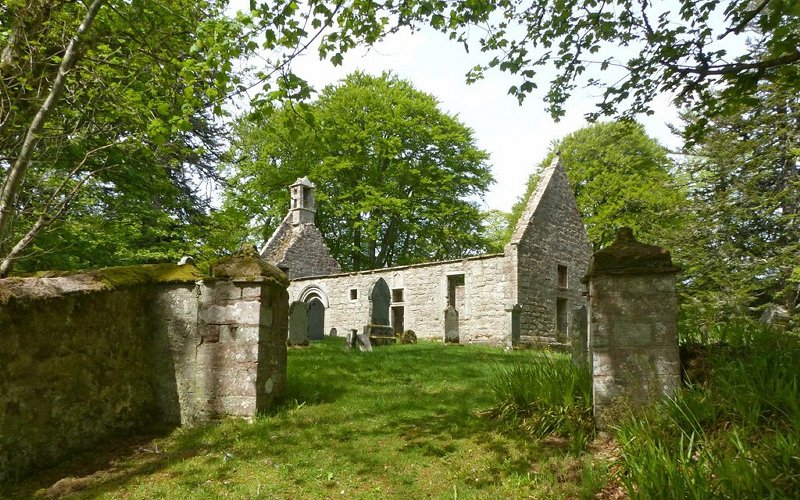
Auchindoir. The church of Auchindoir was dedicated to St Mary. Auchindoir was a prebend of King's College, Aberdeen. Near the church was a Well of Our Lady. A Fair of St Mary was held at Auchindoir.
Kearn. On 17 June 1618 the parishes of Forbes and Kearn were united. In 1638 they were severed again. On 18 July 1722 Forbes and Kearn were joined a second time. On 4 July 1792 Kearn was once more disjoined from Forbes and was united to Auchindoir.
Includes ministers, licentiates, assistants, readers, and clerks.
Auchindoir (QO)
Kearn (QO)
(1928: Fasti Ecclesiæ Scoticanæ, by Hew Scott, D. D.)
Parish registers turned over to the Registrar-General, as a result of the Registration of Births, Deaths, and Marriages (Scotland) Act of 1854. The letters B. D. and M. indicate Births (or Baptisms), Deaths (or Burials), and Marriages (or Proclamations of Banns) respectively. Numbers indicate separate volumes or books. Note: These records are by no means complete or without damage; consult the Detailed List of the Old Parochial Registers of Scotland (1872) to learn more about the condition of the records.
| OPR and RD Numbers | |||
|---|---|---|---|
| Date Range | Name | Number | Type |
| 1694-1854 | Auchindoir and Kearn | 172 | OPR |
| 1855-1967 | Auchindoir | 172 | RD |
| 2009 | Aberdeenshire, Alford | 326 | RD |
| 2026 | Aberdeenshire Council; Donside Community Council | ||
(2009: Parishes and Registration Districts of Scotland - Old and New, National Records of Scotland)
Local community councils (2026) are provided as a potential source of additional information for settlements within the original boundaries of the parish. (Source)
Statistics from informal and official censuses
Anderson, Duncan, Fraser, Gordon, Henderson, Murray, Reid, Smith, Souter, Watt
Note: Names appearing in research materials, other than censuses. Simple names (First name, surname only) have been omitted unless they appear associated with large properties. All women's names, and men's names with occupations, military ranks, or peerage titles are included.
By the Reverend Mr James Reid.
"By an actual enumeration in summer 1785, the parish contained 661 souls, and by another enumeration last spring, it contained only 572; so that the decrease, in less than 8 years has been 89. Of the 572 inhabitants which the parish contains, there are 290 males, and 282 females. Of these there are 441 of the Established Church, 15 Seceders (Burghers, and Anti-burghers), 5 Scotch Episcopalians, 4 Papists, and 1 Quaker.
There is one person who was born in Flanders: all the other inhabitants are natives of Scotland, and almost all of them of this and the neighbouring parishes. We have no physician nor lawyer. No manufactures are carried on here. The women knit a good many stockings, and spin a good deal of linen yarn for the manufacturers of Aberdeen and Huntly; but how much money this may bring into the parish, it is not easy to determine.
The only language spoken here, is that dialect of the English which is common in Aberdeenshire. The peculiarities of it, a native is perhaps little qualified to point out. The people in the south of Scotland say, that the tone is harsh, and to them has the appearance of passion and bad humour.
Our young people consider it as a point of honour to support their parents; and, when any case of extraordinary distress occurs, to which the public funds are unequal, the people cheerfully and amply make up the deficiency. There is no strolling beggar belonging to the parish; but we have great numbers of them from other parishes. Some of these, particularly the women, are young and healthy; and they are usually attended by several children of different ages, whom they train up to the same habits with themselves."
(This section contains excerpts, at times restructured or paraphrased, from an article appearing in Statistical Account of Scotland, Sir John Sinclair, 1791-1799)
Primary Sources:
Statistical Account of Scotland (1791-1799), Volume 12, p. 490
New Statistical Account of Scotland (1834-1845), Volume 12, p. 406
See Parish Page Sources for all source information and links.