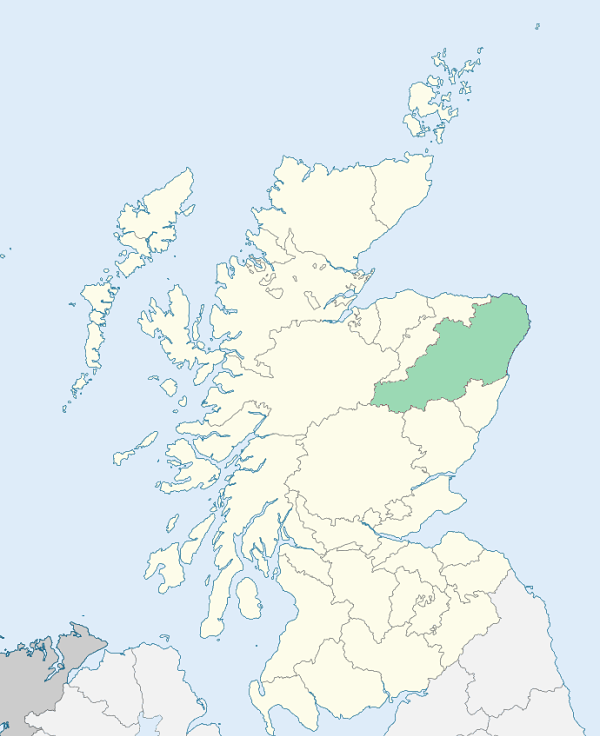
Dyce is a parish 7 miles north-west of Aberdeen, Aberdeenshire. It is bounded by Fintray, New Machar, Old Machar, Newhills, and Kinellar. (1867: The Imperial Gazetteer of Scotland, by John Marius Wilson).
Blackburn, Caskieben, Dyce, Kirkton, Overton, Pitmedden, Woodland
Caskieben, Gordon Place
PRE-REFORMATION GOVERNANCE:
POST-REFORMATION GOVERNANCE:
The church of Dyce was dedicated to St Fergus.
Includes ministers, licentiates, assistants, readers, and clerks.
(1928: Fasti Ecclesiæ Scoticanæ, by Hew Scott, D. D.)
Parish registers turned over to the Registrar-General, as a result of the Registration of Births, Deaths, and Marriages (Scotland) Act of 1854. The letters B. D. and M. indicate Births (or Baptisms), Deaths (or Burials), and Marriages (or Proclamations of Banns) respectively. Numbers indicate separate volumes or books. Note: These records are by no means complete or without damage; consult the Detailed List of the Old Parochial Registers of Scotland (1872) to learn more about the condition of the records.
| OPR and RD Numbers | |||
|---|---|---|---|
| Date Range | Name | Number | Type |
| 1646-1854 | Dyce | 190 | OPR |
| 1855-1967 | Dyce | 190 | RD |
| 2009 | Aberdeen City | 300 | RD |
| 2026 | Aberdeen City Council; Dyce and Stoneywood Community Council | ||
(2009: Parishes and Registration Districts of Scotland - Old and New, National Records of Scotland)
Local community councils (2026) are provided as a potential source of additional information for settlements within the original boundaries of the parish. (Source)
Statistics from informal and official censuses
Allan, Christie, Cruickshank, Edwards, Fraser, Gray, Simpson, Smith, Thomson, Wilson
Note: Names appearing in research materials, other than censuses. Simple names (First name, surname only) have been omitted unless they appear associated with large properties. All women's names, and men's names with occupations, military ranks, or peerage titles are included.
By the Reverend Mr William Wilson.
"Though the parish is of considerable extent, it is but thinly inhabited. The whole number of inhabitants exceeds not 352, of which there are 181 males and 171 females. There are 70 dwelling houses. There are about 24 large, and 46 small farms. The people are, on the whole, humane, social, peaceable, and industrious. They all belong to the Presbyterian established religion."
(This section contains excerpts, at times restructured or paraphrased, from an article appearing in Statistical Account of Scotland, Sir John Sinclair, 1791-1799)
Primary Sources:
Statistical Account of Scotland (1791-1799), Volume 3, p. 130
New Statistical Account of Scotland (1834-1845), Volume 12, p. 120
See Parish Page Sources for all source information and links.