Kineddard, Kinedward, King-Edward, Ken-Edgar
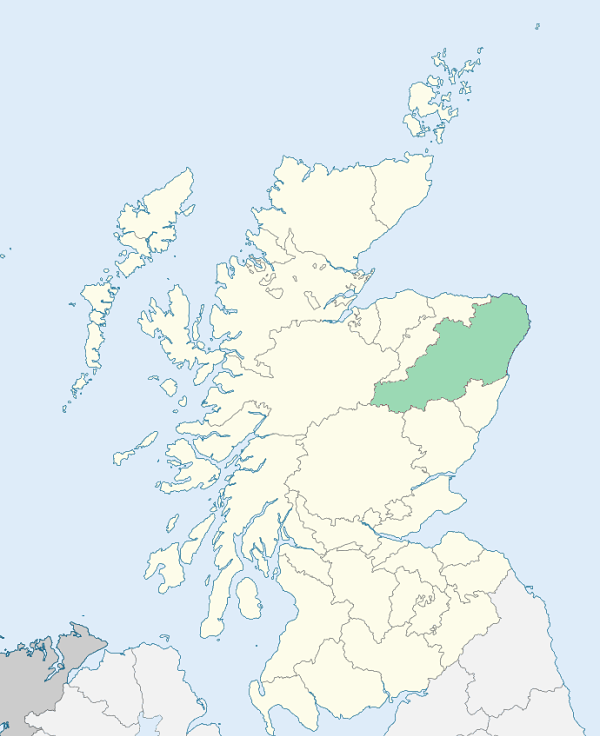
King Edward is a parish in the north-west extremity of Aberdeenshire. It is bounded on the west and north by Banffshire, and on other sides by the parishes of Aberdour, New Deer, Monquhitter, and Turriff. (1867: The Imperial Gazetteer of Scotland, by John Marius Wilson).
Byth, Fisherie, King-Edward, Millseat, Newbyth
Byth, Eden, Gavenwood, Gellyburn, Montcoffer
There was a detached part of the county of Aberdeen which was also a detached part of the Aberdeenshire parish of King Edward, and which was surrounded by the county of Banff. It was situated near the town of Banff, and was surrounded by the Banffshire parishes of Alvah, Banff, and Gamrie. This detached part was transferred to the county of Banff, and was at the same time annexed to the parish of Alvah. See affected properties and landholders. (1892: Boundary of counties and parishes in Scotland as settled by the Boundary Commissioners under the Local Government Act, 1889, by Hay Shennan)
PRE-REFORMATION GOVERNANCE:
POST-REFORMATION GOVERNANCE:
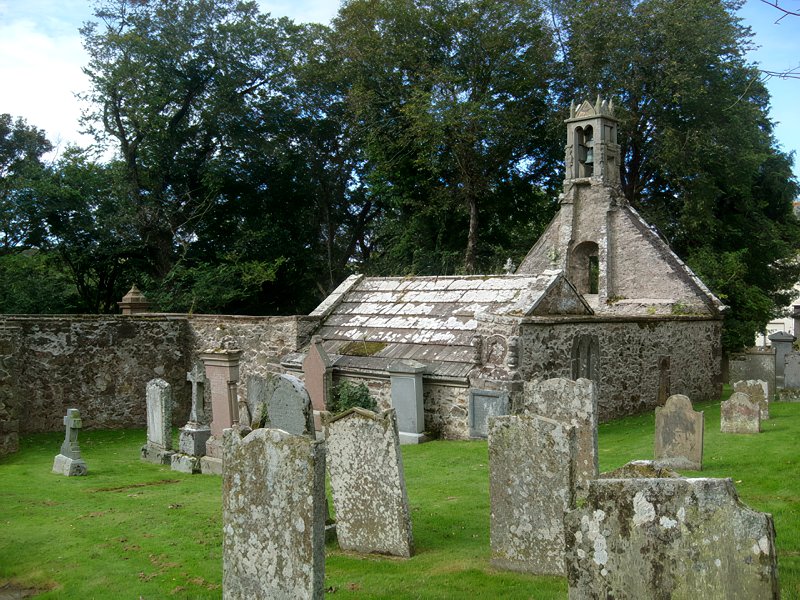
The church of Kinedward was dedicated to St Edward the Confessor. It belonged to the Abbey of Deer. The modern spelling is a misnomer, King-Edward having been engraved in error upon communion cups presented in 1619. A new church was erected 1847-48.
Disjoined Quoad Sacra Parishes:
New Byth. A chapel was built here in 1793. The parish of New Byth was disjoined from Kinedward and Aberdour on 18 Dec 1867.
Includes ministers, licentiates, assistants, readers, and clerks.
King Edward (QO)
New Byth (QS)
(1928: Fasti Ecclesiæ Scoticanæ, by Hew Scott, D. D.)
Parish registers turned over to the Registrar-General, as a result of the Registration of Births, Deaths, and Marriages (Scotland) Act of 1854. The letters B. D. and M. indicate Births (or Baptisms), Deaths (or Burials), and Marriages (or Proclamations of Banns) respectively. Numbers indicate separate volumes or books. Note: These records are by no means complete or without damage; consult the Detailed List of the Old Parochial Registers of Scotland (1872) to learn more about the condition of the records.
| OPR and RD Numbers | |||
|---|---|---|---|
| Date Range | Name | Number | Type |
| 1701-1854 | King Edward | 210 | OPR |
| 1855-1871 | King Edward | 210 | RD |
| 1872-1879 | King Edward | 210-1 | RD |
| 1872-1879 | New Byth | 210-2 | RD |
| 1880-1963 | King Edward | 210a-1 | RD |
| 1880-1967 | New Byth | 210a-2 | RD |
| 1880-1967 | Kininmonth | 210b | RD |
| 2009 | Aberdeenshire, Fraserburgh | 311 | RD |
| 2026 | (King Edward) Aberdeenshire Council; King Edward and Gamrie Community Council | ||
| 2026 | (New Byth) Aberdeenshire Council; Fyvie, Rothienorman and Monquhitter Community Council | ||
| 2026 | (Kininmonth) Aberdeenshire Council; Strichen and District Community Council | ||
(2009: Parishes and Registration Districts of Scotland - Old and New, National Records of Scotland)
Local community councils (2026) are provided as a potential source of additional information for settlements within the original boundaries of the parish. (Source)
Statistics from informal and official censuses
Anderson, Clark, Duncan, Gordon, Milne, Morrison, Scott, Smith, Taylor, Wilson
Note: Names appearing in research materials, other than censuses. Simple names (First name, surname only) have been omitted unless they appear associated with large properties. All women's names, and men's names with occupations, military ranks, or peerage titles are included.
By Alexander Simpson, Schoolmaster of the Parish.
"The population of this parish has been almost stationary for these last 10 years. In 1793 the number of souls is 1577. Of these there are 1520 belonging to the Established Church. The people are sober and industrious, submissive to the laws, and attached to their respective heritors. Though not in affluent circumstances, they all enjoy the necessaries, and many of them, the comforts of life; and seem as well satisfied with their situation as can be expected.
In point of living, dress, and cleanliness, their condition is superior to what it was in former times. It is highly reasonable, that an order of men, by the fruit of whose labours all are fed, should enjoy such a competence as to make their condition easy and comfortable. They claim the support and encouragement of all who wish well to their country, who have any interest in its prosperity, or power to promote it."
(This section contains excerpts, at times restructured or paraphrased, from an article appearing in Statistical Account of Scotland, Sir John Sinclair, 1791-1799)
Primary Sources:
Statistical Account of Scotland (1791-1799), Volume 11, p. 401
New Statistical Account of Scotland (1834-1845), Volume 12, p. 274
See Parish Page Sources for all source information and links.