Ayr and Alloway
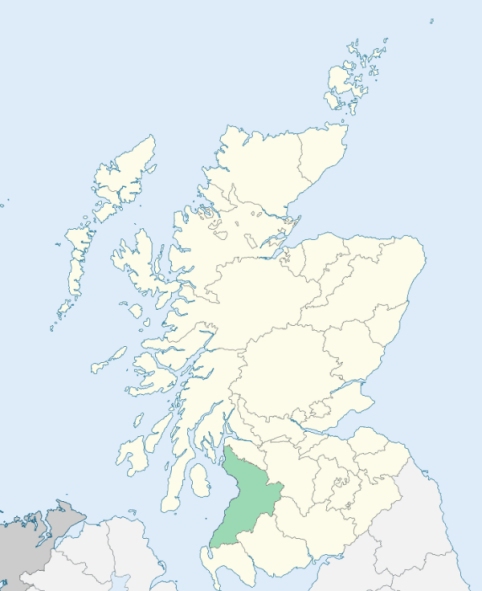
Ayr is a parish on the coast of Ayrshire. It is bounded on the west by the sea, on the north by the River Ayr, which divides it from Newton-upon-Ayr and St Quivox, on the east by Coylton, on the south-east by Dalrymple, and on the south-west by the River Doon, which divides it from Maybole. It comprises the ancient parishes of Ayr and Alloway, which are separated from each other by the Glengaw Burn. (1867: The Imperial Gazetteer of Scotland, by John Marius Wilson).
Alloway, Ayr or Air, Belmont
Cambusdoon
A small part of the parish of Maybole was divided from the rest of the parish by the estuary of the River Doon. This part was transferred to the parish of Ayr. See affected properties and landholders. (1892: Boundary of counties and parishes in Scotland as settled by the Boundary Commissioners under the Local Government Act, 1889, by Hay Shennan)
PRE-REFORMATION GOVERNANCE:
POST-REFORMATION GOVERNANCE:
The parishes of Ayr and Alloway were united in 1690. In 1860 the union was dissolved by the re-erection of the parish of Alloway.
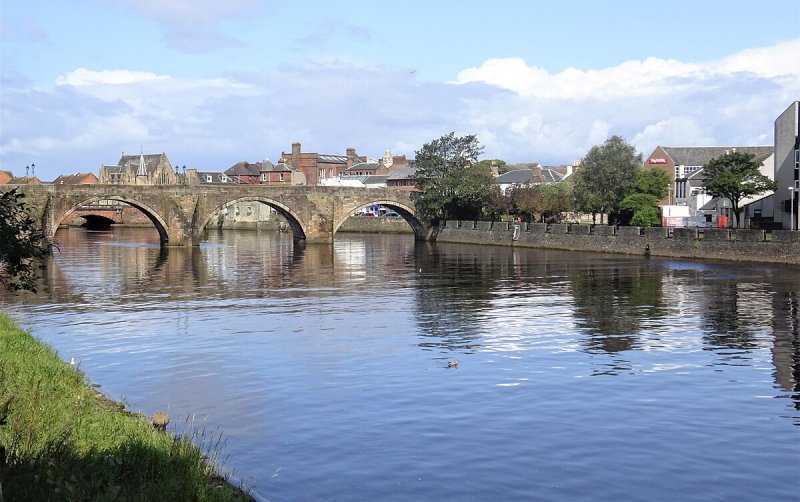
Ayr. Until the Reformation the Rectory of Ayr was a prebend of Glasgow. Its church was dedicated to St John the Baptist. About 1652 the building was pulled down by Oliver Cromwell to furnish material for a fort which he was erecting close by. About 1654 a smaller edifice was built, which has come to be called The Old Church of Ayr. When the nineteenth century began, the population of the old parish of Alloway had become greatly reduced, while the town of Ayr was steadily growing. In 1810 church services at Alloway were given up, and there was built at Ayr a second place of worship for the united parishes. This building, termed the New Church, stands near the ruins of St John's. The chief yearly fairs at Ayr were St John's on St John the Baptist's day, 24 June, and St Michael's at Michaelmas, 29 September. At Doonslie in the parish of Ayr there was a hospital of St Leonard. In the town of Ayr there was a priory of the Black Friars, dedicated to St Katherine. This priory, founded in 1230, was the earliest house of the Dominicans in Scotland. The Grey Friars also had a priory in the town, founded in 1472 on the site now occupied by the Old Church and its churchyard.
Alloway. The parish of Alloway is ancient, and was a prebend of the Chapel Royal of Stirling. Its church was dedicated to St Mungo. In 1858 a mission chapel was built close to the churchyard gate. By decree of the Court of Teinds, 4 July 1860, Alloway was disjoined from Ayr, and erected anew as a separate parish. In addition to the territory within its ancient boundaries, Alloway thereafter included certain lands on the right bank of the Water of Doon taken from the parish of Maybole.
Disjoined Quoad Sacra Parishes:
St James's. The church was built in 1885 in North Newton. The parish, disjoined from Newton-upon-Ayr, was erected by the Court of Teinds, 15 July 1904.
St Leonard's. The church was built in 1886. The parish, disjoined from Ayr, was erected by the Court of Teinds, 7 March 1892.
Wallacetown. The church was built in 1834. In 1836 the General Assembly granted it a constitution and a district of its own. The parish was disjoined from St Quivox by the Court of Teinds, 9 March 1874.
Includes ministers, licentiates, assistants, readers, and clerks.
Ayr (QO)
Alloway (QO)
St James's (QS)
St Leonard's (QS)
(1928: Fasti Ecclesiæ Scoticanæ, by Hew Scott, D. D.)
Parish registers turned over to the Registrar-General, as a result of the Registration of Births, Deaths, and Marriages (Scotland) Act of 1854. The letters B. D. and M. indicate Births (or Baptisms), Deaths (or Burials), and Marriages (or Proclamations of Banns) respectively. Numbers indicate separate volumes or books. Note: These records are by no means complete or without damage; consult the Detailed List of the Old Parochial Registers of Scotland (1872) to learn more about the condition of the records.
| OPR and RD Numbers | |||
|---|---|---|---|
| Date Range | Name | Number | Type |
| 1664-1854 | Ayr | 578 | OPR |
| 1855-1855 | Ayr Burgh | 578-1 | RD |
| 1855-1855 | Ayr Landward | 578-2 | RD |
| 1856-1895 | Ayr | 578 | RD |
| 1896-1953 | Ayr | 578-1 | RD |
| 1896-1953 | St Quivox | 578-2 | RD |
| 1896-1948 | Alloway | 578-3 | RD |
| 1954-1971 | Ayr | 578 | RD |
| 1972-2005 | Ayr | 680 | RD |
| 2006-2008 | Ayr, South Ayrshire | 680 | RD |
| 2009 | South Ayrshire, Ayr | 680 | RD |
| 2026 | (Ayr) South Ayrshire Council; North Ayr Community Council Fort, Seafield and Wallacetown Community Council Belmont and Kincaidston Community Council | ||
| 2026 | (Alloway) South Ayrshire Council; Alloway, Doonfoot and St Leonards Community Council | ||
| 2026 | (St Quivox) South Ayrshire Council; Mossblown and St Quivox Community Council | ||
(2009: Parishes and Registration Districts of Scotland - Old and New, National Records of Scotland)
Local community councils (2026) are provided as a potential source of additional information for settlements within the original boundaries of the parish. (Source)
Statistics from informal and official censuses
Brown, Campbell, Hunter, Miller, Murray, Smith, Stewart, Thomson, Wilson, Young
Note: Names appearing in research materials, other than censuses. Simple names (First name, surname only) have been omitted unless they appear associated with large properties. All women's names, and men's names with occupations, military ranks, or peerage titles are included.
By the Reverend Dr James Dalrymple, and the Reverend Dr William M'Gill.
"The number of examinable persons in the parish, reckoning from 7 years of age and upwards, is above 3400. Of these there are 3000 in the town, and the remainder in the country. The number of souls may therefore be stated at about 4100 souls. There are above 600 inhabited houses in the parish. There are 2 physicians, 3 surgeons and apothecaries, and about 16 writers. The Seceders amount to about 50 or 60."
(This section contains excerpts, at times restructured or paraphrased, from an article appearing in Statistical Account of Scotland, Sir John Sinclair, 1791-1799)
Primary Sources:
Statistical Account of Scotland (1791-1799), Volume 1, p. 89
New Statistical Account of Scotland (1834-1845), Volume 5, Section I, p. 1
See Parish Page Sources for all source information and links.