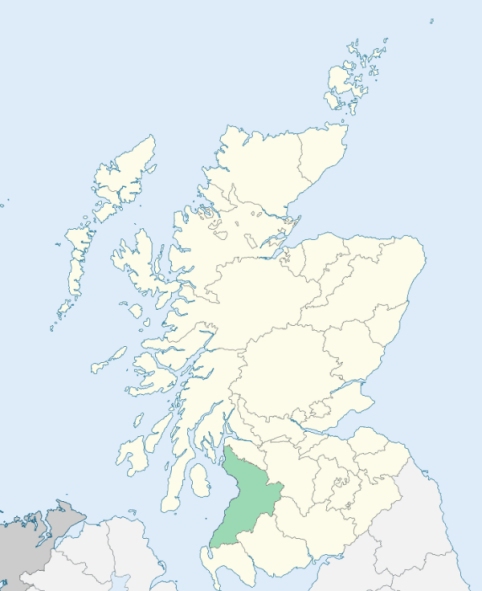
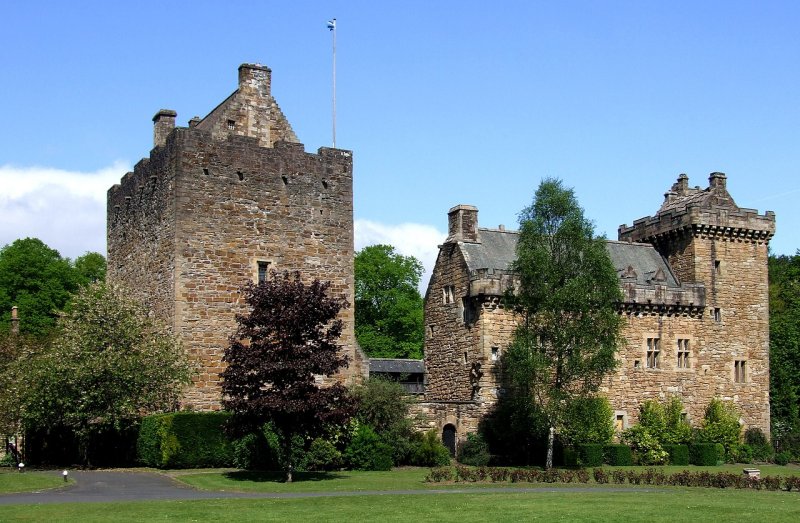
Kilmarnock is a parish in the district of Cunningham, Ayrshire. It is bounded on the south by the River Irvine, which divides it from Kyle, and on other sides by the parishes of Kilmaurs, Fenwick, and Loudoun. (1867: The Imperial Gazetteer of Scotland, by John Marius Wilson).
Bankhead, Beansburn, Crookedholm, Kilmarnock, Woodside
PRE-REFORMATION GOVERNANCE:
POST-REFORMATION GOVERNANCE:
The church of this parish was dedicated to St Marnoch, who was commemorated also in the name of the stream called the Water of Manorch, but now generally termed Kilmarnock Water. The church was rebuilt in 1802, and enlarged in 1831. It is now commonly known as the Laigh Kirk. Its tower is a survival from the older building, and is said to have been built in the 15th century.
Disjoined Quoad Sacra Parishes:
High Kirk Parish. A chapel was built here in 1732. The High Kirk parish, so named from the lofty situation of its church, was disjoined from Kilmarnock, 23 July 1811.
Hurlford. The parish was disjoined from Kilmarnock, Galston, and Riccarton, by the Court of Teinds, 9 March 1874, and, by Act of Assembly, annexed to the Presbytery of Irvine. The church was built in 1875.
St Andrew's. A new chapel called St Andrew's, Netherton, with a district of its own in the parish of Kilmarnock, was sanctioned by the Presbytery in 1842. The church and district were erected a parish quoad sacra by the Court of Teinds, 19 June 1867.
St Marnoch's. A chapel was built here in 1836. The parish was disjoined from the parish of Kilmarnock by the Court of Teinds on 16 July 1862.
Includes ministers, licentiates, assistants, readers, and clerks.
Kilmarnock (QO)
High Kirk Parish (QS)
Hurlford (QS)
St Andrew's (QS)
St Marnoch's (QS)
(1928: Fasti Ecclesiæ Scoticanæ, by Hew Scott, D. D.)
Parish registers turned over to the Registrar-General, as a result of the Registration of Births, Deaths, and Marriages (Scotland) Act of 1854. The letters B. D. and M. indicate Births (or Baptisms), Deaths (or Burials), and Marriages (or Proclamations of Banns) respectively. Numbers indicate separate volumes or books. Note: These records are by no means complete or without damage; consult the Detailed List of the Old Parochial Registers of Scotland (1872) to learn more about the condition of the records.
| OPR and RD Numbers | |||
|---|---|---|---|
| Date Range | Name | Number | Type |
| 1640-1854 | Kilmarnock | 597 | OPR |
| 1855-1971 | Kilmarnock | 597 | RD |
| 1972-1998 | Kilmarnock | 666 | RD |
| 1999-2005 | Kilmarnock | 664-665 | RD |
| 2006-2008 | Kilmarnock, East Ayrshire | 664-665 | RD |
| 2009 | East Ayrshire, Kilmarnock | 664-665 | RD |
| 2026 | East Ayrshire Council; Bonnyton Community Council Grange/Howard Community Council New Farm Loch Community Council Northwest Kilmarnock Community Council Piersland-Bentinck Community Council Shortlees Community Council Southcraigs-Dean Community Council | ||
(2009: Parishes and Registration Districts of Scotland - Old and New, National Records of Scotland)
Local community councils (2026) are provided as a potential source of additional information for settlements within the original boundaries of the parish. (Source)
Statistics from informal and official censuses
Brown, Campbell, Gibson, Robertson, Smith, Stewart, Thomson, Wallace, Wilson, Young
Note: Names appearing in research materials, other than censuses. Simple names (First name, surname only) have been omitted unless they appear associated with large properties. All women's names, and men's names with occupations, military ranks, or peerage titles are included.
By the Reverend Mr James MacKinlay and the Reverend Mr John Robertson, Ministers of the Parish.
"The present state of the population is as follows: 6776 total number of souls, of these 3132 are males, and 3634 are females. There are 5670 souls in the town, 1106 in the country. There are 5716 of the Established Church, 40 Cameronians, 540 Burghers, and 480 Antiburghers.
Kilmarnock is one of the principal manufacturing towns in Ayrshire, and for many years has carried on a considerable trade. The following account is of the different branches of manufacture carried on: Carpets, shoes and boots, cow, calf and seal-skins tanned, printed calico, sheep and lamb skins dressed, leather gloves, cotton cloth, duffles, coverlets, blankets, plaidings, saddlery good for home and foreign sale, candles, stockings, tobacco and snuff; bar, rod, and cast iron, bonnets, milled caps and mitts, and cabinet work. In these different branches from two or three thousand hands may be employed. There are 56 master shoemakers, who employ 408 men."
(This section contains excerpts, at times restructured or paraphrased, from an article appearing in Statistical Account of Scotland, Sir John Sinclair, 1791-1799)
Primary Sources:
Statistical Account of Scotland (1791-1799), Volume 2, p. 84
New Statistical Account of Scotland (1834-1845), Volume 5, Section I, p. 535
See Parish Page Sources for all source information and links.