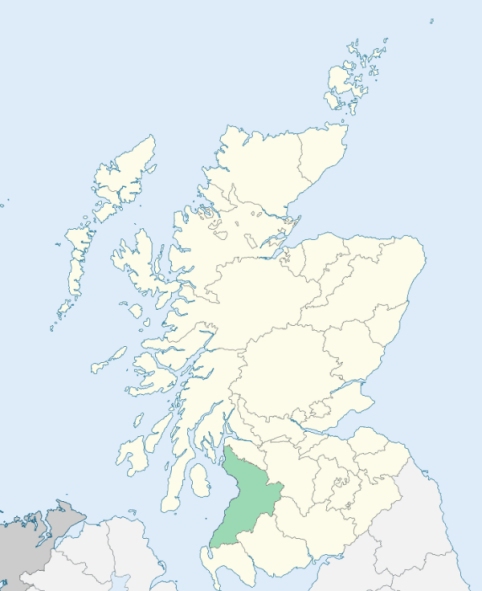
Galston is a parish in the north-east corner of Kyle, Ayrshire. It is bounded on the north by Irvine Water, which divides it from the parishes of Kilmarnock and Loudon in Cunningham, on the east by Avon Water, which divides it from the parish of Avondale in Lanarkshire, on the south by the parishes of Sorn and Mauchline, and on the west by Cessnock Water, which divides it from the parishes of Riccarton and Craigie. (1867: The Imperial Gazetteer of Scotland, by John Marius Wilson).
Allanton, Darvel, Galston, Newmilns, Old Bridgend
Milrig
Part of the parish of Riccarton was detached from the main part of the parish by a narrow intervening portion of the parish of Galston. An exchange of territory was effected between the two parishes, whereby Galston received the east portion of the detached part of Riccarton, while the remainder of the detached part was joined to the main portion of Riccarton parish by the annexation of the intervening portion of Galston parish. See affected properties and landholders. (1892: Boundary of counties and parishes in Scotland as settled by the Boundary Commissioners under the Local Government Act, 1889, by Hay Shennan)
PRE-REFORMATION GOVERNANCE:
POST-REFORMATION GOVERNANCE:
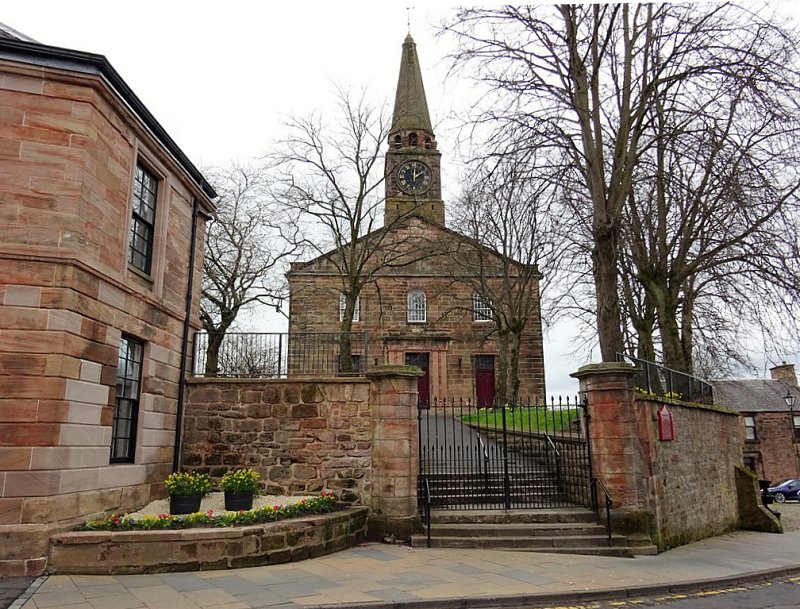
The vicarage of Galston belonged to the Ministry of the Red Friars of Fail. Its church was dedicated to St Peter. An annual fair, formerly held on 29 June, is known as St Peter's Fair. In the parish there was a Chapel of St Mary. Galston Church was rebuilt in 1809.
Disjoined Quoad Sacra Parishes:
Darvel. The parish was disjoined from the parishes of Loudoun and Galston on 7 March 1892.
Hurlford. The parish was disjoined from Kilmarnock, Galston, and Riccarton, by the Court of Teinds, 9 March 1874, and, by Act of Assembly, annexed to the Presbytery of Irvine. The church was built in 1875.
Includes ministers, licentiates, assistants, readers, and clerks.
Galston (QO)
Darvel (QS)
Hurlford (QS)
(1928: Fasti Ecclesiæ Scoticanæ, by Hew Scott, D. D.)
Parish registers turned over to the Registrar-General, as a result of the Registration of Births, Deaths, and Marriages (Scotland) Act of 1854. The letters B. D. and M. indicate Births (or Baptisms), Deaths (or Burials), and Marriages (or Proclamations of Banns) respectively. Numbers indicate separate volumes or books. Note: These records are by no means complete or without damage; consult the Detailed List of the Old Parochial Registers of Scotland (1872) to learn more about the condition of the records.
| OPR and RD Numbers | |||
|---|---|---|---|
| Date Range | Name | Number | Type |
| 1670-1854 | Galston | 593 | OPR |
| 1855-1971 | Galston | 593 | RD |
| 2009 | East Ayrshire, Galston, Darvel and Newmilns | 670 | RD |
| 2026 | (Galston) East Ayrshire Council; Galston Community Council | ||
| 2026 | (Darvel) East Ayrshire Council; Darvel and District Community Council | ||
| 2026 | (Newmilns) East Ayrshire Council; Newmilns and Greenholm Community Council | ||
(2009: Parishes and Registration Districts of Scotland - Old and New, National Records of Scotland)
Local community councils (2026) are provided as a potential source of additional information for settlements within the original boundaries of the parish. (Source)
Statistics from informal and official censuses
Brown, Mair, Nisbet, Paterson, Patton, Richmond, Robertson, Smith, Wilson, Young
Note: Names appearing in research materials, other than censuses. Simple names (First name, surname only) have been omitted unless they appear associated with large properties. All women's names, and men's names with occupations, military ranks, or peerage titles are included.
By the Reverend Mr George Smith.
"From an actual and pretty accurate survey taken in 1790 the population of the parish amounted to 1577 souls, of which 1219 were examinable.
In the village of Galston, March the 21st, 1791 there were 152 families consisting of 573 souls, of which 473 were examinable persons; 257 were males, and 316 were females. There were 7 day-labourers, 3 carters, 9 masons, 55 weavers, 11 wrights, 11 stocking-weavers, 11 tailors, 2 coopers, 2 carriers, 2 butchers, 24 tambourers, 5 grocers, 21 shoemakers, 4 lint millers, 7 colliers, 1 gardener, 1 mole-catcher, 3 paper makers, 2 dyers, 4 sempstresses, 2 horse dealers, 4 blacksmiths, 1 drummer, 2 flax-dressers, 1 surgeon, 1 druggist, and 1 schoolmaster.
There are about 100 farmers. The produce is chiefly oats; and for these two or three years last past, a small quantity of wheat. Potatoes are raised in great quantities, both by the farmers and by the inhabitants of the village. One great article of produce is cheese; it is sent to Kilmarnock, Paisley, Glasgow, and Edinburgh.
The inhabitants of Galston are, in general, sober, industrious, and charitable to the distressed. It is to be regretted, however, that instead of the wholesome beverage of ale, they are now compelled, by the high duties on that article, to betake themselves to the use of whisky, which is equally destructive to the health, and to the morals of the people."
(This section contains excerpts, at times restructured or paraphrased, from an article appearing in Statistical Account of Scotland, Sir John Sinclair, 1791-1799)
Primary Sources:
Statistical Account of Scotland (1791-1799), Volume 2, p. 71
New Statistical Account of Scotland (1834-1845), Volume 5, Section I, p. 178
See Parish Page Sources for all source information and links.