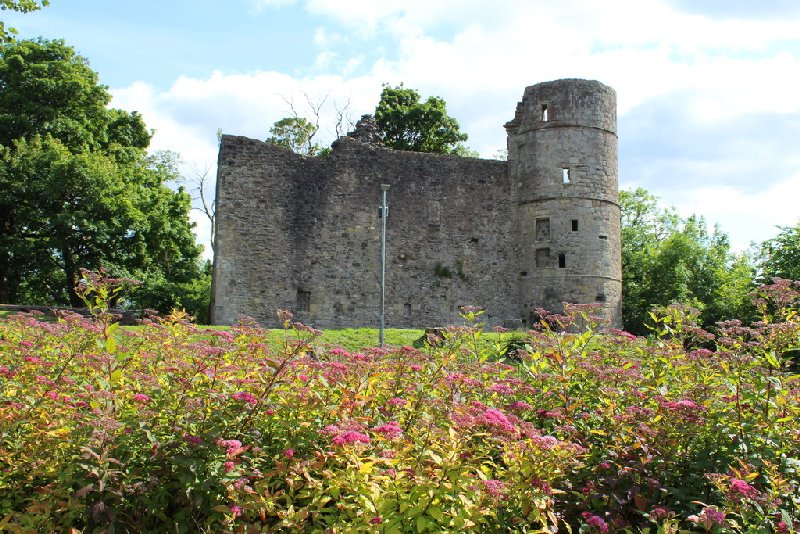
Avendale, Strathaven
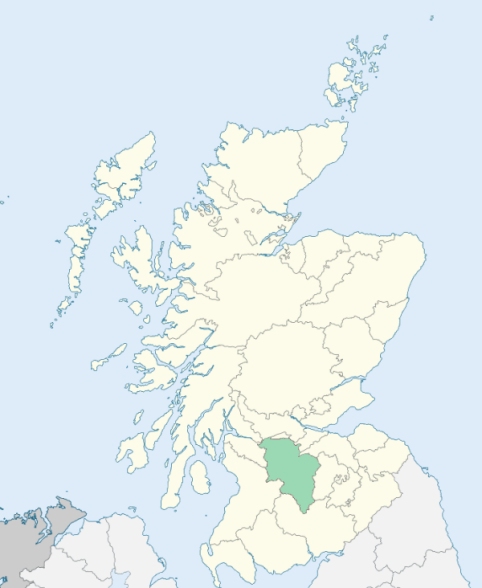
Avondale is a parish on the west border of Lanarkshire. It is bounded by Ayrshire, and by the parishes of Kilbride, Glassford, Stonehouse, and Lesmahagow. (1867: The Imperial Gazetteer of Scotland, by John Marius Wilson).
Caldermill, East Newton, Flemington, Overton, Strathaven, Todshill, Townhead, West Newton
Overton
PRE-REFORMATION GOVERNANCE:
POST-REFORMATION GOVERNANCE:
The church of Strathaven was dedicated to St Mary. It belonged to the collegiate church of Bothwell. There were three chapels within the bounds, one of them being St Bride's at Kype, which belonged to the Priory of Lesmahagow. A yearly fair of St Laurence was held at Strathaven on 10 August. In 1772 the Parish Church was rebuilt on a new site. A mission chapel was built for the district of East Strathaven in 1837, but after some years this was given up. The building was sold, and the money used in the erection of Drumclog Memorial Church within the parish.
Includes ministers, licentiates, assistants, readers, and clerks.
(1928: Fasti Ecclesiæ Scoticanæ, by Hew Scott, D. D.)
Parish registers turned over to the Registrar-General, as a result of the Registration of Births, Deaths, and Marriages (Scotland) Act of 1854. The letters B. D. and M. indicate Births (or Baptisms), Deaths (or Burials), and Marriages (or Proclamations of Banns) respectively. Numbers indicate separate volumes or books. Note: These records are by no means complete or without damage; consult the Detailed List of the Old Parochial Registers of Scotland (1872) to learn more about the condition of the records.
| OPR and RD Numbers | |||
|---|---|---|---|
| Date Range | Name | Number | Type |
| 1698-1854 | Avondale | 621 | OPR |
| 1855-1937 | Avondale | 621 | RD |
| 1938-1968 | Avondale and Glassford | 621 | RD |
| 2009 | South Lanarkshire, Strathaven | 579 | RD |
| 2026 | South Lanarkshire Council; Strathaven and Glassford Community Council | ||
(2009: Parishes and Registration Districts of Scotland - Old and New, National Records of Scotland)
Local community councils (2026) are provided as a potential source of additional information for settlements within the original boundaries of the parish. (Source)
Statistics from informal and official censuses
Brown, Brownlie, Craig, Fleming, Hamilton, Kirkland, Scott, Semple, Wilson, Young
Note: Names appearing in research materials, other than censuses. Simple names (First name, surname only) have been omitted unless they appear associated with large properties. All women's names, and men's names with occupations, military ranks, or peerage titles are included.
By the Reverend Mr John Scott.
"The population in 1791 and 1792 in the country, 315 families, 1733 persons; only 9 more women than men. In the town, 469 families, 1610 persons; 28 more women than men. In the whole parish 784 families, 3343 persons.
About 15 years ago, from 12 to 15 hands were constantly employed in dressing flax; now there are not more than 2 or 3 employed in it. The weavers are almost wholly employed by the Glasgow and Paisley manufacturers, and cotton yarn is the principal material.
Great number of young men are employed by the same people, in flowering muslin. The great wages made by weaving, induces many parents to put their boys too early to that business, which stints their growth, occasions swellings about their legs, and hurts their morals, by rendering them too soon independent of their parents. The same temptation is presented to the girls by the flowering of muslin, which, by confining them too soon to a sedentary life, makes them pale and sickly, and is likely to subject them to nervous complaint all their lives.
There is a cotton mill erecting at the town of Strathaven, which, it is said, will employ from 60 to 70 hands. About 30 years go, there was only 1 baker in the town. There are now 3, and all well employed. The number of butchers too has been doubled within the same period. There are 22 public houses in the parish, 20 of which are in the town, and about the same number of dealers in tea and tobacco. Some accidents have happened of late years, from the retailing of bad whisky. There are commonly 2, sometimes 3 surgeons in the town, and the same number of writers."
(This section contains excerpts, at times restructured or paraphrased, from an article appearing in Statistical Account of Scotland, Sir John Sinclair, 1791-1799)
Primary Sources:
Statistical Account of Scotland (1791-1799), Volume 9, p. 382
New Statistical Account of Scotland (1834-1845), Volume 6, p. 301
See Parish Page Sources for all source information and links.