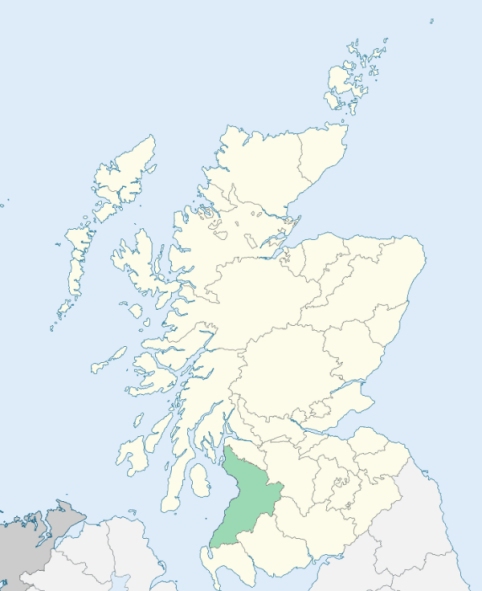
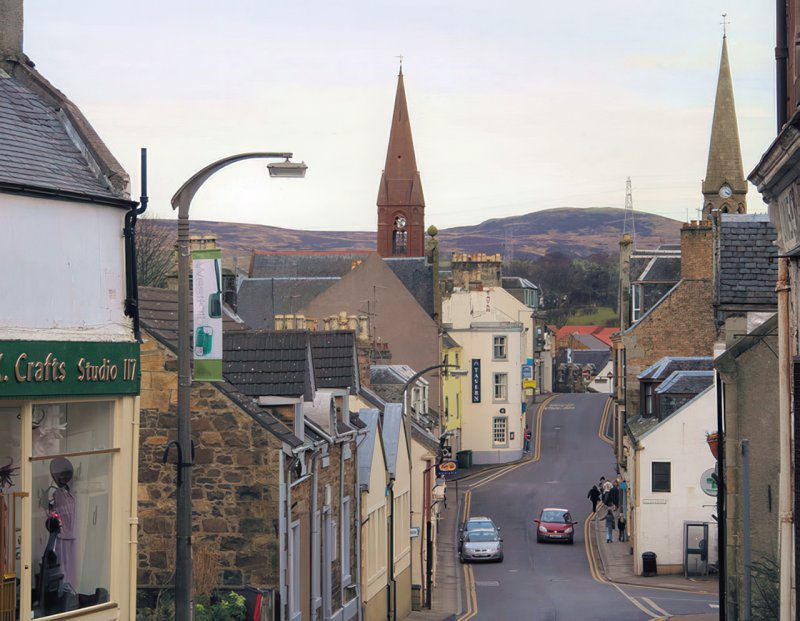
West Kilbride is a parish on the coast of the district of Cunningham, Ayrshire. It is bounded by Largs, Dalry, Ardrossan, and the Firth of Clyde. (1867: The Imperial Gazetteer of Scotland, by John Marius Wilson).
West Kilbride
Drummilling, Hunterston, Southannan
PRE-REFORMATION GOVERNANCE:
POST-REFORMATION GOVERNANCE:
St Bride's Parish Church here belonged to the Abbey of Kilwinning. A yearly tryst called Bridesday Fair was held at Kilbride on St Bride's Day, 1st February. Within the parish there were several chapels, St Inan's at Southannan, St Bey's on the island of Little Cumbrae, and another at Chapelton. The church of West Kilbride was rebuilt in 1873.
Disjoined Quoad Sacra Parishes:
Fairlie. A church was built in 1833. In 1835, a chapel constitution was granted, and a district assigned. The parish was disjoined from Largs and West Kilbride, 19 June 1876.
New Parish. A church was built here on a site granted by Archibald, Earl of Eglinton and Winton, and largely at his expense. The parish was disjoined from Ardrossan and West Kilbride, 5 March 1851.
Includes ministers, licentiates, assistants, readers, and clerks.
West Kilbride (QO)
Fairlie (QS)
New Parish (QS)
(1928: Fasti Ecclesiæ Scoticanæ, by Hew Scott, D. D.)
Parish registers turned over to the Registrar-General, as a result of the Registration of Births, Deaths, and Marriages (Scotland) Act of 1854. The letters B. D. and M. indicate Births (or Baptisms), Deaths (or Burials), and Marriages (or Proclamations of Banns) respectively. Numbers indicate separate volumes or books. Note: These records are by no means complete or without damage; consult the Detailed List of the Old Parochial Registers of Scotland (1872) to learn more about the condition of the records.
| OPR and RD Numbers | |||
|---|---|---|---|
| Date Range | Name | Number | Type |
| 1691-1854 | West Kilbride | 620 | OPR |
| 1855-1971 | West Kilbride | 620 | RD |
| 1972-2004 | West Kilbride | 661 | RD |
| 2005-2008 | West Kilbride, North Ayrshire | 661 | RD |
| 2009 | North Ayrshire, West Kilbride | 661 | RD |
| 2026 | North Ayrshire Council; West Kilbride Community Council | ||
(2009: Parishes and Registration Districts of Scotland - Old and New, National Records of Scotland)
Local community councils (2026) are provided as a potential source of additional information for settlements within the original boundaries of the parish. (Source)
Statistics from informal and official censuses
Barbour, Brown, Dickie, Hood, Kean, Lindsay, Marshall, Miller, Speirs, Wilson
Note: Names appearing in research materials, other than censuses. Simple names (First name, surname only) have been omitted unless they appear associated with large properties. All women's names, and men's names with occupations, military ranks, or peerage titles are included.
By the Reverend Mr Arthur Oughtersons.
"From a pretty accurate account lately taken of the number of inhabitants, it appears to amount to 698, young and old. There is not the smallest doubt that the population of this parish, was much greater about 50 years ago, than it is now. The many vestiges of demolished farmhouses to be seen in different places, and the reports of old men, afford sufficient proofs of depopulation.
The people here are particularly attentive to the raising of flax. The reason of this is, that considerable quantities of coarse linen are made every year, which is the only species of manufacture among them, cultivated to any extent. It employs the female hands during winter, and brings a considerable sum into the place. It is bleached and whitened at home, at a small expense. Nearly 7000 yards of cloth, of this coarse fabric, are manufactured yearly.
From a calculation made in the year 1782, it appears that upwards of 63 men were employed in the service of the Navy, or aboard trading vessels, and some of them were in every great action fought at sea, during the late war.
It may well be accounted a fortunate circumstance for the inhabitants of this place, that their sequestered situation has hitherto secured them from the encroaching influence of that corruption, which in other places of more business and resort, has produced so great a change in the morals of the people. They, on the contrary, have uniformly supported a character for industry, sobriety, and decent conduct. The oldest man living, does not recollect an instance of one convicted of a capital crime. Their festive meetings are conducted with much cheerfulness and rural gaiety, but without riot. Their punctuality in paying their debts, at two terms in the year, is now grown into local usage. They are uncommonly regular in their attendance upon public worship; and at church, exhibit a very decent appearance, from the neatness of their dress, and attention to the sacred service. In their behaviour, especially to their superiors, and to strangers, there is an affability and discretion, that distinguishes it remarkably from the morose and sullen rusticity of some of the more inland peasants."
(This section contains excerpts, at times restructured or paraphrased, from an article appearing in Statistical Account of Scotland, Sir John Sinclair, 1791-1799)
Primary Sources:
Statistical Account of Scotland (1791-1799), Volume 12, p. 404
New Statistical Account of Scotland (1834-1845), Volume 5, Section I, p. 243
See Parish Page Sources for all source information and links.