Invercullen
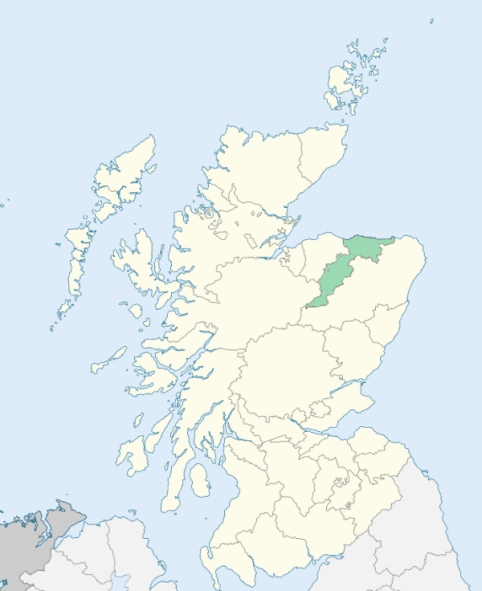
Cullen is a parish on the coast of Banffshire. It lies between the districts of Boyne and the Enzie, and consists of Cullen proper, with an annexation from the parish of Rathven. It is bounded on the north by Cullen Bay, on the east by Fordyce, on the south by Deskford, and on the west by Rathven. (1867: The Imperial Gazetteer of Scotland, by John Marius Wilson).
Cullen, Lintmill, Portknockie, Portlong, Seatown, Tochieneal
PRE-REFORMATION GOVERNANCE:
POST-REFORMATION GOVERNANCE:
In old times the church of Invercullen was dedicated to St Neachtan of Mortlach. It belonged to the Abbey of Lindores. There was in the parish a chapel of St Mary. In or about 1543 Alexander Ogilvie of Findlater and Deskford rebuilt part of this chapel and added much to it. He then endowed it as a collegiate church. Early in the seventeenth century this church of St Mary was made the parish church. It contained a chapel of St Anne. St Mary's Well is near the church, and Mary Fair was held in the town on the third Tuesday of September.
Includes ministers, licentiates, assistants, readers, and clerks.
(1928: Fasti Ecclesiæ Scoticanæ, by Hew Scott, D. D.)
Parish registers turned over to the Registrar-General, as a result of the Registration of Births, Deaths, and Marriages (Scotland) Act of 1854. The letters B. D. and M. indicate Births (or Baptisms), Deaths (or Burials), and Marriages (or Proclamations of Banns) respectively. Numbers indicate separate volumes or books. Note: These records are by no means complete or without damage; consult the Detailed List of the Old Parochial Registers of Scotland (1872) to learn more about the condition of the records.
| OPR and RD Numbers | |||
|---|---|---|---|
| Date Range | Name | Number | Type |
| 1640-1854 | Cullen | 150 | OPR |
| 1855-1855 | Cullen Burgh | 150-1 | RD |
| 1855-1855 | Cullen Landward | 150-2 | RD |
| 1856-1971 | Cullen | 150 | RD |
| 2009 | Moray, Buckie | 290 | RD |
| 2026 | Moray Council; Cullen and Deskford Community Council | ||
(2009: Parishes and Registration Districts of Scotland - Old and New, National Records of Scotland)
Local community councils (2026) are provided as a potential source of additional information for settlements within the original boundaries of the parish. (Source)
Statistics from informal and official censuses
Addison, Findlay, Gardiner, Grant, Hay, Ross, Sim, Smith, Thomson, Wilson
Note: Names appearing in research materials, other than censuses. Simple names (First name, surname only) have been omitted unless they appear associated with large properties. All women's names, and men's names with occupations, military ranks, or peerage titles are included.
By the Reverend Mr Robert Grant.
"By a list taken in 1791, the number of souls in the parish of Cullen, and the annexed part of the parish of Rathven, amounted to 1719. Of which, in the parish of Cullen 1214; of these, males 550, females 664. In the annexed part of Rathven 505; males 271, females 234. The bulk of the people are of the Established religion. Before the year 1782, there was not one Catholic in the parish, at present there are about 30, and 8 Episcopalians.
Before the year 1748, the inhabitants of Cullen were as poor and idle as any set of people in the north. There was no industry, trade, nor manufacture among them: their only employment was to labour a few acres of land, and to keep tippling houses; and often to drink with one another, to consume the beer for want of customers. The late Earl of Findlater, pitying the situation of the people, resolved to introduce the linen manufacture among them. In a few years, the manufacture was established to the extent desired. All the young people were engaged in the business; and even the old found employment in various ways by the manufactures: and thus a spirit of industry was diffused over the place and neighbourhood in a very short time, which soon appeared in their comfortable mode of living, and their dress.
The people, in general, are sober and industrious. They enjoy a reasonable share of the comforts of life, and seem strongly attached to the place of their abode. They have long been remarkable for their charitable disposition, not only to their poor neighbours, but also to strangers. They live peaceably with one another. In proof of this, although they have town-courts at their door, and the sheriff-court within 8 miles of them, there is hardly such a thing as a lawsuit heard of among them."
(This section contains excerpts, at times restructured or paraphrased, from an article appearing in Statistical Account of Scotland, Sir John Sinclair, 1791-1799)
Primary Sources:
Statistical Account of Scotland (1791-1799), Volume 12, p. 143
New Statistical Account of Scotland (1834-1845), Volume 13, Section I, p. 313
See Parish Page Sources for all source information and links.