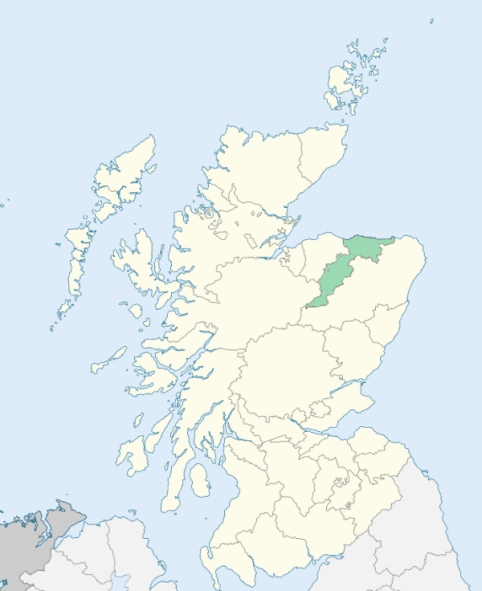
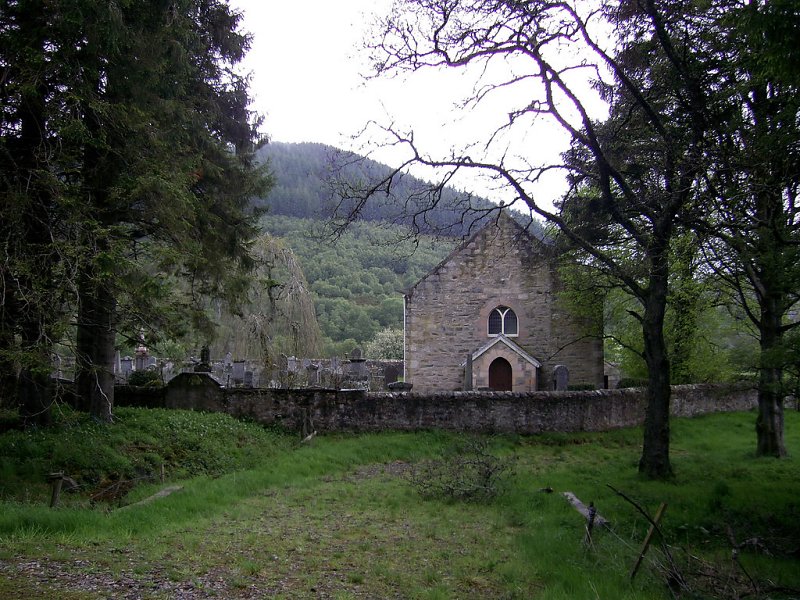
Kirkmichael is a parish in the southern extremity of Banffshire. It is bounded on the north by the parish of Inveraven, and on other sides by the counties of Aberdeen and Inverness. (1867: The Imperial Gazetteer of Scotland, by John Marius Wilson).
Delnabo, Easter Gaulrig, Gaulrig, Tomintoul, Wester Gaulrig
PRE-REFORMATION GOVERNANCE:
POST-REFORMATION GOVERNANCE:
The church of Kirkmichael was dedicated to St Michael the Archangel.
Includes ministers, licentiates, assistants, readers, and clerks.
(1928: Fasti Ecclesiæ Scoticanæ, by Hew Scott, D. D.)
Parish registers turned over to the Registrar-General, as a result of the Registration of Births, Deaths, and Marriages (Scotland) Act of 1854. The letters B. D. and M. indicate Births (or Baptisms), Deaths (or Burials), and Marriages (or Proclamations of Banns) respectively. Numbers indicate separate volumes or books. Note: These records are by no means complete or without damage; consult the Detailed List of the Old Parochial Registers of Scotland (1872) to learn more about the condition of the records.
| OPR and RD Numbers | |||
|---|---|---|---|
| Date Range | Name | Number | Type |
| 1725-1854 | Kirkmichael | 160 | OPR |
| 1855-1855 | Kirkmichael | 160 | RD |
| 1856-1967 | Kirkmichael | 160-1 | RD |
| 1856-1967 | Tomintoul | 160-2 | RD |
| 1968-1971 | Tomintoul | 160 | RD |
| 1972-2002 | Tomintoul | 298 | RD |
| 2009 | Moray, Keith | 295 | RD |
| 2026 | (Kirkmichael) Aberdeenshire Council; Banff and Macduff Community Council | ||
| 2026 | (Tomintoul) Moray Council; Glenlivet Community Council | ||
(2009: Parishes and Registration Districts of Scotland - Old and New, National Records of Scotland)
Local community councils (2026) are provided as a potential source of additional information for settlements within the original boundaries of the parish. (Source)
Statistics from informal and official censuses
Cameron, Coutts, Fraser, Gordon, Grant, Meldrum, Shaw, Smith, Stewart, Stuart
Note: Names appearing in research materials, other than censuses. Simple names (First name, surname only) have been omitted unless they appear associated with large properties. All women's names, and men's names with occupations, military ranks, or peerage titles are included.
By the Reverend Mr John Grant.
"By the most accurate inquiry, it has been found that this parish contains 1276 inhabitants, young and old, and of both sexes. Of these, 384 are Roman Catholics: all the individuals of each profession are included in 253 families, containing, at an average, 5 persons to a family, with 265 children under 8 years of age.
Tomintoul is the only village within the precincts of this parish. It is inhabited by 37 families, without a single manufacture, by which such a number of people might be supposed to be able to acquire a subsistence. No monopolies are established here; no restraints upon the industry of the community. All of them sell whisky, and all of them drink it. When disengaged from this business, the women spin yarn, kiss their inamoratos, or dance to the discordant sounds of an old fiddle. The men, when not participating in the amusements of the women, sell small articles of merchandise, or let themselves occasionally for days labour, and by these means earn a scanty subsistence for themselves and families. Here the Roman Catholic priest has got an elegant meeting-house, and the Protestant clergyman, the reverse of it; yet, to an expiring mode of worship, it would be illiberal to envy this transient superiority, in a country where a succession of ages has witnessed its absurdities. A school is stationed at this village, attended by 40 or 50 little recreants, all promising to be very like their parents."
(This section contains excerpts, at times restructured or paraphrased, from an article appearing in Statistical Account of Scotland, Sir John Sinclair, 1791-1799)
Primary Sources:
Statistical Account of Scotland (1791-1799), Volume 12, p. 425
New Statistical Account of Scotland (1834-1845), Volume 13, Section I, p. 296
See Parish Page Sources for all source information and links.