
Plaidwerx


Features: Scottish Parishes » Historic Shires » Caithness » Olrig

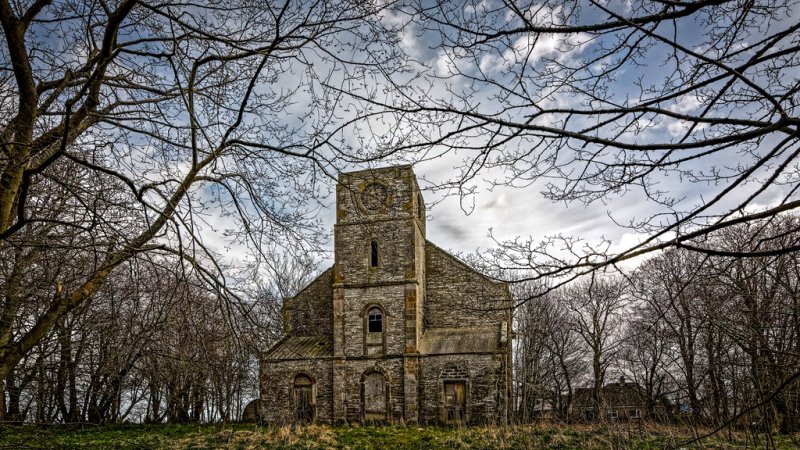
Abandoned Kirk in Castletown, Caithness by Peter Moore
Abandoned Kirk in Castletown, Caithness © 2016, Peter Moore

OLRIG PARISH

TABLE OF CONTENTS


ALTERNATE NAMES AND SPELLING:

Olrick


LOCATION

Location Description:

Olrig is a parish on the northern border of Caithness-shire. It is bounded on the north by Dunnet Bay, and on other sides by the parishes of Dunnet, Bower, and Thurso. (1867: The Imperial Gazetteer of Scotland, by John Marius Wilson).

Shire, District, and Region Timeline:

  • Shire: Caithness (Before 1707)
  • County: Caithness (After 1707)
  • District: Caithness (Before 1930)
  • Landward District: Central (1930-1975)
  • Region: Highland (1975-1996)
  • District: Caithness (1975-1996)

Cities, Towns, Villages, and Hamlets:

Castleton or Castletown, Coomskirk

Estates:

Murkle, Olrig, Ratter


PARISH TIMELINE

PRE-REFORMATION GOVERNANCE:

  • Diocese: Caithness

POST-REFORMATION GOVERNANCE:

  • Synod: Sutherland and Caithness
  • Presbytery: Caithness

PAROCHIAL OVERVIEW:

The church was dedicated to St Trothan. In the Cathedral of Dornoch there was a prebend of Olrig. At Coomskirk in this parish stood a chapel of St Columba.

CHURCH OF SCOTLAND CLERGY:

Includes ministers, licentiates, assistants, readers, and clerks.

  • Francis Wright, 1570
  • Alexander Urquhart, 1572
  • Thomas Keir, 1576
  • David Carmichael, 1585
  • John Hutcheson, 1588
  • Saul Bruce, 1599
  • David Bruce, 1625
  • David Allardyce, 1636
  • James Adam, 1656
  • William Campbell, 1661
  • Robert Tarres, 1668
  • William Mackbeth, 1699
  • David Dunbar, 1735
  • Alexander Smith, 1762
  • George Mackenzie, 1785
  • William Mackenzie (son of George, above), 1825
  • William Phin, 1843
  • Archibald Hamilton Gillieson, 1874
  • William Robertson, 1920
  • William M'Nutt, 1925

(1928: Fasti Ecclesiæ Scoticanæ, by Hew Scott, D. D.)


RECORDS

Parochial Registers:

Parish registers turned over to the Registrar-General, as a result of the Registration of Births, Deaths, and Marriages (Scotland) Act of 1854. The letters B. D. and M. indicate Births (or Baptisms), Deaths (or Burials), and Marriages (or Proclamations of Banns) respectively. Numbers indicate separate volumes or books. Note: These records are by no means complete or without damage; consult the Detailed List of the Old Parochial Registers of Scotland (1872) to learn more about the condition of the records.

  • (1) B. 1699-1819; M. 1699-1820
  • (2) B. and M. 1820-54

OPR and RD Numbers
Date RangeNameNumberType
1699-1854Olrig39OPR
1855-1967Olrig39RD
1968-1971Mey39RD
1972-2001Mey160RD
2002-2006Thurso, Strathy and Mey161RD
2009Highland; Thurso, Strathy and Mey161RD
2026(Olrig) Highland Council; Casteltown Community Council
2026(Mey) Highland Council; Dunnet and Canisbay Community Council

(2009: Parishes and Registration Districts of Scotland - Old and New, National Records of Scotland)

Local community councils (2026) are provided as a potential source of additional information for settlements within the original boundaries of the parish. (Source)

Population:

Statistics from informal and official censuses

  • 1755: 875
  • 1791: 1,001
  • 1821: 1,093
  • 1831: 1,146
  • 1841: 1,584
  • 1861: 2,059
  • 1881: 1,998
  • 1901: 1,555
  • 1911: 1,450

RESIDENTS


Common Surnames:

Angus, Cormack, Gunn, Manson, Miller, Murray, Ross, Sinclair, Sutherland, Swanson

Land-owners, teachers, and other professionals:

Note: Names appearing in research materials, other than censuses. Simple names (First name, surname only) have been omitted unless they appear associated with large properties. All women's names, and men's names with occupations, military ranks, or peerage titles are included.

  • George MILLER, Esq., of Swarclet
  • Alexander Campbell SINCLAIR, Earl of Caithness
  • Sir John Gordon SINCLAIR, Bart.
  • James SMITH, Esq., of Olrig
  • James TRAILL, Esq., of Ratter

Other residents:

By the Reverend Mr George Mackenzie.
"The inhabitants are, in general, a sober, civilized, industrious, honest people, and regular attendants on divine worship. Theft may be said to be unknown among them; a few, and but a few, from particular modes of living, are somewhat addicted to excess in drinking."
(This section contains excerpts, at times restructured or paraphrased, from an article appearing in Statistical Account of Scotland, Sir John Sinclair, 1791-1799)


NOTES:

Primary Sources:
Statistical Account of Scotland (1791-1799), Volume 12, p. 156
New Statistical Account of Scotland (1834-1845), Volume 15, Section II, p. 59

See Parish Page Sources for all source information and links.
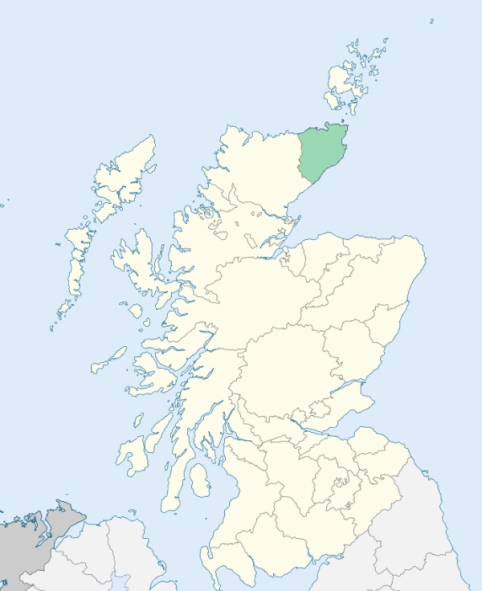

Photo credits: (Featured) Abandoned Kirk in Castletown, Caithness, © 2016 Peter Moore, used under Creative Commons License CC BY-SA 2.0, (Related Resources) Caithness Locator Map, © 2024, Elianfoo, used under Creative Commons License CC BY-SA 4.0.
Related Resources
Map of Scotland with Caithness highlighted
Location of Caithness
See more maps at Wikimedia Commons
Glossary
  • Burghs:
  • Royal - Towns on royal lands
  • Regality - Towns granted to noblemen/landowners
  • Barony - Towns granted to tenant-in-chief (laird)
  • Police - Towns with elected officials
  • Small - Population under 20,000
  • Large - Population over 20,000
  •  
  • Chapel-of-Ease: Small church for those living far from the main church
  • Collegiate church: See What is a Collegiate Church?
  • Commune kirk: Owned by a larger church
  • Court of Teinds: Controlled funds for support of clergy
  •  
  • Friars:
  • Black - Dominican
  • Grey - Franciscan
  • Red - Trinitarian
  • White - Carmelite
  •  
  • Iron chapel: Building made of corrugated galvanized iron
  •  
  • Landward District: Rural part of a district
  •  
  • Mensal: Source of income to support clergy member (Roman Catholic)
  •  
  • OPR: Old Parochial Register
  •  
  • Pre-Reformation: Before 1560
  • Prebend: Source of income to support a clergy member
  •  
  • QO: Quoad Omnia - Civil and church control
  • QS: Quoad Sacra - Church control only
  •  
  • RD: Registration District - Civil control
  •  
  • Tryst: Large-scale market or fair, particularly for livestock
  •