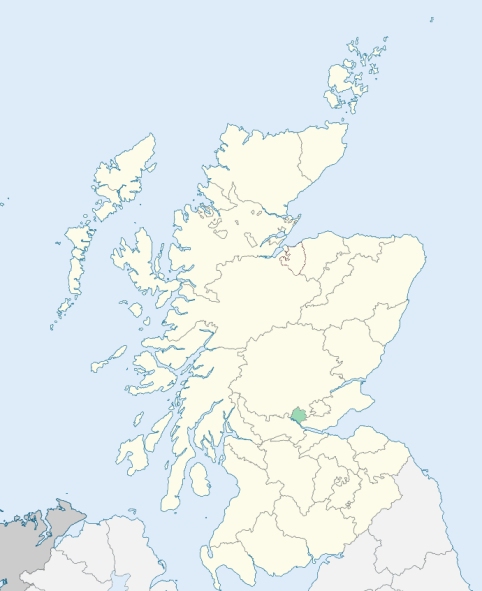
Clackmannan is a parish in Clackmannanshire. It is bounded on the west by the parish of Alloa; on the north by the River Devon, which divides it from Tillicoultry and Dollar, on the east by the detached district of Perthshire, and on the south by the upper part of the Firth of Forth, which divides it from Stirlingshire. (1867: The Imperial Gazetteer of Scotland, by John Marius Wilson).
Clackmannan, Craigrie, Fishcross, Forest Mill or Forrestmill, Kennet, Kennetpans, Linmill, Newtonshaw, Old Sauchie, Sauchie, Westfield
Aberdonan, Brucefield
The parish of Alloa has been altered in area:
(a) by the disjunction of the small portion of the parish formerly situated in the county of Perth; (b) by the addition of the detached part of the parish of Clackmannan situated at Sauchie; and (c) by the addition of the Blackgrange district of Logie. See affected properties and landholders. (1892: Boundary of counties and parishes in Scotland as settled by the Boundary Commissioners under the Local Government Act, 1889, by Hay Shennan)
PRE-REFORMATION GOVERNANCE:
POST-REFORMATION GOVERNANCE:
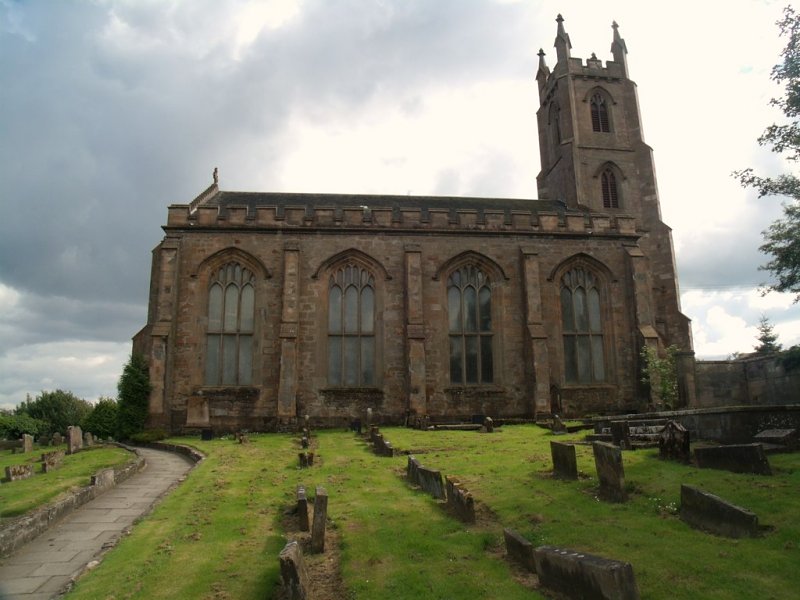
The church of Clackmannan was dedicated to St Serf. There were in this parish two chapels - St Bega's at Kilbagie, and St Bride's in the barony of Sauchie. There was also within the bounds a Well of St Mary. A fair of St Batholomew was held at Clackmannan.
Disjoined Quoad Sacra Parishes:
Sauchie. The parish of Sauchie was disjoined from Clackmannan and Alloa on 16 July 1877.
Includes ministers, licentiates, assistants, readers, and clerks.
Clackmannan (QO)
Sauchie (QS)
(1928: Fasti Ecclesiæ Scoticanæ, by Hew Scott, D. D.)
Parish registers turned over to the Registrar-General, as a result of the Registration of Births, Deaths, and Marriages (Scotland) Act of 1854. The letters B. D. and M. indicate Births (or Baptisms), Deaths (or Burials), and Marriages (or Proclamations of Banns) respectively. Numbers indicate separate volumes or books. Note: These records are by no means complete or without damage; consult the Detailed List of the Old Parochial Registers of Scotland (1872) to learn more about the condition of the records.
| OPR and RD Numbers | |||
|---|---|---|---|
| Date Range | Name | Number | Type |
| 1593-1854 | Clackmannan | 466 | OPR |
| 1855-1948 | Clackmannan | 466 | RD |
| 1949-1969 | Alloa and Clackmannan | 465a | RD |
| 2009 | Clackmannanshire | 460 | RD |
| 2026 | Clackmannanshire Council; Clackmannan Community Council | ||
(2009: Parishes and Registration Districts of Scotland - Old and New, National Records of Scotland)
Local community councils (2026) are provided as a potential source of additional information for settlements within the original boundaries of the parish. (Source)
Statistics from informal and official censuses
Allan, Ferguson, Forsyth, Fyfe, Hall, Harrower, Hunter, Mitchell, Paterson, Sharp
Note: Names appearing in research materials, other than censuses. Simple names (First name, surname only) have been omitted unless they appear associated with large properties. All women's names, and men's names with occupations, military ranks, or peerage titles are included.
By the Reverend Mr Robert Moore.
"In 1791 the number of souls was 2528, of whom 1205 were males, and 1323 were females. There were 633 souls under age 10. There are 170 men servants, 79 women servants, 51 farmers, 116 colliers, 4 bakers, 11 tailors, 12 shoemakers, 23 wrights, 10 masons, 15 smiths, 23 weavers, 7 butchers, 2 millers, 114 day labourers, 1 glazier, 2 distillers, 23 ale and whisky sellers, 10 carters, 10 gardeners, 2 coopers, 2 cadgers, 3 coal grieves, 6 miners, 7 sailors, and 12 grocers or shopkeepers.
The great diversity of ranks and employments in this parish, renders the character of the people equally diversified. In general, however, they are a sober, industrious, and religious people; though instances of great profligacy now and then occur. Many of the lower ranks are much addicted to the drinking of whisky; which is often the cause of much misery to their families. The great body of the farmers are a most intelligent and respectable class of men; many of them possessing sentiments and manners superior to their rank in life."
(This section contains excerpts, at times restructured or paraphrased, from an article appearing in Statistical Account of Scotland, Sir John Sinclair, 1791-1799)
Primary Sources:
Statistical Account of Scotland (1791-1799), Volume 14, p. 605
New Statistical Account of Scotland (1834-1845), Volume 8, Section III, p. 121
See Parish Page Sources for all source information and links.