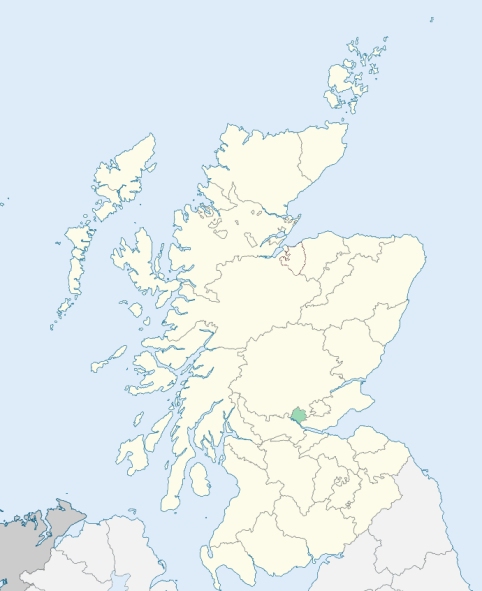
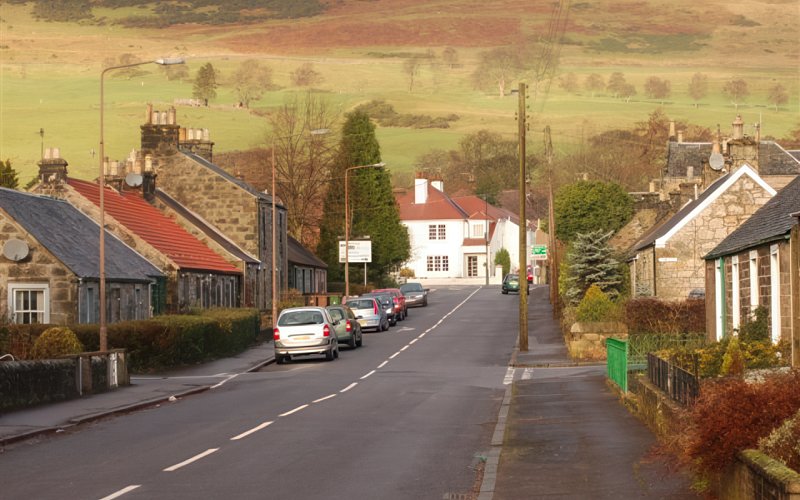
Dollar is a parish in Clackmannanshire. It is bounded by the parishes of Glendevon, Muckhart, Fossoway, Clackmannan, and Tillicoultry. (1867: The Imperial Gazetteer of Scotland, by John Marius Wilson).
Dollar, Gloomhill, New Town, Old Town, Sheardale
PRE-REFORMATION GOVERNANCE:
POST-REFORMATION GOVERNANCE:
The church of Dollar belonged to the Abbey of Inchcolm. In 1538 Thomas Forret, the vicar of this parish, was burned as a heretic.
Includes ministers, licentiates, assistants, readers, and clerks.
(1928: Fasti Ecclesiæ Scoticanæ, by Hew Scott, D. D.)
Parish registers turned over to the Registrar-General, as a result of the Registration of Births, Deaths, and Marriages (Scotland) Act of 1854. The letters B. D. and M. indicate Births (or Baptisms), Deaths (or Burials), and Marriages (or Proclamations of Banns) respectively. Numbers indicate separate volumes or books. Note: These records are by no means complete or without damage; consult the Detailed List of the Old Parochial Registers of Scotland (1872) to learn more about the condition of the records.
| OPR and RD Numbers | |||
|---|---|---|---|
| Date Range | Name | Number | Type |
| 1700-1854 | Dollar | 467 | OPR |
| 1855-1969 | Dollar | 467 | RD |
| 2009 | Clackmannanshire | 460 | RD |
| 2026 | Clackmannanshire Council; Dollar Community Council | ||
(2009: Parishes and Registration Districts of Scotland - Old and New, National Records of Scotland)
Local community councils (2026) are provided as a potential source of additional information for settlements within the original boundaries of the parish. (Source)
Statistics from informal and official censuses
Alexander, Anderson, Blackwood, Drysdale, Henderson, Hunter, Robertson, Scott, Smith, Stewart
Note: Names appearing in research materials, other than censuses. Simple names (First name, surname only) have been omitted unless they appear associated with large properties. All women's names, and men's names with occupations, military ranks, or peerage titles are included.
By the Reverend Mr John Watson, Minister.
"The number of souls in 1792 was 510. There were 51 families in the town, and 71 families in the country. Of Seceders, of all denominations, there were 17. There were 2 merchants, 18 miners, 4 musicians, 2 corn millers, 3 smiths, 2 masons, 2 wrights or joiners, 5 weavers, 4 tailors, 2 shoemakers, 2 dyers, 1 cooper, 1 baker, and 2 butchers. There were 2 keepers of public houses, 30 male servants, 29 female servants. There were 30 servants, chiefly men, employed at the bleach-field, in the heat of the season.
The people are sober, regular, and industrious in their different professions and employments; and live in peace and harmony with one another. The common employment of the women, except such as are engaged with farmers for husbandry work, is that of spinning wool for the manufacturers in Stirling, Bannockburn, &c. They all enjoy, in their respective stations, a reasonable share of the conveniences and comforts of life; and some seem well contented with the condition in which Providence has placed them. They are much of the ordinary size, and speak the English language tolerably well, without any remarkable provincial dialect."
(This section contains excerpts, at times restructured or paraphrased, from an article appearing in Statistical Account of Scotland, Sir John Sinclair, 1791-1799)
Primary Sources:
Statistical Account of Scotland (1791-1799), Volume 15, p. 144
New Statistical Account of Scotland (1834-1845), Volume 8, Section III, p. 76
See Parish Page Sources for all source information and links.