Canonby
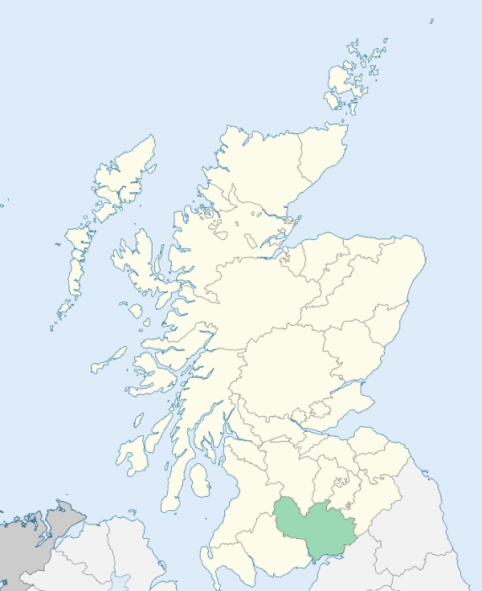
Canonbie is a parish on the eastern border of Dumfriesshire. It is bounded on the south by England, on the east by Roxburghshire, and on the other sides by the parishes of Ewes, Langholm, and Half-Morton. (1867: The Imperial Gazetteer of Scotland, by John Marius Wilson).
Bowholm, Brick-Kiln, Canonbie, Caulside, Claygate, Everton or Evertown, Hardenside, Hollow, Overton or Overtown, Priorhill, Rowan Burn or Rowanburn
PRE-REFORMATION GOVERNANCE:
POST-REFORMATION GOVERNANCE:
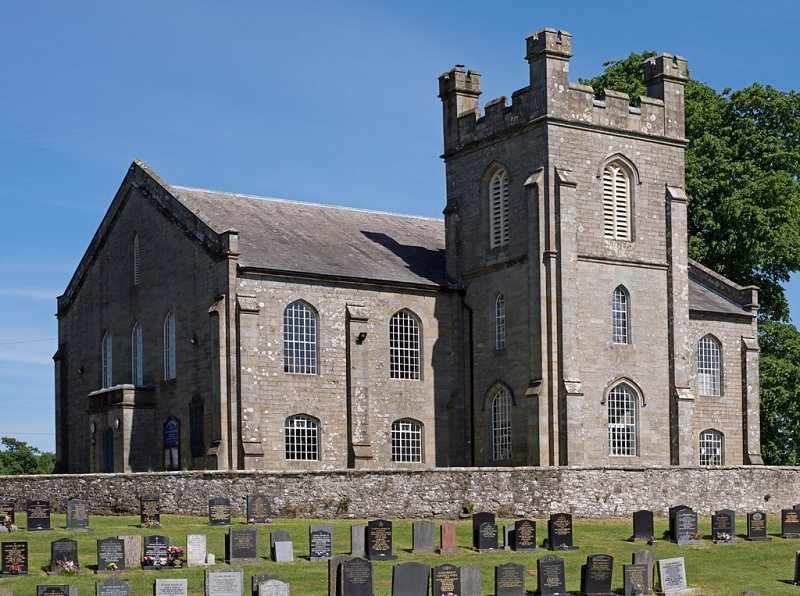
The church, commonly spoken of as the Kirk of Liddal, was dedicated to St Martin. It belonged to the Priory of Canonbie, and passed with it under the jurisdiction of the Abbey of Jedburgh. At Halgreen, or Hailygreen, in the parish, Turgot of Rossdall founded in 1150 a Priory of Canons Regular of St Augustine. This became known as the Canonbie, and gave its name to the parish. In 1542, after the battle of Solway Moss, the English troops destroyed the Priory of Canonbie. The parish of Wauchope was united by Parliament to Canonbie before 1609, but was soon disjoined again.
Includes ministers, licentiates, assistants, readers, and clerks.
(1928: Fasti Ecclesiæ Scoticanæ, by Hew Scott, D. D.)
Parish registers turned over to the Registrar-General, as a result of the Registration of Births, Deaths, and Marriages (Scotland) Act of 1854. The letters B. D. and M. indicate Births (or Baptisms), Deaths (or Burials), and Marriages (or Proclamations of Banns) respectively. Numbers indicate separate volumes or books. Note: These records are by no means complete or without damage; consult the Detailed List of the Old Parochial Registers of Scotland (1872) to learn more about the condition of the records.
| OPR and RD Numbers | |||
|---|---|---|---|
| Date Range | Name | Number | Type |
| 1693-1854 | Canonbie | 814 | OPR |
| 1855-1968 | Canonbie | 814 | RD |
| 2009 | Dumfries and Galloway, Langholm | 838 | RD |
| 2026 | Dumfries & Galloway Council; Canonbie and District Community Council | ||
(2009: Parishes and Registration Districts of Scotland - Old and New, National Records of Scotland)
Local community councils (2026) are provided as a potential source of additional information for settlements within the original boundaries of the parish. (Source)
Statistics from informal and official censuses
Armstrong, Beattie, Bell, Davidson, Elliot, Graham, Irving, Little, Murray, Wylie
Note: Names appearing in research materials, other than censuses. Simple names (First name, surname only) have been omitted unless they appear associated with large properties. All women's names, and men's names with occupations, military ranks, or peerage titles are included.
By the Reverend Mr John Russel.
"At present, in the beginning of 1794, the population is 2725. There are 20 widowers and 54 widows; bachelors, or such as live single in their own houses, do not exceed 6. Many have fixed their residence here, who are not natives; several of whom are from England. There are about 512 inhabited houses. None are uninhabited. There are between 30 and 40 Seceders, chiefly of the sect of Burghers; the rest adhere to the Established Church.
Of the inhabitants, 201 are enrolled upon his Grace's (the Duke of Buccleugh) rental-book as tenants, possessing land. The farms are generally small. The rest of the inhabitants that are come to maturity, consist of artificers, labourers, and work servants. The state of the first class is as follows, viz. 40 weavers, 1 stocking weaver, 14 masons, 16 wright, 8 blacksmiths, 10 tailors, 4 shoemakers, 6 coopers, 3 clog-makers, 1 wheel-wright, 4 bakers, 9 ale and spirt vendors, 4 shopkeepers, and 2 surgeons. There are 98 labourers including coal miners, 54 male servants, and 62 female servants. There are two collieries in Canonby; one at Archerbeck, the other at Byreburnfoot.
The tenantry, so far as is known to the writer, are industrious, sober, and decent, in all respects. The same may be said of the generality of the other class of inhabitants; although, it must be owned, there are exceptions, which it is apprehended, would still be fewer, if spirituous liquors were more rare; and perhaps also, if parents were more attentive in teaching their children the first lesson of obedience to themselves; for by preserving the curb of parental authority, the young would be in a great measure prevented from contracting habits of dissipation in the early part of life, which afterward are not easily eradicated.
The people are of the middle size, with a due proportion of bodily strength, capable of enduring hardships; sagacious, humane, and benevolent. Many are seriously disposed, and all for the most part regular in their attendance upon the public ordinances of religion."
(This section contains excerpts, at times restructured or paraphrased, from an article appearing in Statistical Account of Scotland, Sir John Sinclair, 1791-1799)
Primary Sources:
Statistical Account of Scotland (1791-1799), Volume 14, p. 407
New Statistical Account of Scotland (1834-1845), Volume 4, Section I, p. 483
See Parish Page Sources for all source information and links.