
Plaidwerx


Features: Scottish Parishes » Historic Shires » Edinburghshire » West Calder

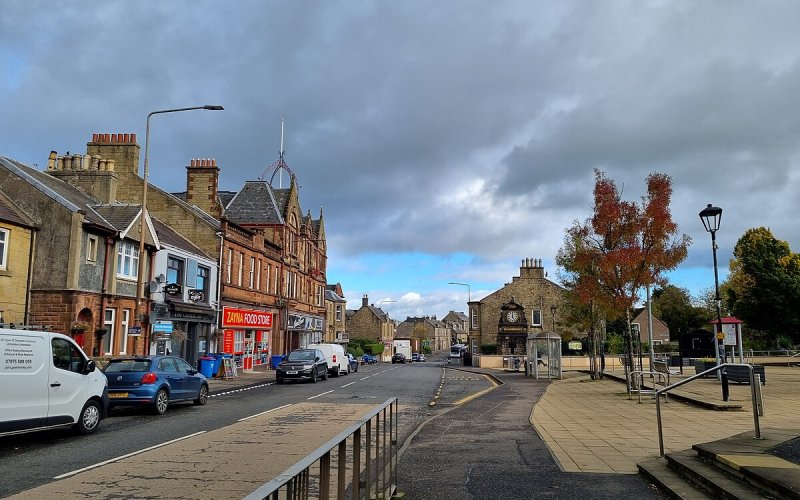
West Calder Union Square by Lord Harris
West Calder Union Square © 2021, Lord Harris

WEST CALDER PARISH

TABLE OF CONTENTS


ALTERNATE NAMES AND SPELLING:

Calder-Comitis


LOCATION

Location Description:

West Calder is a parish in the extreme west of Edinburghshire. It is bounded on the west and north-west by Linlithgowshire, on the north-east and east by the parish of Mid Calder, on the south-east by Peeblesshire, and on the south by Lanarkshire. (1867: The Imperial Gazetteer of Scotland, by John Marius Wilson).

Shire, District, and Region Timeline:

  • Shire: Edinburghshire (Before 1707)
  • County: Edinburgh (After 1707)
  • District: Edinburghshire (Before 1930)
  • County: Midlothian (1947)
  • Landward District: West Calder (1930-1975)
  • Region: Lothian (1975-1996)
  • District: West Lothian (1975-1996)

Cities, Towns, Villages, and Hamlets:

Addiewell, Cobinshaw, Gavieside, Hermand, Levenseat, Mossend, West Calder

Estates:

Harburn, Hartwood, Limefield


PARISH TIMELINE

PRE-REFORMATION GOVERNANCE:

  • Diocese: St Andrews
  • Deanery: Linlithgow

POST-REFORMATION GOVERNANCE:

  • Synod: Lothian and Tweeddale
  • Presbytery: Edinburgh

PAROCHIAL OVERVIEW:

Disjoined from Mid-Calder and erected in 1647. Disjoined from Presbytery of Linlithgow, and annexed to the Presbytery of Edinburgh, May 1884.

Disjoined Quoad Sacra Parishes:
Addiewell. A mission in connection with West Calder was started in 1871, the services being held in a hall. A church was opened 3 April 1886, and on 23 January 1893 Addiewell was erected into a parish quoad sacra.

CHURCH OF SCOTLAND CLERGY:

Includes ministers, licentiates, assistants, readers, and clerks.

West Calder (QO)

  • Patrick Shields (Shiells), 1645
  • John Somerville, 1668
  • John Knox, 1672
  • William Weir, 1672
  • George Robertson, 1675
  • John Lauder, 1689
  • John Anderson, 1692
  • James Anderson, 1707
  • Andrew Gloag, 1720
  • William Garvie, 1770
  • Alexander Wardrop, 1782
  • John Willison, 1785
  • John Mackersy (Muckersey), 1794
  • William Learmonth, 1835
  • John Davidson Grant, 1870
  • James Alexander Anderson, 1894

Addiewell (QS)

  • William Peter M'Laren, 1893
  • Thomas Henry Jones, 1894
  • William Low Jamie, 1898

(1928: Fasti Ecclesiæ Scoticanæ, by Hew Scott, D. D.)


RECORDS

Parochial Registers:

Parish registers turned over to the Registrar-General, as a result of the Registration of Births, Deaths, and Marriages (Scotland) Act of 1854. The letters B. D. and M. indicate Births (or Baptisms), Deaths (or Burials), and Marriages (or Proclamations of Banns) respectively. Numbers indicate separate volumes or books. Note: These records are by no means complete or without damage; consult the Detailed List of the Old Parochial Registers of Scotland (1872) to learn more about the condition of the records.

  • (1) B. 1645-1819; M. 1677-1817-1817; D. 1677-1819
  • (2) B. and M. 1820-54; D. 1818-54

OPR and RD Numbers
Date RangeNameNumberType
1645-1854West Calder701OPR
1855-1971West Calder701RD
1972-2008West Calder, West Lothian771RD
2009West Lothian, West Calder771RD
2026West Lothian Council;
Polbeth Community Council
West Calder and Harburn Community Council

(2009: Parishes and Registration Districts of Scotland - Old and New, National Records of Scotland)

Local community councils (2026) are provided as a potential source of additional information for settlements within the original boundaries of the parish. (Source)

Population:

Statistics from informal and official censuses

  • 1755: 1,294
  • 1801: 1,185
  • 1811: 1,435
  • 1821: 1,458
  • 1831: 1,617
  • 1841: 1,666
  • 1861: 1,927
  • 1901: 8,092
  • 1911: 7,716

RESIDENTS


Common Surnames:

Brown, Calder, Hamilton, Martin, Robertson, Smith, Thomson, Walker, Watson, Wilson

Land-owners, teachers, and other professionals:

Note: Names appearing in research materials, other than censuses. Simple names (First name, surname only) have been omitted unless they appear associated with large properties. All women's names, and men's names with occupations, military ranks, or peerage titles are included.

  • Thomas BALFOUR, Esq., of Woodmuir
  • James CARRUTHERS, Esq., of South Cabinshaw
  • James ELDER, Esq., of Bents
  • (Rev) Houston DOUGLAS, of Baads
  • Allan GIBSON, Esq., of Rashiehill
  • Thomas GLOAG, Esq., of Limefield
  • James GRAHAM, Esq., of Muldren
  • John GRAHAM, Esq., of Meadowhead
  • Thomas HARDIE, Esq., of Grant
  • Stewart B. HARE, Esq., of Handerwood
  • Sir Henry JARDINE, of Harwood
  • John KIDD, Esq., of North Cabenshaw
  • (Rev) James LOGAN, Esq., of Loganlee
  • James M'LEOD, Esq., of Polbeth
  • John David MARTIN, Esq. of Gaviside
  • John W. MOWBRAY, Esq., W. S., of Hartwood
  • James PATERSON, Esq., of East Torphin
  • John PENNY, Esq., of Birniehill
  • William John SMELLIE, Esq., of Addiewell
  • Andrew STEELE, Esq., of Crosswoodhill
  • Claud STORRIE, Esq., of Blackhill
  • John WEIR, Esq., of Woodmuir
  • Alexander YOUNG, Esq. W. S., of Harburn

Other residents:

By the Reverend Mr John Muckersie.
"There are in the parish 968 souls, comprised of 221 families. There are 389 males, 410 females, and 169 under 9 years old. Of Seceders there are 142 Antiburghers, 169 Burghers, 7 connected with the presbytery of Relief, and 3 Cameronians.

There are 65 farmers, 25 cottagers, 26 day-labourers, 1 innkeeper, 3 smiths, 2 coopers, 1 flax-dress, 7 wrights and masons, 8 weavers, 6 carriers, 7 shoemakers, 3 millers, and 4 tailors.

The inhabitants of this parish are much excluded from the commerce of the world, and nearly on the same level with regard to each other; their attention is directed to few objects, and hence they are simple and unaffected in their manners; which they possess a wonderful degree of sagacity and acuteness, in every thing connected with the circle of their pursuits. Altogether detached from the capital, they are unacquainted with its vices. Drunkenness, and debauchery of all sorts are scarcely known; and there are very few instances of men continuing unmarried, who have the means of supporting a family."
(This section contains excerpts, at times restructured or paraphrased, from an article appearing in Statistical Account of Scotland, Sir John Sinclair, 1791-1799)


NOTES:

Primary Sources:
Statistical Account of Scotland (1791-1799), Volume 18, p. 190
New Statistical Account of Scotland (1834-1845), Volume 1, p. 304

See Parish Page Sources for all source information and links.
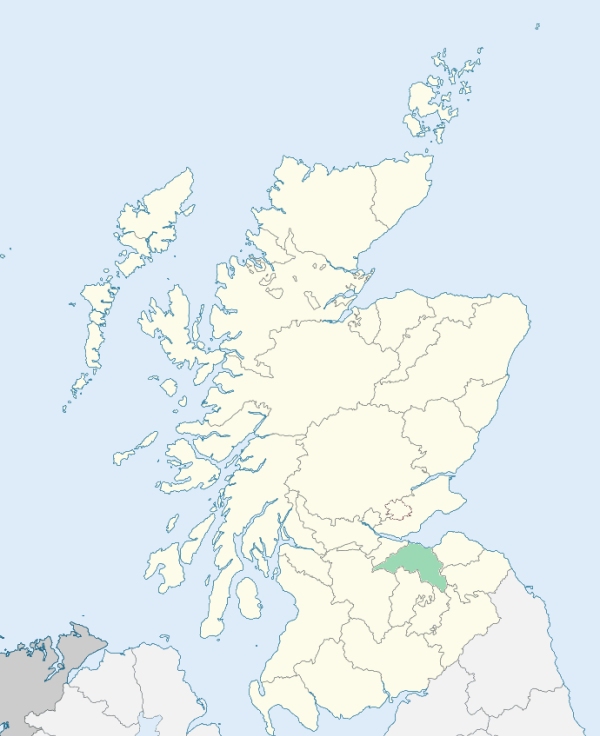

Photo credits: (Featured) West Calder Union Square, © 2022 Lord Harris, used under Creative Commons License CC BY-SA 4.0, (Related Resources) Edinburghshire Locator Map, © 2025, Elianfoo, used under Creative Commons License CC BY-SA 4.0.
Related Resources
Map of Scotland with Edinburghshire highlighted
Location of Edinburghshire
See more maps at Wikimedia Commons
Glossary
  • Burghs:
  • Royal - Towns on royal lands
  • Regality - Towns granted to noblemen/landowners
  • Barony - Towns granted to tenant-in-chief (laird)
  • Police - Towns with elected officials
  • Small - Population under 20,000
  • Large - Population over 20,000
  •  
  • Chapel-of-Ease: Small church for those living far from the main church
  • Collegiate church: See What is a Collegiate Church?
  • Commune kirk: Owned by a larger church
  • Court of Teinds: Controlled funds for support of clergy
  •  
  • Friars:
  • Black - Dominican
  • Grey - Franciscan
  • Red - Trinitarian
  • White - Carmelite
  •  
  • Iron chapel: Building made of corrugated galvanized iron
  •  
  • Landward District: Rural part of a district
  •  
  • Mensal: Source of income to support clergy member (Roman Catholic)
  •  
  • OPR: Old Parochial Register
  •  
  • Pre-Reformation: Before 1560
  • Prebend: Source of income to support a clergy member
  •  
  • QO: Quoad Omnia - Civil and church control
  • QS: Quoad Sacra - Church control only
  •  
  • RD: Registration District - Civil control
  •  
  • Tryst: Large-scale market or fair, particularly for livestock
  •