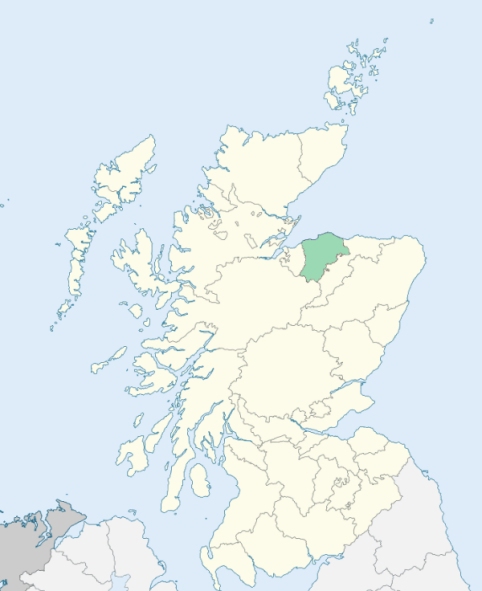
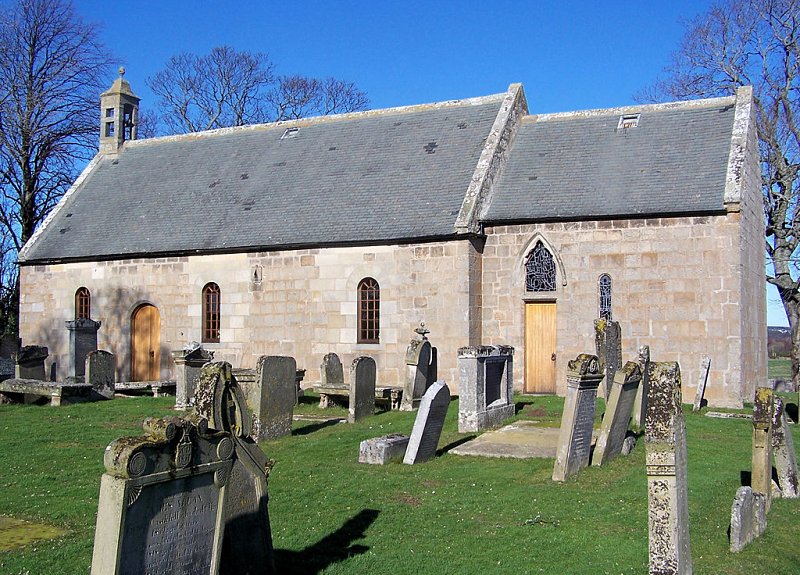
Birnie is a parish in Morayshire bounded on the west, north, and east, by the parish of Elgin, and on the south by Rothes and Dallas. (1867: The Imperial Gazetteer of Scotland, by John Marius Wilson).
Birnie, Glenlatterach, Thomshill
PRE-REFORMATION GOVERNANCE:
POST-REFORMATION GOVERNANCE:
Birnie was a commune kirk of the Cathedral of Elgin. It was dedicated to St Breandan. (1928: Fasti Ecclesiæ Scoticanæ, by Hew Scott, D. D.)
Includes ministers, licentiates, assistants, readers, and clerks.
(1928: Fasti Ecclesiæ Scoticanæ, by Hew Scott, D. D.)
Parish registers turned over to the Registrar-General, as a result of the Registration of Births, Deaths, and Marriages (Scotland) Act of 1854. The letters B. D. and M. indicate Births (or Baptisms), Deaths (or Burials), and Marriages (or Proclamations of Banns) respectively. Numbers indicate separate volumes or books. Note: These records are by no means complete or without damage; consult the Detailed List of the Old Parochial Registers of Scotland (1872) to learn more about the condition of the records.
| OPR and RD Numbers | |||
|---|---|---|---|
| Date Range | Name | Number | Type |
| 1712-1854 | Birnie | 127 | OPR |
| 1855-1954 | Birnie | 127 | RD |
| 2009 | Moray, Elgin | 280 | RD |
| 2026 | Moray Council; Heldon Community Council | ||
(2009: Parishes and Registration Districts of Scotland - Old and New, National Records of Scotland)
Local community councils (2026) are provided as a potential source of additional information for settlements within the original boundaries of the parish. (Source)
Statistics from informal and official censuses
Allan, Clark, Dean, Grant, Milton, Ross, Sim, Simpson, Smith, Taylor
Note: Names appearing in research materials, other than censuses. Simple names (First name, surname only) have been omitted unless they appear associated with large properties. All women's names, and men's names with occupations, military ranks, or peerage titles are included.
By the Reverend Mr Joseph Anderson.
"The number of souls in 1781 were 460; in 1791, 402. To explain the decrease, besides 24 persons who have emigrated to America, two farms are possessed by tenants who do not reside in the parish, for the purpose of pasture, where 4 tenants formerly lived. There are in the parish 85 inhabited houses, 128 married persons with 5 children average from each marriage; 8 weavers, 2 carpenters, 1 blacksmith, 6 shoemakers, 4 tailors, 1 miller, 2 day-labourers, 22 male farm servants, and 17 female farm servants. The farms in general being of small extent, are managed by the tenants themselves, and their children. They only need the assistance of reapers in harvest.
The people are industrious, temperate, and cheerful, though poor. Music is their favourite diversion. Some of them can play on the bagpipe, and others on the violin. Ferocious manners have given place to civilized. There has been no instance of suicide or murder during the last 26 years. Neither has any one been banished, or suffered capital punishment. They speak English, in the Scotch dialect."
(This section contains excerpts, at times restructured or paraphrased, from an article appearing in Statistical Account of Scotland, Sir John Sinclair, 1791-1799)
Primary Sources:
Statistical Account of Scotland (1791-1799), Volume 9, p. 155
New Statistical Account of Scotland (1834-1845), Volume 13, Section II, p. 82
See Parish Page Sources for all source information and links.