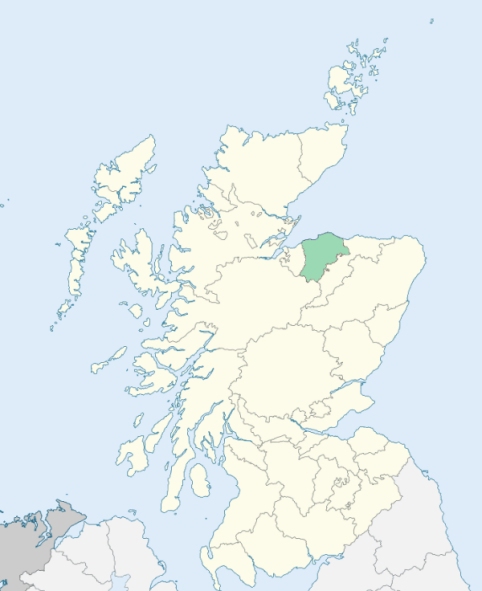
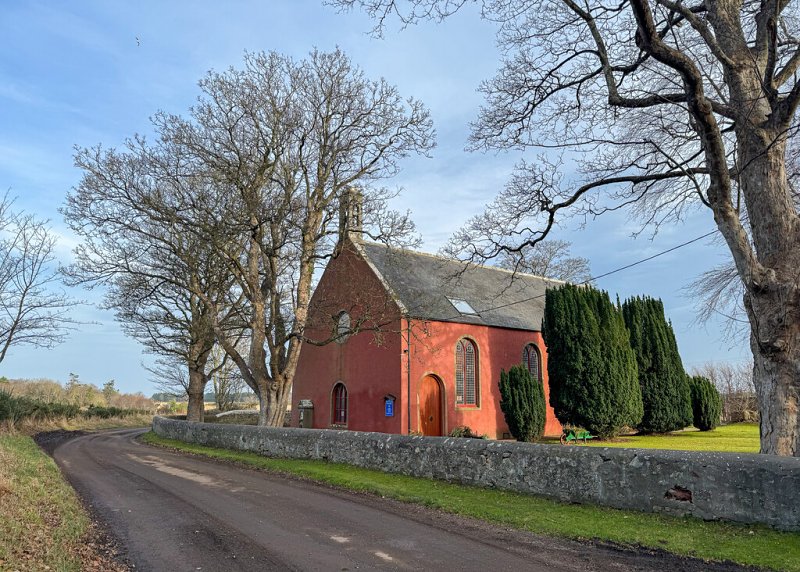
Speymouth is a parish at the north-east extremity of Morayshire. It is bounded on the north by the Moray Firth, on the east by the Spey, which divides it from Bellie, on the south by Rothes, and on the west by Urquhart. (1867: The Imperial Gazetteer of Scotland, by John Marius Wilson).
Garmouth, Kingston, Mosstodloch, Orbliston
PRE-REFORMATION GOVERNANCE:
POST-REFORMATION GOVERNANCE:
The parishes of Dipple and Essil were united on 14 July 1731.
Dipple. The church of Dipple was dedicated to the Holy Ghost. In 1732 the parish church was removed from Dipple to Speymouth. There is a mission chapel within the bounds at Orbliston.
Essil. The church of Essil was dedicated to St Peter. Near it was St Peter's Well. Essil was a prebend of the Cathedral of Elgin. At Garmouth, in this parish, there is a mission chapel.
(1928: Fasti Ecclesiæ Scoticanæ, by Hew Scott, D. D.)
Includes ministers, licentiates, assistants, readers, and clerks.
Speymouth, or Dipple (QO)
Essil (QO)
(1928: Fasti Ecclesiæ Scoticanæ, by Hew Scott, D. D.)
Parish registers turned over to the Registrar-General, as a result of the Registration of Births, Deaths, and Marriages (Scotland) Act of 1854. The letters B. D. and M. indicate Births (or Baptisms), Deaths (or Burials), and Marriages (or Proclamations of Banns) respectively. Numbers indicate separate volumes or books. Note: These records are by no means complete or without damage; consult the Detailed List of the Old Parochial Registers of Scotland (1872) to learn more about the condition of the records.
| OPR and RD Numbers | |||
|---|---|---|---|
| Date Range | Name | Number | Type |
| 1651-1854 | Speymouth | 143 | OPR |
| 1855-1967 | Speymouth | 143 | OPR |
| 1890-1966 | Garmouth | 144-2 | RD |
| 2009 | Moray, Elgin | 280 | RD |
| 2026 | Moray Council; Innes Community Council | ||
(2009: Parishes and Registration Districts of Scotland - Old and New, National Records of Scotland)
Local community councils (2026) are provided as a potential source of additional information for settlements within the original boundaries of the parish. (Source)
Statistics from informal and official censuses
Allan, Davidson, Milne, Roy, Russell, Shand, Simpson, Sutherland, Taylor, Williamson
Note: Names appearing in research materials, other than censuses. Simple names (First name, surname only) have been omitted unless they appear associated with large properties. All women's names, and men's names with occupations, military ranks, or peerage titles are included.
By the Reverend Mr James Gillan.
"The number of souls in this parish, according to an accurate list taken in 1792, is 1347. There are 655 males, 692 females. The number of houses inhabited is 310. There are in this parish at present 12 English and 2 Irishmen. There are 5 of the Episcopal persuasion; 40 Roman Catholics; all the rest are of the Established Church. There are 71 farmers, 8 weavers, 7 tailors, 5 blacksmiths, 3 coopers, 10 joiners, 32 ship carpenters and blockmakers, 20 sawyers, 8 saw millers, 3 corn millers, 30 seamen, 6 shopeepers, 45 salmon fishers, 8 ferrymen, 5 inn and ale-house keepers; and the rest are servants, cottagers, day-labourers, carriers, &c.
The people of this parish are, in general, honest, peaceable, and industrious; very charitable to the poor, and, in cases of distress, very much disposed to acts of humanity. They are generally rather above the middle size, active and hardy. Few go into the army. The greatest part apply themselves to husbandry, to the salmon fishing, or a seafaring life. The young men of the part of the parish next to the sea, and especially of the town of Garmouth, are much disposed to this last; and many of them go to sea, and become excellent seamen.
In this parish, most of the common tenants have as many sheep as supply wool for their own and their children's clothing. This is spun in their families, and manufactured and dyed in their neighbourhood. Almost all raise as much flax likewise as supplies their families with shirts, &c, which they spin also in their houses. The industry of the women in spinning is very commendable. In many families they make a little of woollen and linen cloth, especially the latter, for sale; and the poorer women spin a good deal of linen yarn for sale."
(This section contains excerpts, at times restructured or paraphrased, from an article appearing in Statistical Account of Scotland, Sir John Sinclair, 1791-1799)
Primary Sources:
Statistical Account of Scotland (1791-1799), Volume 15, p. 374
New Statistical Account of Scotland (1834-1845), Volume 13, Section II, p. 51
See Parish Page Sources for all source information and links.