Kerneth
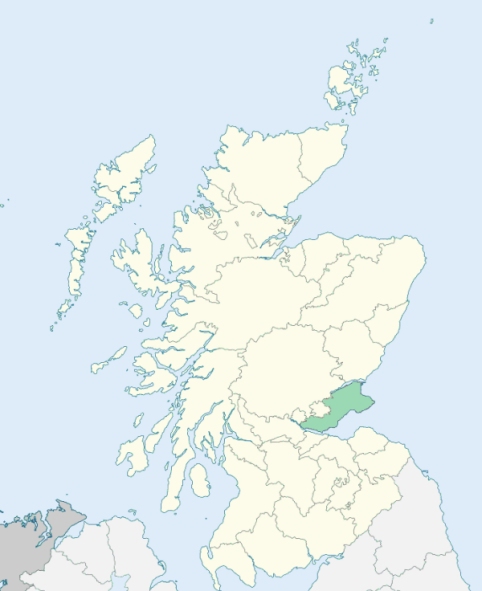
Carnock is a parish on the south-western border of Fife. It is bounded by the Culross district of Perthshire, and by the parishes of Saline, Dunfermline, and Torryburn. (1867: The Imperial Gazetteer of Scotland, by John Marius Wilson).
Balclune, Bonhard, Carnock, Cairneyhill or Cairniehill, Carnock, Easter Clune, Gowkhall
Blair, Clune
PRE-REFORMATION GOVERNANCE:
POST-REFORMATION GOVERNANCE:
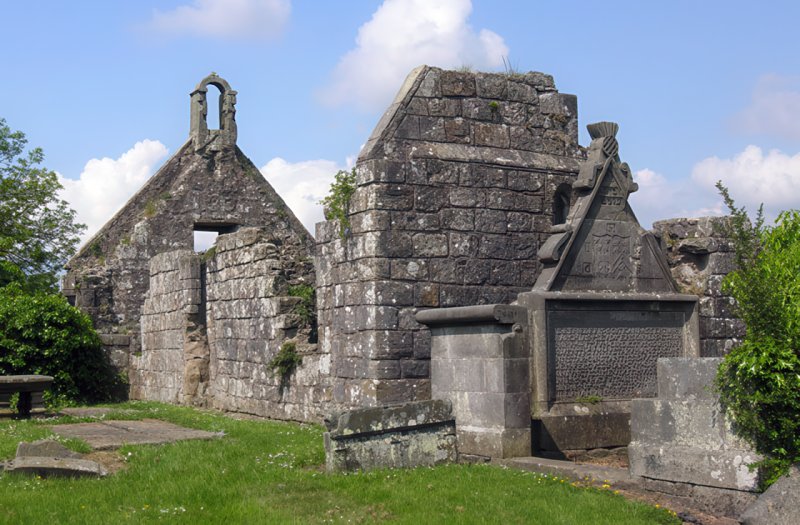
The church of Carnock belonged to the Ministry of the Red Friars at Scotlandwell. It is said that there was in this parish an early dedication to St Cearnach. (1928: Fasti Ecclesiæ Scoticanæ, by Hew Scott, D. D.)
Includes ministers, licentiates, assistants, readers, and clerks.
(1928: Fasti Ecclesiæ Scoticanæ, by Hew Scott, D. D.)
Parish registers turned over to the Registrar-General, as a result of the Registration of Births, Deaths, and Marriages (Scotland) Act of 1854. The letters B. D. and M. indicate Births (or Baptisms), Deaths (or Burials), and Marriages (or Proclamations of Banns) respectively. Numbers indicate separate volumes or books. Note: These records are by no means complete or without damage; consult the Detailed List of the Old Parochial Registers of Scotland (1872) to learn more about the condition of the records.
| OPR and RD Numbers | |||
|---|---|---|---|
| Date Range | Name | Number | Type |
| 1643-1854 | Carnock | 414 | OPR |
| 1855-1967 | Carnock | 414 | RD |
| 2009 | Fife, Dunfermline | 432 | RD |
| 2026 | Fife Council; Carnock and Gowkhall Community Council | ||
(2009: Parishes and Registration Districts of Scotland - Old and New, National Records of Scotland)
Local community councils (2026) are provided as a potential source of additional information for settlements within the original boundaries of the parish. (Source)
Statistics from informal and official censuses
Anderson, Bald, Erskine, Graham, Hodge, Hunter, Moodie, Robertson, Templeman, Wilson
Note: Names appearing in research materials, other than censuses. Simple names (First name, surname only) have been omitted unless they appear associated with large properties. All women's names, and men's names with occupations, military ranks, or peerage titles are included.
By the Reverend Mr Alexander Thomson.
"The number of souls in 1791 was 960. Members of the Established Church, including infants 489; dissenters of various denominations 481. There are 80 feuars in villages, 20 in the country. There are 35 master weavers with 35 journeymen and apprentices, 5 smiths, 4 masons, 6 wrights, 6 tailors, 2 mariners, 6 miners, 35 or 50 colliers, 61 male servants, 59 female servants, and 40 day-labourers.
The two principal villages are Carnock and Cairney-hill. The collieries are Blair Colliery, Merrylees Colliery, and Whinny-hill Colliery. There are about 10 small inns and ale-houses in the parish, viz. 4 in Carnock, 6 in Cairny-hill, and 1 in Blair.
The natives of this parish have nothing remarkable in their size or strength: neither are they discriminated from their countrymen by any peculiar qualities of the mind. Their size is generally between 5 and 6 feet. A laudable spirit of industry prevails much among the inferior classes. The men are mostly occupied in husbandry, and the women in spinning, sewing, knitting stockings, &c. There are very few who incline to go to sea, though some are engaged at the ports on the Firth. The natives are equally averse to the land service; not above 9 or 10 having enlisted in the army these many years; and of these, 2 or 3 only of late."
(This section contains excerpts, at times restructured or paraphrased, from an article appearing in Statistical Account of Scotland, Sir John Sinclair, 1791-1799)
Primary Sources:
Statistical Account of Scotland (1791-1799), Volume 11, p. 479
New Statistical Account of Scotland (1834-1845), Volume 9, Section I, p. 690
See Parish Page Sources for all source information and links.