Crelyn
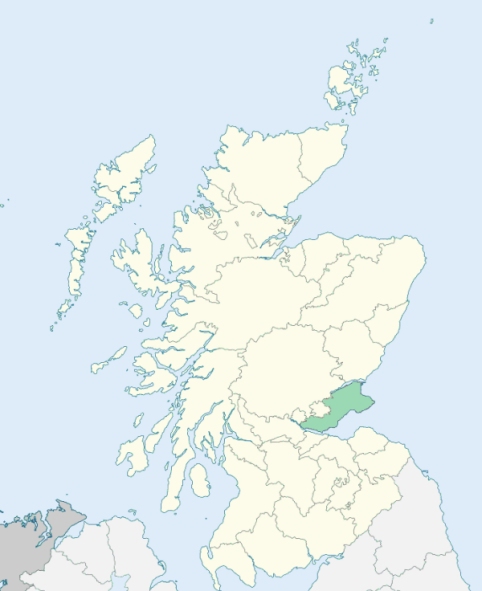
Crail is a parish in the south-east angle of Fife, commonly called 'the East Neuk o'Fife.' It is bounded on the north by Dunino and Kingsbarns, on the east by the North Sea, on the south by the North Sea and Kilrenny, and on the west by Kilrenny and Carnbee. (1867: The Imperial Gazetteer of Scotland, by John Marius Wilson).
Balcomie, Chance Inn, Craighead, Crail, Damside, Fife Ness, Grassmiston, Kirklands, Kirkmay, Lochton, Muirhead, Old Barns, Ragfield, Ribbonfield, Roseville, Smithfield, Spysies, Tapefield, Toldrie, Troustie, West Newhall
Airdrie, Kingsmuir, Wormistone House
(1) The parish of Dunino was represented on the Ordnance Survey maps as having a detached part lying to the south of the main portion of the parish, and surrounded by the parish of Crail. The authorities of the two parishes, however, concurred in stating that the parish boundary as recognised in practice lay to the south of that shown on the map, and really included within the parish of Dunino not only the part marked on the maps as detached, but also a considerable portion of what was shown as belonging to the parish of Crail. The following subjects were included in the area marked on the maps as belong to the parish of Crail, and now declared to form part of the parish of Dunino. See affected properties and landholders. (1892: Boundary of counties and parishes in Scotland as settled by the Boundary Commissioners under the Local Government Act, 1889, by Hay Shennan)
(2) The parish of Kingsbarns had a detached part consisting of the farms of Grassmiston and Randerston, which was separated from the main portion of the parish by an intervening strip of the parish of Crail. Kingsbarns had also a part very nearly detached consisting of the farm of Lochton. The farm of Randerston in the detached part is united with the main portion of Kingsbarns parish by annexing to that parish the intervening portion of Crail parish. In return the farms of Lochton and Grassmiston are transferred from Kingsbarns parish to Crail parish. See affected properties and landholders. (1892: Boundary of counties and parishes in Scotland as settled by the Boundary Commissioners under the Local Government Act, 1889, by Hay Shennan)
PRE-REFORMATION GOVERNANCE:
POST-REFORMATION GOVERNANCE:
In early times the church of Crail was dedicated to St Malrubh, but there was a later dedication to St Mary. The church belonged to the Cistercian Nunnery of Haddington. A collegiate foundation was given to this church in 1517. At Kilminning, in the parish, there was a chapel of St Monan. A Roodmas fair was held at Crail. (1928: Fasti Ecclesiæ Scoticanæ, by Hew Scott, D. D.)
Includes ministers, licentiates, assistants, readers, and clerks.
(1928: Fasti Ecclesiæ Scoticanæ, by Hew Scott, D. D.)
Parish registers turned over to the Registrar-General, as a result of the Registration of Births, Deaths, and Marriages (Scotland) Act of 1854. The letters B. D. and M. indicate Births (or Baptisms), Deaths (or Burials), and Marriages (or Proclamations of Banns) respectively. Numbers indicate separate volumes or books. Note: These records are by no means complete or without damage; consult the Detailed List of the Old Parochial Registers of Scotland (1872) to learn more about the condition of the records.
| OPR and RD Numbers | |||
|---|---|---|---|
| Date Range | Name | Number | Type |
| 1655-1854 | Crail | 417 | OPR |
| 1855-1855 | Crail Burgh | 417-1 | RD |
| 1855-1855 | Crail Landward | 417-2 | RD |
| 1856-1967 | Crail | 417 | RD |
| 2009 | Fife, East Neuk | 414 | RD |
| 2026 | Fife Council; Royal Burgh of Crail and District Community Council | ||
(2009: Parishes and Registration Districts of Scotland - Old and New, National Records of Scotland)
Local community councils (2026) are provided as a potential source of additional information for settlements within the original boundaries of the parish. (Source)
Statistics from informal and official censuses
Anderson, Brown, Christie, Duncan, Gay, Meldrum, Mitchell, Scott, Smith, Taylor
Note: Names appearing in research materials, other than censuses. Simple names (First name, surname only) have been omitted unless they appear associated with large properties. All women's names, and men's names with occupations, military ranks, or peerage titles are included.
By the Reverend Mr Andrew Bell.
"The population in 1790-91 was 1710 souls, of whom 728 were males and 972 were females. There were 335 families in the town, 73 in the country. Number of souls in the town 1301, in the country, 409. All the inhabitants are of the Established religion, except 8 Episcopalians, 3 Burger Seceders, and 3 Presbytery of Relief. The great excess of the females above the males, is occasioned by the young men going to sea, &c. while a great proportion of the girls remain at home with their parents.
In 1792 there were 5 smiths, 8 wrights with 7 journeymen and apprentices, 35 weavers with 21 journeymen and apprentices, 12 tailors with 1 journeyman, 18 shoemakers with 11 journeymen and apprentices, 3 coopers, and 7 bakers with 1 apprentice. Several of these tradesmen are not engaged in their respective trades. At present there is but 1 working cooper, though this trade was formerly very flourishing. In the country there are 2 smiths, 5 weavers, 1 shoemaker, 1 mason, and 1 miller. Besides these, there are in the town, 2 hairdressers and barbers, 1 butcher, 11 masons, 6 brewers who also retail ale and British spirits, 1 vintner, and 3 others who retail ale, porter, and spirits, 1 surgeon, 1 writer, 6 retail shopkeepers, and 1 miller.
Belonging to this port, there are 6 sloops, 1 brig, and 1 sloop upon the stocks. These vessels are navigated by 25 men. The number of sailors belonging to the town, but sailing from other ports, is very fluctuating. During the late French and American war, 72 men from the town and parish of Crail, entered on board his Majesty's fleet; a small proportion returned home.
Of the character of his people, a minister ought to speak with caution in a publication of this kind. To record their vices would argue imprudence, as tending rather to irritate than to reform. To trumpet forth their praise would favour of adulation. In no material feature of their character do the people here differ from their neighbours. The credulity of former times with respect to witches is almost extinguished, and the little superstitious fancies, which so frequently prevail among the commonality, are gradually losing ground. If they are not remarkable for sobriety and industry, neither do they deserve to be stigmatized as dissipated and idle. The ordinances of religion are respected, a tolerable decorum of manners is observed; as subjects they are peaceable and loyal."
(This section contains excerpts, at times restructured or paraphrased, from an article appearing in Statistical Account of Scotland, Sir John Sinclair, 1791-1799)
Primary Sources:
Statistical Account of Scotland (1791-1799), Volume 9, p. 439
New Statistical Account of Scotland (1834-1845), Volume 9, Section I, p. 941
See Parish Page Sources for all source information and links.