Fettykil, Fithkill, Leslie in Fife
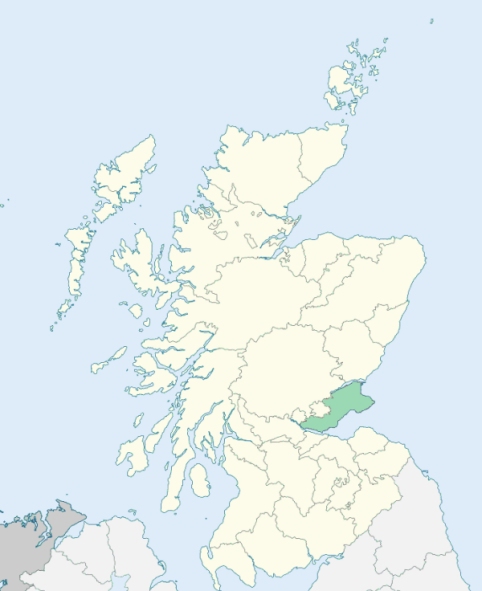
Leslie is a parish at the middle of the western border of Fife. It is bounded by the county of Kinross, and by the parishes of Falkland, Markinch, and Kinglassie. (1867: The Imperial Gazetteer of Scotland, by John Marius Wilson).
Collydean, Formonthills, Leslie, Pitcoudie, Scoonieburn
PRE-REFORMATION GOVERNANCE:
POST-REFORMATION GOVERNANCE:
The church of Fettykil was dedicated to St Mary. It belonged to the Abbey of Inchcolm. A Michaelmas fair was held at Leslie.
Disjoined Quoad Sacra Parishes:
Prinlaws. The parish was disjoined from Leslie and erected 16 November 1891.
(1928: Fasti Ecclesiæ Scoticanæ, by Hew Scott, D. D.)
Includes ministers, licentiates, assistants, readers, and clerks.
Leslie (QO)
Prinlaws (QS)
(1928: Fasti Ecclesiæ Scoticanæ, by Hew Scott, D. D.)
Parish registers turned over to the Registrar-General, as a result of the Registration of Births, Deaths, and Marriages (Scotland) Act of 1854. The letters B. D. and M. indicate Births (or Baptisms), Deaths (or Burials), and Marriages (or Proclamations of Banns) respectively. Numbers indicate separate volumes or books. Note: These records are by no means complete or without damage; consult the Detailed List of the Old Parochial Registers of Scotland (1872) to learn more about the condition of the records.
| OPR and RD Numbers | |||
|---|---|---|---|
| Date Range | Name | Number | Type |
| 1673-1854 | Leslie | 444 | OPR |
| 1855-1967 | Leslie | 444 | RD |
| 2009 | Fife, Glenrothes | 420 | RD |
| 2026 | Fife Council; Leslie Community Council | ||
(2009: Parishes and Registration Districts of Scotland - Old and New, National Records of Scotland)
Local community councils (2026) are provided as a potential source of additional information for settlements within the original boundaries of the parish. (Source)
Statistics from informal and official censuses
Barclay, Dewar, Duncan, Farmer, Galloway, Henderson, Kirk, Michie, Robertson, Wilson
Note: Names appearing in research materials, other than censuses. Simple names (First name, surname only) have been omitted unless they appear associated with large properties. All women's names, and men's names with occupations, military ranks, or peerage titles are included.
By the Reverend Mr George Willis.
"In 1785 there were 1212 inhabitants in the parish. In the town 344 were males and 462 were females, total in the town 806. In the country 211 were males and 195 were females, total in the country 406. There were 129 houses in the town of Leslie; 84 houses in the country. Since 1785, the population has not materially altered.
In the town of Leslie the weavers are the most numerous set of handicraftsmen, no other class of mechanics bearing any proportion to them. Their principal employment is weaving plain linen and cotton checks. The chief employment of the women is spinning lint and tow.
Since 1759, no person in this parish hath perished by hunger, nakedness, or want of lodging; nor have any taken to begging. There are 6 houses where ale is sold; but not one person or family is supported by the profits of a public-house, all having some other employment.
There is not, in Britain, a parish of the same extent, in which the people are more sober, honest, and industrious, nor among whom there have been fewer gross crimes committed, than that of Leslie. Their manner of living is greatly altered: a remarkable instance of which is, that for several years after 1760, the present incumbent got all his wheaten bread from Edinburgh, and afterwards from Dysart, rolls only being baked at Leslie; whereas now there are 3 bakers in this town alone. Their clothing and furniture are also much better than formerly. In the church of Leslie no person is ever seen in rags. The young men wear coats of English cloth, fancy vests, &c. and the young women, printed and white cottons, silk cloaks and bonnet, &c. About 30 years ago, when the present incumbent was settled, there was not 6 clocks in the parish, and now there is not a house in Leslie where there is not either a clock or watch."
(This section contains excerpts, at times restructured or paraphrased, from an article appearing in Statistical Account of Scotland, Sir John Sinclair, 1791-1799)
Primary Sources:
Statistical Account of Scotland (1791-1799), Volume 6, p. 41
New Statistical Account of Scotland (1834-1845), Volume 9, Section I, p. 111
See Parish Page Sources for all source information and links.