Cupar-Angus
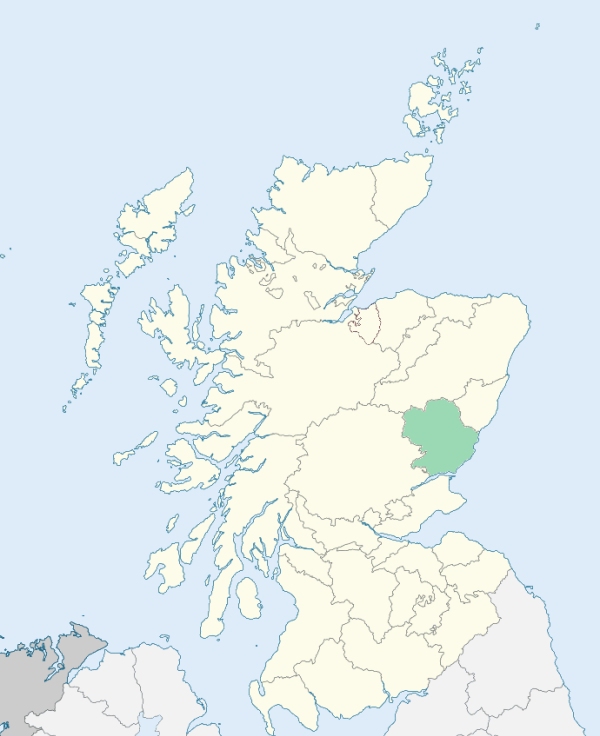
Coupar-Angus is a parish, partly in Forfarshire, but chiefly in Perthshire. It lies in the centre of Strathmore. (1867: The Imperial Gazetteer of Scotland, by John Marius Wilson).
Ardler, Arthurstone, Balbrogie, Caddam, Coupar-Angus, Kinloch, Princeland, Washington
Keithick
Whereas each of the parishes of Alyth, Coupar-Angus, and Liff, Benvie and Invergowrie is situated partly in the county of Forfar and partly in the county of Perth:
I. So much of the parish of Alyth as is situated in the county of Forfar, shall cease to be part of that county and shall form part of the county of Perth.
II. So much of the parish of Coupar-Angus as is situated in the county of Forfar shall cease to be part of that county, and shall form part of the county of Perth.
III. So much of the parish of Liff, Benvie and Invergowrie as is situated in the county of Perth shall cease to be part of that county, and shall form part of the county of Forfar.
IV. The parish of Fowlis Easter shall cease to be part of the county of Perth and shall form part of the county of Forfar.
V. The parish of Fowlis Easter shall form part of the Dundee district of the county of Forfar for the purposes of the Acts regulating the licensing of public-houses in Scotland.
See affected properties and landholders. (1892: Boundary of counties and parishes in Scotland as settled by the Boundary Commissioners under the Local Government Act, 1889, by Hay Shennan)
PRE-REFORMATION GOVERNANCE:
POST-REFORMATION GOVERNANCE:
The church of Coupar in Angus formed a prebend belonging to the Archdeacon of Dunkeld. In this parish stood St Mary's Cistercian Abbey of Coupar, founded in 1164 by King Malcolm IV. In the gateway of the Abbey there was a chapel of St Katherine. A fair was held at Coupar-Angus on the Thursday in Holy Week.
Disjoined Quoad Sacra Parishes:
Ardler. The parish of Ardler was disjoined from Coupar-Angus on 1 June 1885.
(1928: Fasti Ecclesiæ Scoticanæ, by Hew Scott, D. D.)
Includes ministers, licentiates, assistants, readers, and clerks.
Coupar Angus (QO)
Ardler (QS)
(1928: Fasti Ecclesiæ Scoticanæ, by Hew Scott, D. D.)
Parish registers turned over to the Registrar-General, as a result of the Registration of Births, Deaths, and Marriages (Scotland) Act of 1854. The letters B. D. and M. indicate Births (or Baptisms), Deaths (or Burials), and Marriages (or Proclamations of Banns) respectively. Numbers indicate separate volumes or books. Note: These records are by no means complete or without damage; consult the Detailed List of the Old Parochial Registers of Scotland (1872) to learn more about the condition of the records.
| OPR and RD Numbers | |||
|---|---|---|---|
| Date Range | Name | Number | Type |
| 1682-1854 | Coupar Angus | 279 | OPR |
| 1855-1892 | Coupar Angus | 279 | RD |
| 1893-1968 | Coupar Angus | 341b | RD |
| 1969-1971 | Coupar Angus | 341 | RD |
| 1972-2003 | Coupar Angus | 389 | RD |
| 2009 | Perth and Kinross, Coupar Angus | 389 | RD |
| 2026 | Perth and Kinross Council; Coupar Angus and Bendochy Community Council | ||
(2009: Parishes and Registration Districts of Scotland - Old and New, National Records of Scotland)
Local community councils (2026) are provided as a potential source of additional information for settlements within the original boundaries of the parish. (Source)
Statistics from informal and official censuses
Anderson, Baxter, Duncan, Reid, Robertson, Small, Smith, Stewart, Watson, Wilson
Note: Names appearing in research materials, other than censuses. Simple names (First name, surname only) have been omitted unless they appear associated with large properties. All women's names, and men's names with occupations, military ranks, or peerage titles are included.
By Mr John Ritchie, Student in Divinity at Markinch.
"The population in 1793 was 2076 of whom 999 were males, and 1082 were females. In the town of Coupar there were 1604 total, of whom 753 were males and 851 females. In the country were 246 males and 231 females, 477 total. There were 520 families in Coupar, 188 families in the country, of whom 5 families were Epicopalians, and 3 of Roman Catholics.
There were 3 barbers, 101 weavers, 2 saddlers, 8 smiths, 20 wrights, 57 day-labourers, 3 coopers, 3 watchmakers, 22 tailors, 1 plasterer, 2 drovers, 5 teachers, 3 midwives, 3 surgeons, 15 master shoemakers, 15 shoemakers journeymen and apprentices, 2 stocking-makers, 3 gardeners, 3 fiddlers, 11 flax-dressers, 7 milliners and sempstresses, 7 bakers, 9 butchers, 9 brewers, 5 wheel-wrights, 2 dyers, 43 farmers, 23 masons, 2 slaters, 25 merchants, 3 excise officers, and 45 public house-keepers.
Next to Coupar, the greatest villages are Balbrogie, Wellton, and Cadam, and the number of families in the largest of these does not exceed 35.
The inhabitants of this district are sober, frugal, and industrious. They are hospitable and obliging to strangers, and charitable to the poor. In their dealings they are open, unsuspecting, and sincere. Their stature is of the middle size, few exceeding 6 feet high; and their general appearance indicates strength and vigour. Their hair is generally of a darkish hue, though some are to be seen with yellow or flaxen locks. In the article of dress, expence and finery are much more studied than formerly."
(This section contains excerpts, at times restructured or paraphrased, from an article appearing in Statistical Account of Scotland, Sir John Sinclair, 1791-1799)
Primary Sources:
Statistical Account of Scotland (1791-1799), Volume 17, p. 1
New Statistical Account of Scotland (1834-1845), Volume 11, Section I, p. 1141
See Parish Page Sources for all source information and links.