Caterline (Catterline)
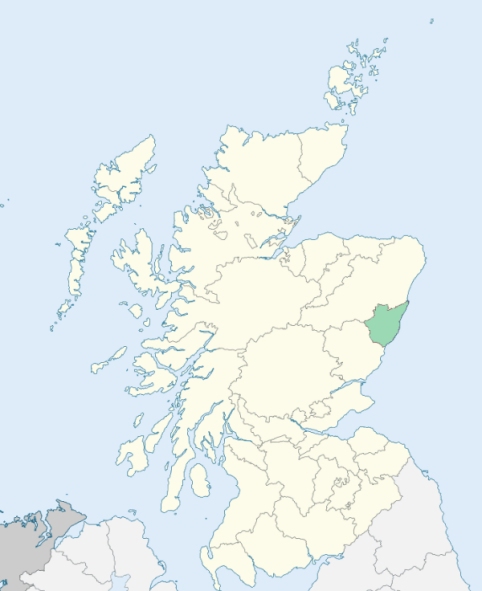
Kinneff and Catterline is a united parish on the coast of Kincardineshire. It is bounded by the German Ocean (North Sea), and by the parishes of Bervie, Arbuthnot, Glenbervie, and Dunnottar. (1867: The Imperial Gazetteer of Scotland, by John Marius Wilson).
Caterline or Catterline, Kinneff
Falside
PRE-REFORMATION GOVERNANCE:
POST-REFORMATION GOVERNANCE:
The parishes of Kinneff and Caterline were united on 7 January 1719.
Kinneff. The church of Kinneff was dedicated to St Adamnan. At Barras, in this parish, stood a chapel of St John. There was also within the bounds a Well of St Mungo.
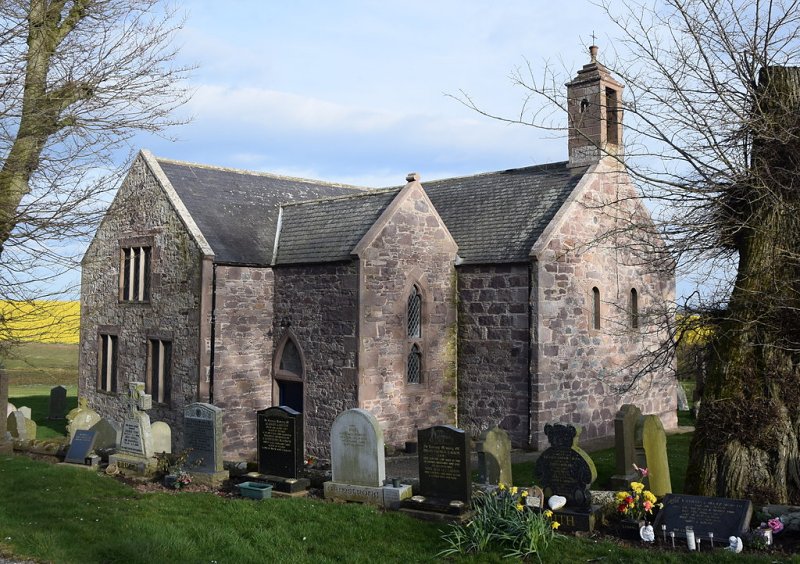
Caterline. The church of Caterline was dedicated to St Katherine. It belonged to the Abbey of Arbroath.
Includes ministers, licentiates, assistants, readers, and clerks.
Kinneff (QO)
Caterline (QO)
(1928: Fasti Ecclesiæ Scoticanæ, by Hew Scott, D. D.)
Parish registers turned over to the Registrar-General, as a result of the Registration of Births, Deaths, and Marriages (Scotland) Act of 1854. The letters B. D. and M. indicate Births (or Baptisms), Deaths (or Burials), and Marriages (or Proclamations of Banns) respectively. Numbers indicate separate volumes or books. Note: These records are by no means complete or without damage; consult the Detailed List of the Old Parochial Registers of Scotland (1872) to learn more about the condition of the records.
| OPR and RD Numbers | |||
|---|---|---|---|
| Date Range | Name | Number | Type |
| 1616-1854 | Kinneff and Catterline | 262 | OPR |
| 1855-1967 | Kinneff and Catterline | 262 | RD |
| 2009 | Aberdeenshire, Stonehaven and East Kincardine | 342 | RD |
| 2026 | Aberdeenshire Council; Catterline, Kinneff and Dunnottar Community Council | ||
(2009: Parishes and Registration Districts of Scotland - Old and New, National Records of Scotland)
Local community councils (2026) are provided as a potential source of additional information for settlements within the original boundaries of the parish. (Source)
Statistics from informal and official censuses
Clark, Davidson, Mason, Murray, Scott, Smith, Stephen, Taylor, Watt, Wilson
Note: Names appearing in research materials, other than censuses. Simple names (First name, surname only) have been omitted unless they appear associated with large properties. All women's names, and men's names with occupations, military ranks, or peerage titles are included.
By the Reverend Mr Patrick Stewart.
"By a very accurate visitation roll lately taken up, the population contains about 1000 souls. There is neither town nor village, nor 6 families dwelling together, in all the parish. The number of farmers is about 35, whereof 12 possess pretty extensive farms. There are also about 150 families, or houses, where families live. The number of white-fishers, both old and young, in the sea-towns, is about 18.
There are as many house carpenters, joiners, tailors, and other artificers, as are needful for the ordinary supply of the parish. There are also about 20 weavers, who are principally employed in the manufacturing of sacking and ticking, which are the ordinary clothes made for sale in this parish. All the inhabitants are of the Established church, except 2 men and 4 women Scotch Episcopals, and one man and his wife of the English church.
As this part of the coast lies at some distance from any station of excise or custom-house officers, it has been long famous, or rather infamous, for smuggling. By this the morals of the people are considerably hurt, as they often meet with temptations to drunkenness, theft, and perjury, in the course of that business. This illicit trade has, however, has considerably declined on this coast of late."
(This section contains excerpts, at times restructured or paraphrased, from an article appearing in Statistical Account of Scotland, Sir John Sinclair, 1791-1799)
Primary Sources:
Statistical Account of Scotland (1791-1799), Volume 6, p. 197
New Statistical Account of Scotland (1834-1845), Volume 11, Section II, p. 309
See Parish Page Sources for all source information and links.