Invernairn
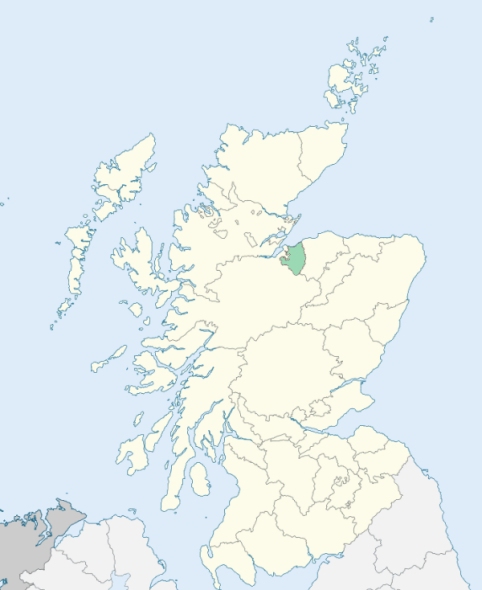
Nairn is a parish on the coast of Nairnshire. It is bounded on the north by the Moray Firth, and on other sides by the parishes of Auldearn, Cawdor, and Ardersier. (1867: The Imperial Gazetteer of Scotland, by John Marius Wilson).
Achareidh, Burnside of Torrich, Clanside, Croy, Delnies or Seatown of Delnies, Fishertown, Househill, Howford, Mosside or Moss-Side, Nairn, Raitcastle
Firhall, Househill, Ivybank
PRE-REFORMATION GOVERNANCE:
POST-REFORMATION GOVERNANCE:
The church of Invernairn was dedicated to St Nairn and near it was St Ninian's Well. At Geddes, in the parish, there was a chapel of St Mary.
Includes ministers, licentiates, assistants, readers, and clerks.
(1928: Fasti Ecclesiæ Scoticanæ, by Hew Scott, D. D.)
Parish registers turned over to the Registrar-General, as a result of the Registration of Births, Deaths, and Marriages (Scotland) Act of 1854. The letters B. D. and M. indicate Births (or Baptisms), Deaths (or Burials), and Marriages (or Proclamations of Banns) respectively. Numbers indicate separate volumes or books. Note: These records are by no means complete or without damage; consult the Detailed List of the Old Parochial Registers of Scotland (1872) to learn more about the condition of the records.
| OPR and RD Numbers | |||
|---|---|---|---|
| Date Range | Name | Number | Type |
| 1705-1854 | Nairn | 123 | OPR |
| 1855-1855 | Nairn Burgh | 123-1 | RD |
| 1855-1855 | Nairn Landward | 123-2 | RD |
| 1856-1971 | Nairn | 123 | RD |
| 1972-2006 | Nairn | 270 | RD |
| 2009 | Highland, Nairn | 270 | RD |
| 2026 | Highland Council; Nairn West and Suburban Community Council | ||
(2009: Parishes and Registration Districts of Scotland - Old and New, National Records of Scotland)
Local community councils (2026) are provided as a potential source of additional information for settlements within the original boundaries of the parish. (Source)
Statistics from informal and official censuses
Barron, Cameron, Campbell, Fraser, Grant, MacKintosh, Main, Rose, Ross, Wilson
Note: Names appearing in research materials, other than censuses. Simple names (First name, surname only) have been omitted unless they appear associated with large properties. All women's names, and men's names with occupations, military ranks, or peerage titles are included.
By the Reverend Mr John Morrison.
"From an accurate list taken of the catechiseable persons in this parish, in the years 1789 and 1790, by the present incumbent, from 7 years old and upwards, the total number amounts to 1780. From the foregoing list, it appears, that in the town there are somewhat more than 1100, and in the country part of the parish, somewhat less than 1300 souls. The proportion of males to females, is nearly as 30 to 27. In the town, there are about 16 merchant shops; only about 6 or 8 any thing considerable.
In the town there are 2 very good inns, commodiously fitted up, and well kept. There are, besides these inns, so many alehouses and whisky shops in the town, that to mention the number, might, to strangers, perhaps appear incredible. It were sincerely to be wished, that these tippling houses were entirely abolished, as they are a nuisance in any place, and highly detrimental to the health and morals of the people.
The people, in general, are about the middle size, affable enough in their manners, with a few exceptions, pretty regular in their attendance on the ordinances of divine institution, and rational, without an overheated zeal, or too much coldness in their religion. Few persons from this parish have been criminally tried before the Court of Justiciary for many years.
Unfortunately, however, this spring two lads were tried and condemned at Inverness for shop-breaking and theft. One of them was hanged. It is surely much to be wished that his fate may prove a warning to others, to avoid the like crimes. The other young man (brother to the lad who was executed), has been reprieved. The writer of this account is sorry to observe, that petty thefts are not so severely curbed by parents in the lower ranks in life, as they ought to be; and he is also sorry to say, that the fatal effects of spiritous liquors become more apparent every day."
(This section contains excerpts, at times restructured or paraphrased, from an article appearing in Statistical Account of Scotland, Sir John Sinclair, 1791-1799)
Primary Sources:
Statistical Account of Scotland (1791-1799), Volume 12, p. 381
New Statistical Account of Scotland (1834-1845), Volume 13, Section III, p. 1
See Parish Page Sources for all source information and links.