Eday and Stronsay
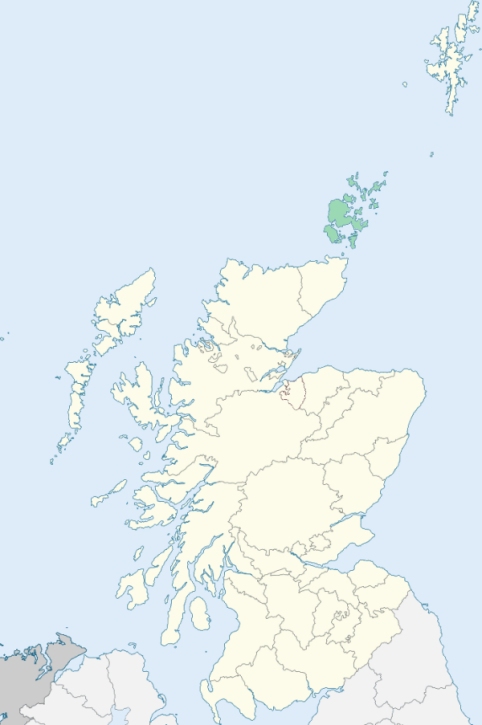
Eday and Pharay is a parish near the the middle of the North Isles of Orkney. It comprises the inhabited islands of Pharay and Eday, and five uninhabited islets. Pharay lies to the west of the northern half of Eday. The inhabited islets are the Holm of Pharay and the Red Holm, lying to the north of Pharay, the Calf of Eday, lying to the north-east of Eday, and the Little Green Holm and the Muckle Green Holm, lying to the south-west of Eday. (1867: The Imperial Gazetteer of Scotland, by John Marius Wilson).
Backaland, Carrick, Cott, Doggerboat
Carrick
PRE-REFORMATION GOVERNANCE:
POST-REFORMATION GOVERNANCE:
The three parishes of Stronsay, St Mary's, St Peter's and St Nicholas, and the Parish of Eday were all united in the sixteenth century. Eday was severed quoad sacra from the three others on 11 Nov 1882.
Includes ministers, licentiates, assistants, readers, and clerks.
(1928: Fasti Ecclesiæ Scoticanæ, by Hew Scott, D. D.)
Parish registers turned over to the Registrar-General, as a result of the Registration of Births, Deaths, and Marriages (Scotland) Act of 1854. The letters B. D. and M. indicate Births (or Baptisms), Deaths (or Burials), and Marriages (or Proclamations of Banns) respectively. Numbers indicate separate volumes or books. Note: These records are by no means complete or without damage; consult the Detailed List of the Old Parochial Registers of Scotland (1872) to learn more about the condition of the records.
| OPR and RD Numbers | |||
|---|---|---|---|
| Date Range | Name | Number | Type |
| 1789-1854 | Eday and Pharay | 15 | OPR |
| 1855-1971 | Eday and Pharay | 15 | RD |
| 1972-2003 | Eday and Pharay | 134 | RD |
| 2009 | Orkney Islands, Eday | 134 | RD |
| 2026 | Orkney Islands Council; Eday Community Council | ||
(2009: Parishes and Registration Districts of Scotland - Old and New, National Records of Scotland)
Local community councils (2026) are provided as a potential source of additional information for settlements within the original boundaries of the parish. (Source)
Statistics from informal and official censuses
See Stronsay
By the Reverend Mr John Anderson, Minister.
"The inhabitants are, in general, of an obliging, kind, hospitable disposition to one another, and also to strangers; especially when, on particular occasions, as at weddings, baptisms, &c. they have it in their power to gratify the spirit of importance, which they possess, by furnishing entertainments in a style superior to what might be expected from their stations and circumstances in life. On these occasions, the highest compliment which the guests can confer on their entertainer, is to sit to a very late hour, and to partake freely of the best things set before them.
The common people of this district remain to this day so credulous, as to think that fairies do exist; that an inferior species of witchcraft is still practised, and that houses have been haunted, not only in former ages, but that they are haunted, at least noises are heard, which cannot be accounted for on rational principles, even in our days."
(This section contains excerpts, at times restructured or paraphrased, from an article appearing in Statistical Account of Scotland, Sir John Sinclair, 1791-1799)
Primary Sources:
Statistical Account of Scotland (1791-1799), Volume 15, p. 387
New Statistical Account of Scotland (1834-1845), Volume 15, Section III, p. 70
See Parish Page Sources for all source information and links.