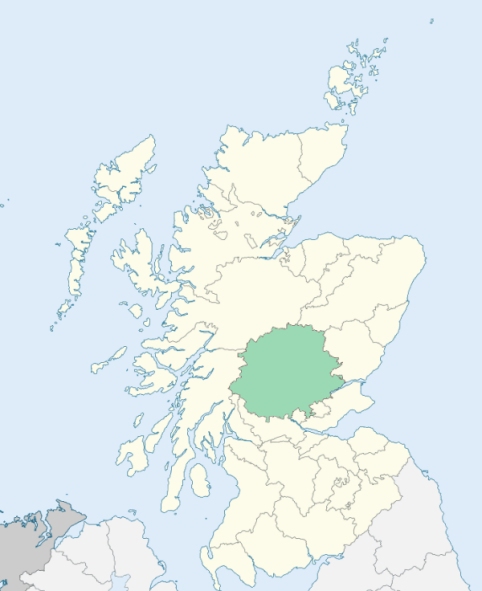
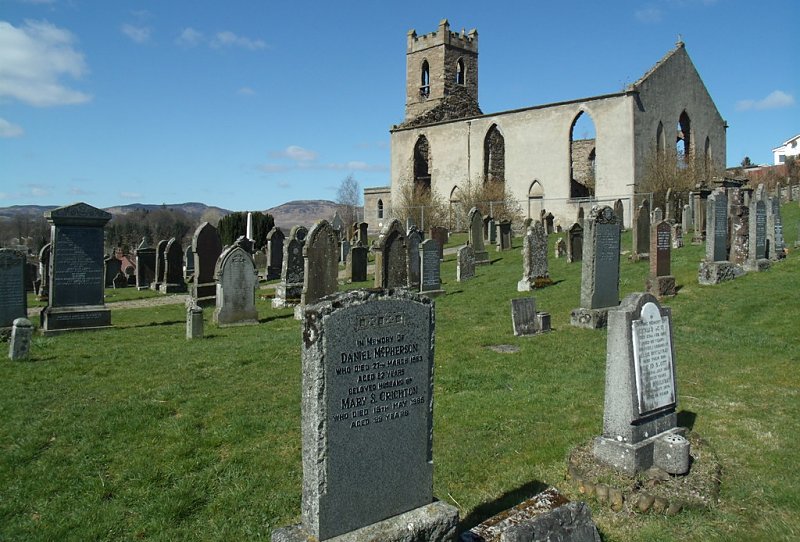
Moneydie is a parish in the Glenalmond district of Perthshire. It is bounded by Auchtergaven, Redgorton, Methven, and Logiealmond. (1867: The Imperial Gazetteer of Scotland, by John Marius Wilson).
Chapelhill, Cottartown of Logie, Heriotfield, Milntown of Logie, Moneydie
Moneydieroger
The detached part of Auchtergaven at Moneydieroger has been transferred to the parish of Moneydie. See affected properties and landholders. (1892: Boundary of counties and parishes in Scotland as settled by the Boundary Commissioners under the Local Government Act, 1889, by Hay Shennan)
PRE-REFORMATION GOVERNANCE:
POST-REFORMATION GOVERNANCE:
The parish of Moneydie was a prebend of Dunkeld. On 3 June 1758, the General Assembly disjoined the parish of Moneydie from the Presbytery of Dunkeld, and added it to that of Perth.
Includes ministers, licentiates, assistants, readers, and clerks.
(1928: Fasti Ecclesiæ Scoticanæ, by Hew Scott, D. D.)
Parish registers turned over to the Registrar-General, as a result of the Registration of Births, Deaths, and Marriages (Scotland) Act of 1854. The letters B. D. and M. indicate Births (or Baptisms), Deaths (or Burials), and Marriages (or Proclamations of Banns) respectively. Numbers indicate separate volumes or books. Note: These records are by no means complete or without damage; consult the Detailed List of the Old Parochial Registers of Scotland (1872) to learn more about the condition of the records.
| OPR and RD Numbers | |||
|---|---|---|---|
| Date Range | Name | Number | Type |
| 1655-1854 | Moneydie | 381 | OPR |
| 1855-1933 | Moneydie | 381 | RD |
| 1934-1956 | Redgorton and Moneydie | 390 | RD |
| 2009 | Perth and Kinross, Perth | 390 | RD |
| 2026 | Perth and Kinross Council; Luncarty, Redgorton and Moneydie Community Council | ||
(2009: Parishes and Registration Districts of Scotland - Old and New, National Records of Scotland)
Local community councils (2026) are provided as a potential source of additional information for settlements within the original boundaries of the parish. (Source)
Statistics from informal and official censuses
Cameron, Gray, Low, Pearson, Peddie, Robertson, Rutherford, Stewart, Taylor, Young
Note: Names appearing in research materials, other than censuses. Simple names (First name, surname only) have been omitted unless they appear associated with large properties. All women's names, and men's names with occupations, military ranks, or peerage titles are included.
By the Reverend Mr George Fraser.
"By an account taken by the elders, the number of people is 520, but there are between 700 and 800 joined, quoad sacra, to the parish.
There are no manufactures in the strict sense of the word. Most of the old tenants were weavers, and a great many of them are so still. There are three tailors, one smith, one mason, and one lint-dresser. Every man almost of the lower ranks knits his own stockings, which he learns while herding the cattle. The women are all spinners of linen yarn, and assist in managing the farm.
There is but one public house at present, which rather deserves the name of a two-penny house, as there is no entertainment to be had in it, but ale and Scots spirits. We have two meal, and two lint mills."
(This section contains excerpts, at times restructured or paraphrased, from an article appearing in Statistical Account of Scotland, Sir John Sinclair, 1791-1799)
Primary Sources:
Statistical Account of Scotland (1791-1799), Volume 3, p. 269
New Statistical Account of Scotland (1834-1845), Volume 10, p. 198
See Parish Page Sources for all source information and links.