Rosemarkie and Fortrose
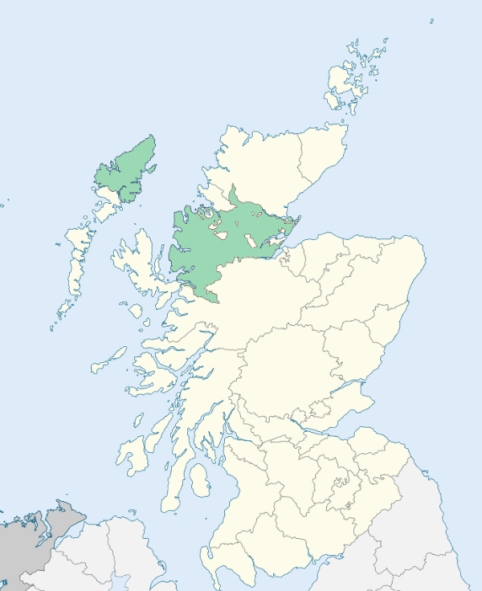
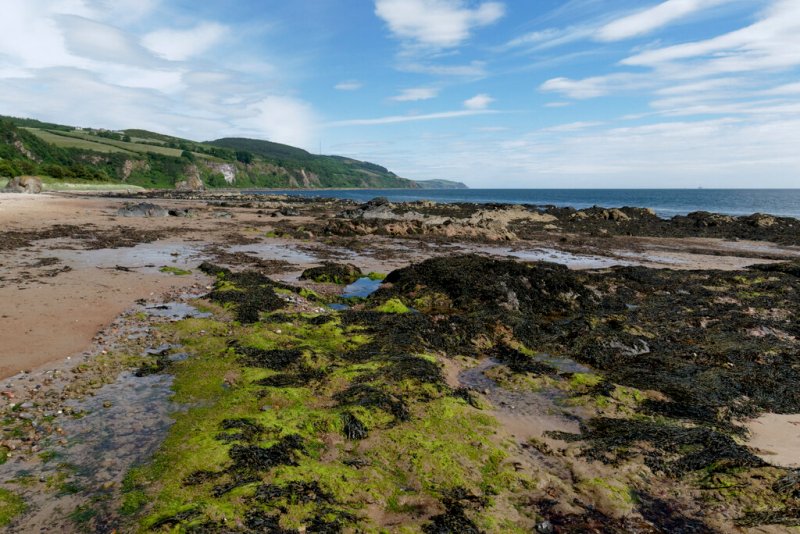
Rosemarkie is a parish on the east coast of Ross-shire. It is bounded by the Moray Firth, and by the parishes of Avoch, Kirkmichael, and Cromarty. (1867: The Imperial Gazetteer of Scotland, by John Marius Wilson).
Chanonry or Fortrose, Raddery, Rosemarkie
PRE-REFORMATION GOVERNANCE:
POST-REFORMATION GOVERNANCE:
The parishes of Rosemarkie and Fortrose were united on 2 February 1670.
Rosemarkie. The chancellor of the diocese of Ross held the prebend of Rosemarkie in the Cathedral of Fortrose. Its parish church was dedicated to St Peter. At Rosemarkie St Curadan was buried, and there his relics were shown to pilgrims, as were also those of St Moluoc. Rosemarkie had a Well of St Peter, and kept a fair in his honour.
Disjoined Quoad Sacra Parishes:
Fortrose, previously Chanonry. The parish church of Fortrose was dedicated to St Curadan, who ministered on this side of the Black Isle. He died in 716. The See of Ross was founded by King David I in 1128. In or about 1309 the Cathedral of St Peter was built at Fortrose. Oliver Cromwell razed the most part of the building, and took its stones to Inverness, where he was erecting a fort. What remained was burned by accident in 1662. A church was opened 11 April 1841. The parish was disjoined quoad sacra 17 March 1873. There were of old, in the Cathedral, chapels of St Nicholas and St Katherine. Near it was a Well of St Curadan. Fortrose held a Whitsunday fair and also fairs of St Peter and St Curadan.
Includes ministers, licentiates, assistants, readers, and clerks.
Rosemarkie (QO)
Fortrose (QS)
(1928: Fasti Ecclesiæ Scoticanæ, by Hew Scott, D. D.)
Parish registers turned over to the Registrar-General, as a result of the Registration of Births, Deaths, and Marriages (Scotland) Act of 1854. The letters B. D. and M. indicate Births (or Baptisms), Deaths (or Burials), and Marriages (or Proclamations of Banns) respectively. Numbers indicate separate volumes or books. Note: These records are by no means complete or without damage; consult the Detailed List of the Old Parochial Registers of Scotland (1872) to learn more about the condition of the records.
| OPR and RD Numbers | |||
|---|---|---|---|
| Date Range | Name | Number | Type |
| 1739-1854 | Rosemarkie | 80 | OPR |
| 1855-1855 | Rosemarkie, Fortrose Burgh | 80-1 | RD |
| 1855-1855 | Rosemarkie, Landward | 80-2 | RD |
| 1856-1867 | Rosemarkie | 80 | RD |
| 2009 | Highland, Black Isle | 200 | RD |
| 2026 | Highland Council; Fortrose and Rosemarkie Community Council | ||
(2009: Parishes and Registration Districts of Scotland - Old and New, National Records of Scotland)
Local community councils (2026) are provided as a potential source of additional information for settlements within the original boundaries of the parish. (Source)
Statistics from informal and official censuses
Gregor, Home, Junor, MacIver, Mackenzie, Miller, Munro, Noble, Ross, Young
Note: Names appearing in research materials, other than censuses. Simple names (First name, surname only) have been omitted unless they appear associated with large properties. All women's names, and men's names with occupations, military ranks, or peerage titles are included.
By the Reverend Mr Alexander Wood, Minister.
"It has been remarked, that for ages past, the greater part of the inhabitants, of the lower class, in Chanonry, have been shoemakers, and in Rosemarkie, weavers; and they commonly train their children to the same occupations. The shoemakers not only furnish shoes for the parish, but carry a parcel weekly for sale to Inverness, though they complain that the tanners enjoy almost all their profits. The weavers are constantly employed in working linen, a considerable quantity of which is sold at the two annual fairs, which circulates a good deal of money in the place. They raise and manufacture the flax themselves from which the linen is made.
It is somewhat remarkable, that in this, as well as the neighbouring parishes of Cromarty and Avoch, the ministers preach only in English, which is the common language of the people; and it has been remarked by travellers, that even the lower sort of them pronounce it with ease and propriety. In this parish, no Gaelic is to be found, but among a few servants who come from the Highlands; and they soon acquire the English by their residence here."
(This section contains excerpts, at times restructured or paraphrased, from an article appearing in Statistical Account of Scotland, Sir John Sinclair, 1791-1799)
Primary Sources:
Statistical Account of Scotland (1791-1799), Volume 11, p. 333
New Statistical Account of Scotland (1834-1845), Volume 14, Section II, p. 348
See Parish Page Sources for all source information and links.