Hauch
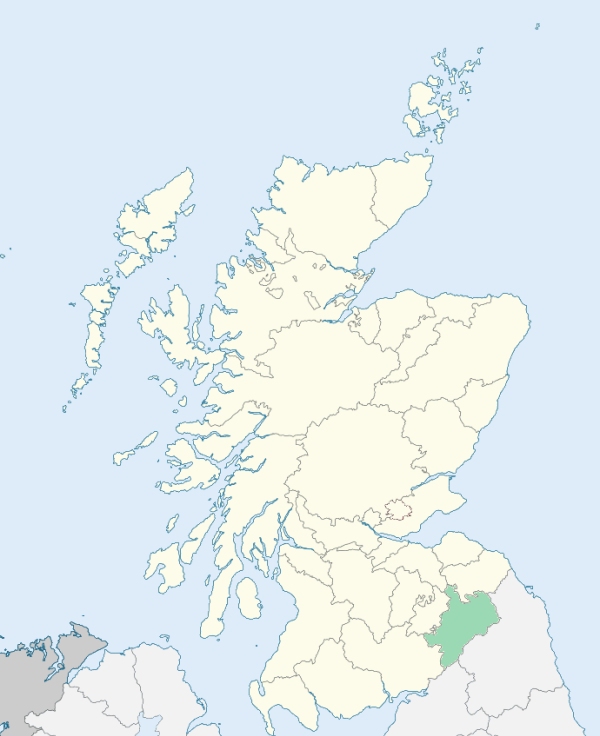
Linton is a parish on the north-east border of Roxburghshire. It is bounded on the north-northeast by England, and on other sides by the parishes of Yetholm, Morebattle, Eckford, and Sprouston. (1867: The Imperial Gazetteer of Scotland, by John Marius Wilson).
Badensgill, Blythe Bridge, Broomlee, Carlops, Coalyburn, Linton
Clifton Park, Medwyn
PRE-REFORMATION GOVERNANCE:
POST-REFORMATION GOVERNANCE:
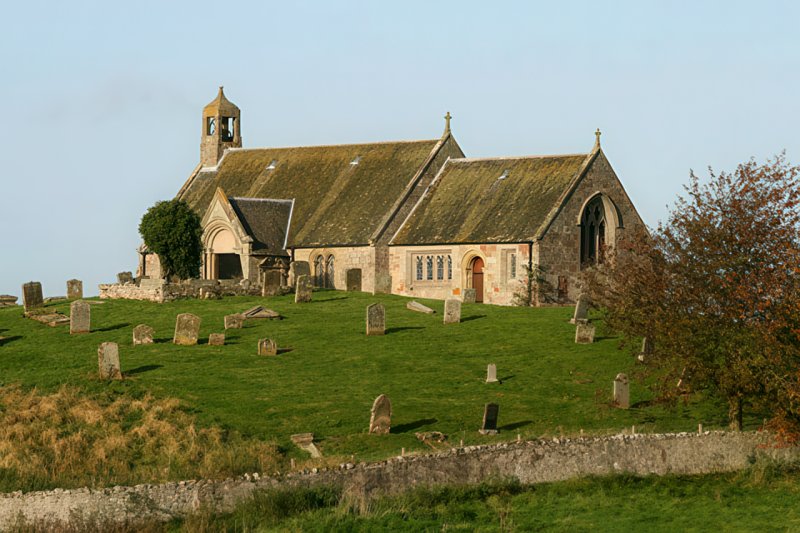
The church of Linton can be traced back to 1127. Prior to the Reformation, Linton was an independent rectory, the patronage being vested in the Lords Somerville. At Hoselaw, in the upper end of the parish, close to the English Border, stood a chapel dedicated to St Machuit. It belonged to the Abbey of Kelso.
Includes ministers, licentiates, assistants, readers, and clerks.
(1928: Fasti Ecclesiæ Scoticanæ, by Hew Scott, D. D.)
Parish registers turned over to the Registrar-General, as a result of the Registration of Births, Deaths, and Marriages (Scotland) Act of 1854. The letters B. D. and M. indicate Births (or Baptisms), Deaths (or Burials), and Marriages (or Proclamations of Banns) respectively. Numbers indicate separate volumes or books. Note: These records are by no means complete or without damage; consult the Detailed List of the Old Parochial Registers of Scotland (1872) to learn more about the condition of the records.
| OPR and RD Numbers | |||
|---|---|---|---|
| Date Range | Name | Number | Type |
| 1732-1854 | Linton | 796 | OPR |
| 1855-1947 | Linton | 796 | RD |
| 1948-1967 | Morebattle and Linton | 801 | RD |
| 2009 | Scottish Borders, Kelso | 821 | RD |
| 2026 | Scottish Borders Council; Kalewater Community Council | ||
(2009: Parishes and Registration Districts of Scotland - Old and New, National Records of Scotland)
Local community councils (2026) are provided as a potential source of additional information for settlements within the original boundaries of the parish. (Source)
Statistics from informal and official censuses
Aitchison, Cairns, Chisholm, Cockburn, Hogg, Scott, Spratt, Thomson, Turnbull, Wilson
Note: Names appearing in research materials, other than censuses. Simple names (First name, surname only) have been omitted unless they appear associated with large properties. All women's names, and men's names with occupations, military ranks, or peerage titles are included.
By the Reverend Mr Andrew Ogilvie.
"It is often mentioned with regret that there is a considerable decrease of his Majesty's subjects in this parish; 40 years ago it consisted of 27 farmers, the patron, and minister; now there are only 12, three of whom, with the patron, do not reside. Of the residing farmers, only three are married. The number of houses is reduced to 55, containing 283 persons above 8 years old; and about 100 children besides, so that the number is supposed to be greatly diminished. In Dr Webster's report (1755), however, the population is stated at only 413 souls. More than one third of the people are Seceders. There are no other sectaries in the parish."
(This section contains excerpts, at times restructured or paraphrased, from an article appearing in Statistical Account of Scotland, Sir John Sinclair, 1791-1799)
Primary Sources:
Statistical Account of Scotland (1791-1799), Volume 3, p. 119
New Statistical Account of Scotland (1834-1845), Volume 3, Section I, p. 145
See Parish Page Sources for all source information and links.