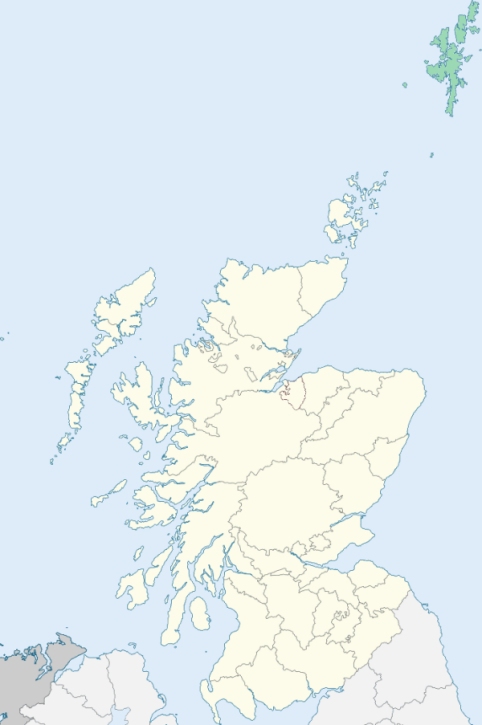
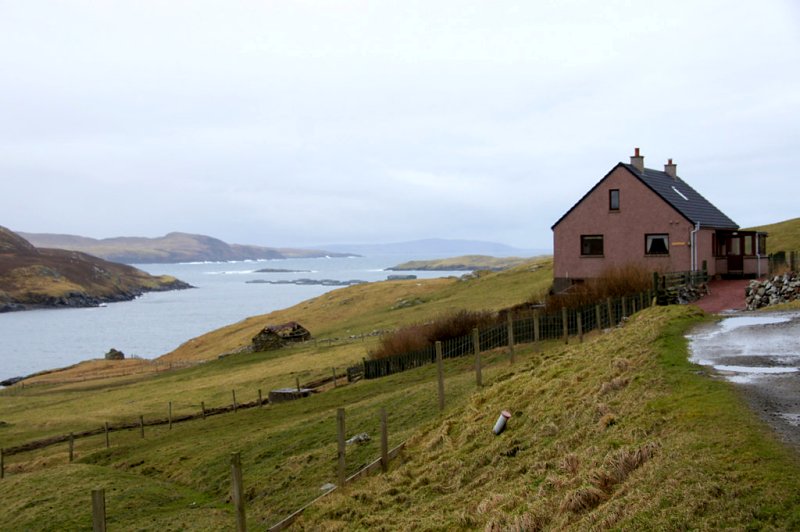
Northmavine is a parish in Shetland. It comprehends the northern part of the mainland, and a number of adjacent islets. It is completely surrounded by the sea, except at an isthmus of only 100 yards on the south, connecting it with Delting, and even this is nearly all submerged at spring tides. (1867: The Imperial Gazetteer of Scotland, by John Marius Wilson).
Colla Firth, Eshaness, Hillswick, Northroe, Ollaberry
PRE-REFORMATION GOVERNANCE:
POST-REFORMATION GOVERNANCE:
The parishes of Northmavine and Ollaberry were united in the 16th century.
Northmavine. The church of Northmavine was dedicated to St Gregory. In this parish there were chapels of St Columa and St Olaf. At Eshaness there is now a mission chapel.
Ollaberry. The church of Ollaberry was dedicated to St Magnus. There was a chapel in the parish at Northroe, where is now a mission chapel. At the village of Ollaberry also there is a mission chapel.
Includes ministers, licentiates, assistants, readers, and clerks.
(1928: Fasti Ecclesiæ Scoticanæ, by Hew Scott, D. D.)
Parish registers turned over to the Registrar-General, as a result of the Registration of Births, Deaths, and Marriages (Scotland) Act of 1854. The letters B. D. and M. indicate Births (or Baptisms), Deaths (or Burials), and Marriages (or Proclamations of Banns) respectively. Numbers indicate separate volumes or books. Note: These records are by no means complete or without damage; consult the Detailed List of the Old Parochial Registers of Scotland (1872) to learn more about the condition of the records.
| OPR and RD Numbers | |||
|---|---|---|---|
| Date Range | Name | Number | Type |
| 1758-1854 | Northmavine | 8 | OPR |
| 1855-1971 | Northmavine | 8 | RD |
| 1972-2006 | Northmavine | 104 | RD |
| 2009 | Shetland Islands, Northmavine | 104 | RD |
| 2026 | Shetland Islands Council; Northmavine Community Council | ||
(2009: Parishes and Registration Districts of Scotland - Old and New, National Records of Scotland)
Local community councils (2026) are provided as a potential source of additional information for settlements within the original boundaries of the parish. (Source)
Statistics from informal and official censuses
Anderson, Johnson, Manson, Robertson, Sandison, Sinclair, Smith, Thomason, Tulloch, Williamson
Note: Names appearing in research materials, other than censuses. Simple names (First name, surname only) have been omitted unless they appear associated with large properties. All women's names, and men's names with occupations, military ranks, or peerage titles are included.
By the Reverend Mr William Jack.
"The women look after domestic concerns, bring up their children, cook the victuals, look after the cattle, spin, and knit stockings; they also assist, and are no less laborious than the men in manuring and labouring the grounds, reaping the harvest, and manufacturing their crops. The children are taught very early to be helpful in the affairs of the house; many of the young women are employed in May and August in cutting seaweed for kelp. The boys are employed in fishing. The province of the men is managing their small farms, the fishing, boat building, and cutting their peats, which are their only fuel; besides, they are generally tailor, shoemaker, weaver, &c. to their own family, and many are smith and wright. There are only 3 persons in this parish who make their living by their trade alone; two wrights and one shoemaker."
(This section contains excerpts, at times restructured or paraphrased, from an article appearing in Statistical Account of Scotland, Sir John Sinclair, 1791-1799)
Primary Sources:
Statistical Account of Scotland (1791-1799), Volume 12, p. 346
New Statistical Account of Scotland (1834-1845), Volume 15, Section IV, p. 70
See Parish Page Sources for all source information and links.