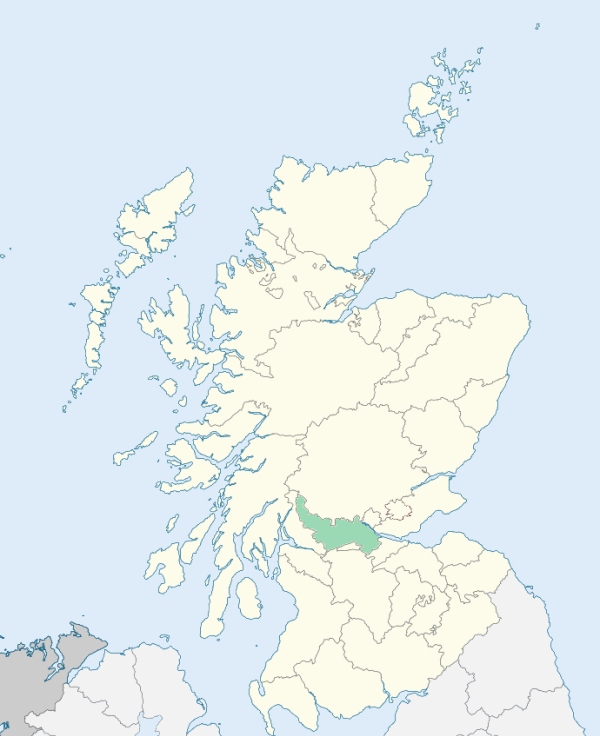
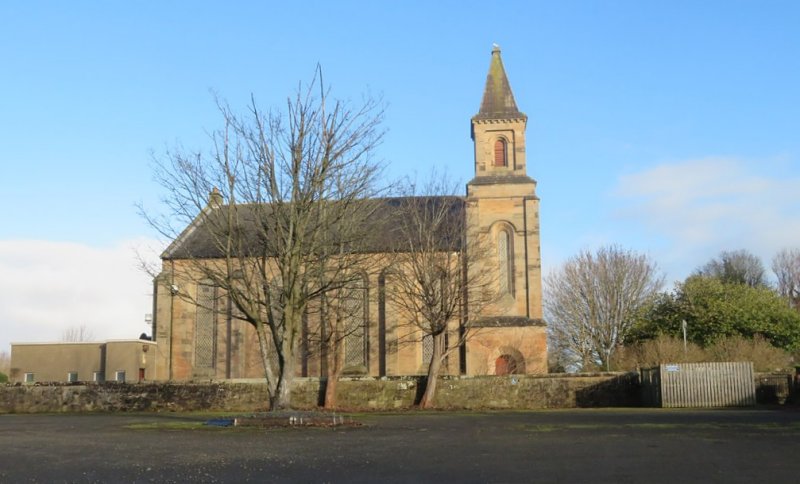
Polmont is a parish in the extreme east of Stirlingshire. It is bounded by the Firth of Forth, by Linlithgowshire, and by the parishes of Muiravonside, Slamannan, Falkirk, and Bothkennar. (1867: The Imperial Gazetteer of Scotland, by John Marius Wilson).
Bennetston, Brightson, Burnside, Craigs, Crosshall, East Shieldhill, Polmont, Redding, Standrig or Standrigg, Wallacestone, Wallacetown
Parkhill
PRE-REFORMATION GOVERNANCE:
POST-REFORMATION GOVERNANCE:
The parish of Polmont was disjoined from Falkirk, and erected by the Commissioners of Teinds, 22 July 1724.
Includes ministers, licentiates, assistants, readers, and clerks.
(1928: Fasti Ecclesiæ Scoticanæ, by Hew Scott, D. D.)
Parish registers turned over to the Registrar-General, as a result of the Registration of Births, Deaths, and Marriages (Scotland) Act of 1854. The letters B. D. and M. indicate Births (or Baptisms), Deaths (or Burials), and Marriages (or Proclamations of Banns) respectively. Numbers indicate separate volumes or books. Note: These records are by no means complete or without damage; consult the Detailed List of the Old Parochial Registers of Scotland (1872) to learn more about the condition of the records.
| OPR and RD Numbers | |||
|---|---|---|---|
| Date Range | Name | Number | Type |
| 1729-1854 | Polmont | 487 | OPR |
| 1855-1900 | Polmont | 487 | RD |
| 1901-1957 | Polmont | 481b3 | RD |
| 1958-1971 | Polmont and Muiravonside | 486 | RD |
| 1972-2003 | Polmont and Muiravonside | 485 | RD |
| 2004-2008 | Polmont, Falkirk | 485 | RD |
| 2009 | Falkirk, Polmont | 485 | RD |
| 2026 | Falkirk Council; Polmont Community Council | ||
(2009: Parishes and Registration Districts of Scotland - Old and New, National Records of Scotland)
Local community councils (2026) are provided as a potential source of additional information for settlements within the original boundaries of the parish. (Source)
Statistics from informal and official censuses
Bennie, Brown, Campbell, Dougall, Maxwell, Sneddon, Taylor, Thomson, Walker, Wilson
Note: Names appearing in research materials, other than censuses. Simple names (First name, surname only) have been omitted unless they appear associated with large properties. All women's names, and men's names with occupations, military ranks, or peerage titles are included.
By the Reverend Mr William Finlay.
"The population amounts to about 1400. Of these the far greater part reside in the country, there being only a few houses near the church, and about 40 families who have feus on the turnpike road, which lies south from it. There are 400 houses in the parish, and not one of them uninhabited. There has not been a single instance of emigration from this district for these five years past. There are about 200 household servants, male and female, in the parish.
The people, in general, are sober and industrious. None have been indicted for any crime, or banished, these many years, one only excepted. They measure from 5 feet 8, to 5 feet 10 inches. No particular manufactures are carried on in it. On the whole, the people enjoy the usual comforts and advantages of society, and appear to be very well contented with their situation and circumstances."
(This section contains excerpts, at times restructured or paraphrased, from an article appearing in Statistical Account of Scotland, Sir John Sinclair, 1791-1799)
Primary Sources:
Statistical Account of Scotland (1791-1799), Volume 3, p. 344
New Statistical Account of Scotland (1834-1845), Volume 8, Section II, p. 191
See Parish Page Sources for all source information and links.