Dornock
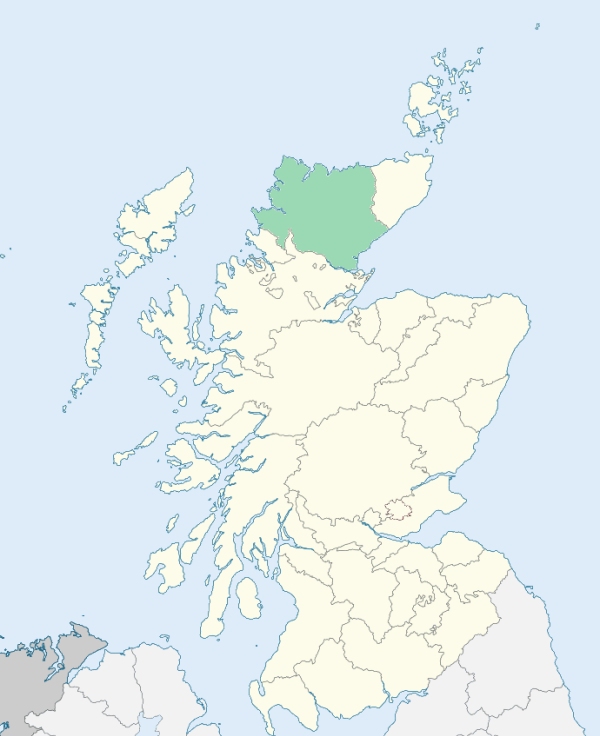
Dornoch is a parish in the southeast corner of Sutherlandshire. It is bounded on the north by Rogart, and by Loch Fleet, which separates it from Golspie; on the southeast and south by the Dornoch Firth; and on the west by Creich. (1867: The Imperial Gazetteer of Scotland, by John Marius Wilson)
Achavandra, Clachmore or Clashmore, Dornoch, Embo
The parish of Dornoch had one detached part lying to the north of the parish. This detached part contained 725 acres, and was bounded on the east by the parish of Golspie and elsewhere by the parish of Rogart. An exchange of territory was effected between the parish of Dornoch and was transferred to Rogart. See affected properties and landholders. (1892: Boundary of counties and parishes in Scotland as settled by the Boundary Commissioners under the Local Government Act, 1889, by Hay Shennan)
PRE-REFORMATION GOVERNANCE:
POST-REFORMATION GOVERNANCE:
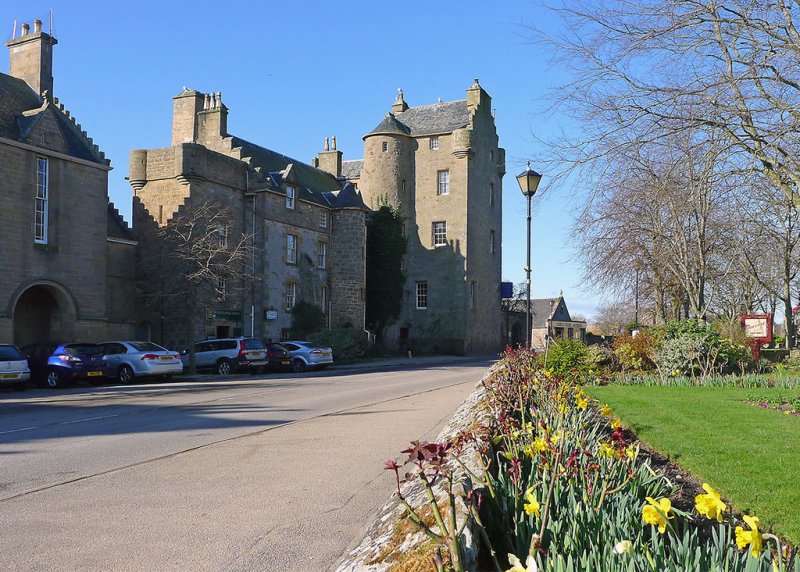
The ancient parish church of Dornoch was dedicated to St Finn Barr. In Dornoch stood also St Gilbert's, the Cathedral church of Caithness. In the later years of the sixteenth century St Gilbert's was made the church of the parish. It took its name from St Gilbert, Bishop of Caithness, its founder. St Gilbert's Cathedral was burned down in 1570. In 1605 it was greatly ruined by a very violent storm. In 1835 the restoration of the building was begun by Elizabeth, Duchess of Sutherland, and the work went on for a number of years. A convent of the Red Friars was founded at Dornoch in 1271. Fairs of St Finn Barr and St Gilbert were held in the town.
Includes ministers, licentiates, assistants, readers, and clerks.
(1928: Fasti Ecclesiæ Scoticanæ, by Hew Scott, D. D.)
Parish registers turned over to the Registrar-General, as a result of the Registration of Births, Deaths, and Marriages (Scotland) Act of 1854. The letters B. D. and M. indicate Births (or Baptisms), Deaths (or Burials), and Marriages (or Proclamations of Banns) respectively. Numbers indicate separate volumes or books. Note: These records are by no means complete or without damage; consult the Detailed List of the Old Parochial Registers of Scotland (1872) to learn more about the condition of the records.
| OPR and RD Numbers | |||
|---|---|---|---|
| Date Range | Name | Number | Type |
| 1730-1854 | Dornoch | 47 | OPR |
| 1855-1855 | Dornoch Burgh | 47-1 | RD |
| 1855-1855 | Dornoch Landward | 47-2 | RD |
| 1856-1971 | Dornoch | 47 | RD |
| 1972-2006 | Dornoch | 182 | RD |
| 2009 | Highland, Dornoch | 182 | RD |
| 2026 | Highland Council; Dornoch Area Community Council | ||
(2009: Parishes and Registration Districts of Scotland - Old and New, National Records of Scotland)
Local community councils (2026) are provided as a potential source of additional information for settlements within the original boundaries of the parish. (Source)
Statistics from informal and official censuses
Cumming, Forbes, Fraser, Grant, MacKay, Matheson, Munro, Murray, Ross, Sutherland
Note: Names appearing in research materials, other than censuses. Simple names (First name, surname only) have been omitted unless they appear associated with large properties. All women's names, and men's names with occupations, military ranks, or peerage titles are included.
By the Reverend Mr John Bethune.
"Although the registers have not been regularly kept here, it is universally believed, that the population has increased within the last 30 years very considerably, to the extent, it is supposed, of at least 500. This increase is not to be ascribed to any addition from trade or manufactures; for except two whisky distilleries, and some flax spun by the women, no branch of trade whatever is cultivated here. The increased population can therefore only be accounted for from these causes; that the women are prolific, and that by the subdivision of farms, and the advancing culture of small crofts and muir ground, the people in general are encouraged to marry young. It may be added, that by the partial introduction of inoculation for the small pox, and by the improved treatment of patients under that disease, which has of late years been pretty generally adopted, even by those who are not yet reconciled to inoculation itself, many lives have been saved, and other fatal disorders prevented."
(This section contains excerpts, at times restructured or paraphrased, from an article appearing in Statistical Account of Scotland, Sir John Sinclair, 1791-1799)
Primary Sources:
Statistical Account of Scotland (1791-1799), Volume 8, p. 1
New Statistical Account of Scotland (1834-1845), Volume 15, Section I, p. 1
See Parish Page Sources for all source information and links.