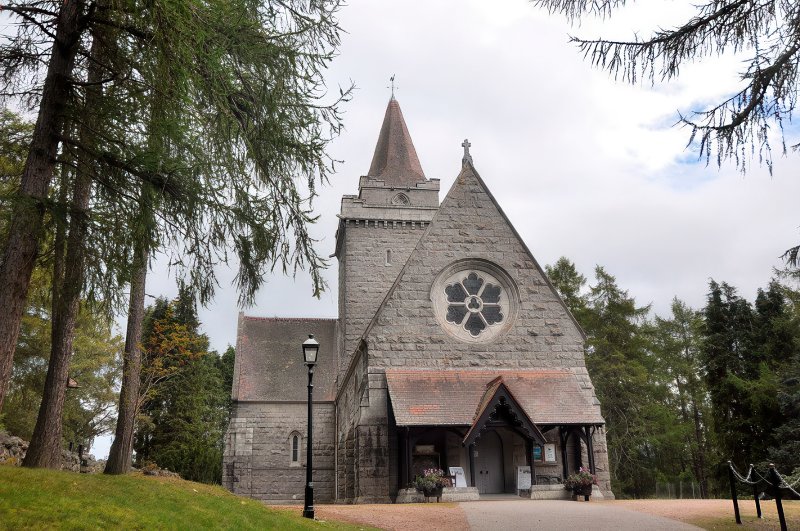
Kindrochet (Braemar)
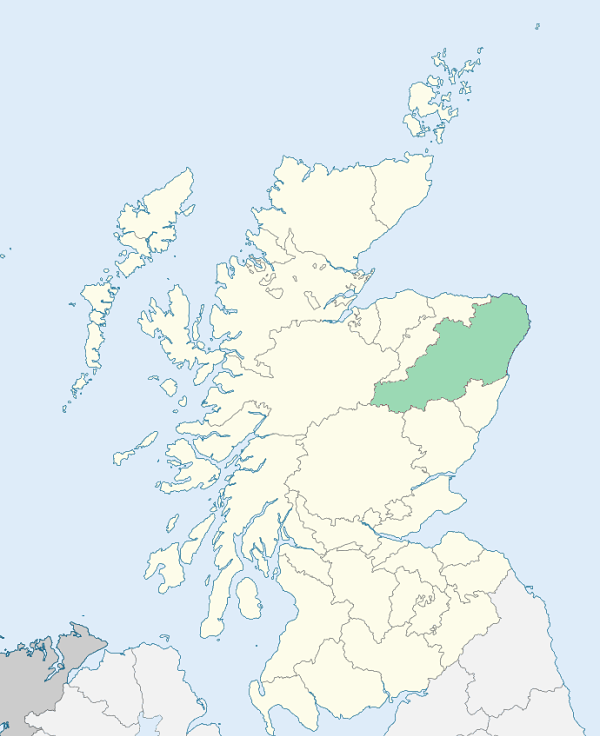
Crathie and Braemar is an extensive, united highland parish in the Mar division of the Kincardine-O'Neil district of Aberdeenshire. It forms a westerly projection from the south-west corner of the county, and is bounded on the south by Forfarshire and Perthshire, on the west by Inverness-shire, on the north chiefly by Banffshire and partly by the parish of Strathdon, and on the east by the parish of Glenmuick. (1867: The Imperial Gazetteer of Scotland, by John Marius Wilson).
Auchendryne or Auchendryone, Castleton, Crathie
Balmoral
PRE-REFORMATION GOVERNANCE:
POST-REFORMATION GOVERNANCE:
The parishes of Crathie and Braemar were united early in the seventeenth century.
Crathie. The church of Crathie, which belonged to the Priory of Monymusk, was dedicated to St Manir. Remains of three chapels are to be found at Micras, nearly opposite Abergeldie Castle, at Balmore, in Aberarder, and at Mains of Abergeldie. Tradition says that a fourth stood at Balmurrel (Balmoral).
Braemar. The church of Kindrochet in Braemar was dedicated to St Andrew. It belonged to the Priory of Monymusk. The parish of Braemar was disjoined quoad sacra from Crathie on 17 March 1879.
Includes ministers, licentiates, assistants, readers, and clerks.
Crathie (QO)
Braemar (QO)
(1928: Fasti Ecclesiæ Scoticanæ, by Hew Scott, D. D.)
Parish registers turned over to the Registrar-General, as a result of the Registration of Births, Deaths, and Marriages (Scotland) Act of 1854. The letters B. D. and M. indicate Births (or Baptisms), Deaths (or Burials), and Marriages (or Proclamations of Banns) respectively. Numbers indicate separate volumes or books. Note: These records are by no means complete or without damage; consult the Detailed List of the Old Parochial Registers of Scotland (1872) to learn more about the condition of the records.
| OPR and RD Numbers | |||
|---|---|---|---|
| Date Range | Name | Number | Type |
| 1717-1854 | Crathie and Braemar | 183 | OPR |
| 1855-1892 | Crathie and Braemar | 183 | RD |
| 1893-1971 | Braemar | 183-1 | RD |
| 1893-1971 | Crathie | 183-2 | RD |
| 1972-2006 | Braemar | 328 | RD |
| 2009 | Aberdeenshire, Braemar | 328 | RD |
| 2026 | (Crathie) Aberdeenshire Council; Ballater and Crathie Community Council | ||
| 2026 | (Braemar) Aberdeenshire Council; Braemar Community Council | ||
(2009: Parishes and Registration Districts of Scotland - Old and New, National Records of Scotland)
Local community councils (2026) are provided as a potential source of additional information for settlements within the original boundaries of the parish. (Source)
Statistics from informal and official censuses
Coutts, Gordon, Grant, Lamont, Michie, Mitchell, Robertson, Smith, Stewart, Stuart
Note: Names appearing in research materials, other than censuses. Simple names (First name, surname only) have been omitted unless they appear associated with large properties. All women's names, and men's names with occupations, military ranks, or peerage titles are included.
By the Reverend Mr Charles M'Hardy.
"In the parish of Crathy, there are 700 Protestants, 150 Papists, and 164 children under 7 years of age. Total 1024 souls. In the parish of Braemar, there are 455 Protestants, 580 Papists, and 192 children. Total 1227. In both parishes, 2251 souls.
The only branch of manufacture in this country, is the spinning of linen yarn. Lint is imported from Aberdeen at the expense of the manufacturing company, and left with the shopkeepers in the united parishes; and they are allowed a certain profit for the trouble of giving out the lint, and taking in the yarn. This brings a considerable sum of money into the country; by which the greater part of the poorer families are supported; and enabled to pay the rents of their houses, and small crofts of land. The women, in general, spin with both hands.
The language generally spoken is the Gaelic. Most of the people, however, understand so much of the English, as to be able to transact ordinary business with their neighbours of the Low Country. It was once thought an object of political attention to use means for eradicating this ancient language from the Highlands of Scotland. It is presumed, that the Legislature now entertains very different views. For experience has fully evinced, that there are no better soldiers in the day of battle than the Highlanders, and that honour, humanity, decency, and good order are not incompatible with the use of Gaelic, and of tartan plaids and philabegs."
(This section contains excerpts, at times restructured or paraphrased, from an article appearing in Statistical Account of Scotland, Sir John Sinclair, 1791-1799)
Primary Sources:
Statistical Account of Scotland (1791-1799), Volume 14, p. 334
New Statistical Account of Scotland (1834-1845), Volume 12, p. 646
See Parish Page Sources for all source information and links.