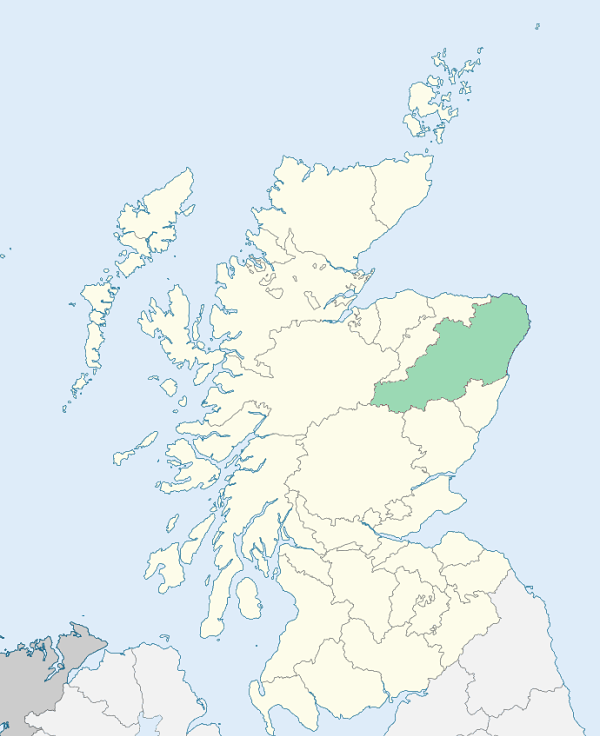
Echt is a parish in the Kincardine-O'Neil district of Aberdeenshire. It lies 10 to 14 miles west of Aberdeen. It is bounded on the north by the parishes of Cluny and Skene, on the east by Skene and Peterculter, on the south by Drumoak parish and part of Kincardineshire, and on the west by the parish of Midmar. (1867: The Imperial Gazetteer of Scotland, by John Marius Wilson).
Colarily, Echt or Kirkton of Echt, Finnersie, Shoggle
PRE-REFORMATION GOVERNANCE:
POST-REFORMATION GOVERNANCE:
The church of Echt was dedicated to St Finichen. It belonged to the Abbey of Scone. There was a chapel in the parish at Monk's Echt. Fairs were held at Echt at Whitsunday and Martinmas.
Includes ministers, licentiates, assistants, readers, and clerks.
(1928: Fasti Ecclesiæ Scoticanæ, by Hew Scott, D. D.)
Parish registers turned over to the Registrar-General, as a result of the Registration of Births, Deaths, and Marriages (Scotland) Act of 1854. The letters B. D. and M. indicate Births (or Baptisms), Deaths (or Burials), and Marriages (or Proclamations of Banns) respectively. Numbers indicate separate volumes or books. Note: These records are by no means complete or without damage; consult the Detailed List of the Old Parochial Registers of Scotland (1872) to learn more about the condition of the records.
| OPR and RD Numbers | |||
|---|---|---|---|
| Date Range | Name | Number | Type |
| 1648-1854 | Echt | 191 | OPR |
| 1855-1967 | Echt | 191 | RD |
| 1968-1971 | Skene and Echt | 238 | RD |
| 1972-2004 | Skene and Echt | 323 | RD |
| 2009 | Aberdeenshire, Skene and Echt | 323 | RD |
| 2026 | Aberdeenshire Council; Echt and Skene Community Council | ||
(2009: Parishes and Registration Districts of Scotland - Old and New, National Records of Scotland)
Local community councils (2026) are provided as a potential source of additional information for settlements within the original boundaries of the parish. (Source)
Statistics from informal and official censuses
Adam, Anderson, Cooper, Donald, Farquhar, Forbes, Fraser, Milne, Robertson, Smith
Note: Names appearing in research materials, other than censuses. Simple names (First name, surname only) have been omitted unless they appear associated with large properties. All women's names, and men's names with occupations, military ranks, or peerage titles are included.
By the Reverend Mr Alexander Henderson.
"In the beginning of the year 1793, there were in the parish of Echt 963 persons, of whom there were 447 males, and 516 females. All are of the Established Church, except 8 Burgher Seceders, and 2 Episcopalians. There are in the parish 3 merchants, 4 gardeners, 14 weavers, 2 shoemakers, 9 tailors, 4 millers, 6 blacksmiths, 1 wheel-wright, 1 cooper, and 6 joiners and house carpenters. The rest of the inhabitants are farmers and subtenants, or cottagers and servants, employed by the farmers. There are 255 inhabited houses in the parish, of which 35 are inhabited by single persons, and 45 by two persons only.
The women, except in time of peat digging and harvest, are generally employed in knitting stockings for the Aberdeen manufacturers, who come to the country once a month, and at different houses of the parish, given out to those who are employed by them dressed wool, to be spun and knitted against the time they next come round, and to take in and pay for the stockings knitted during the preceding month. This is the only branch of manufacture with which the parish is in any way connected.
The people are in general sober, regular, and industrious. They are economical rather than expensive, yet humane and hospitable. They are of simple manners, peaceable in their disposition, and inoffensive in their behaviour. They enjoy in a reasonable degree the comforts and conveniences of society, and seem contented with their situation and circumstances. They are of the ordinary stature, healthy, and strong enough for their size."
(This section contains excerpts, at times restructured or paraphrased, from an article appearing in Statistical Account of Scotland, Sir John Sinclair, 1791-1799)
Primary Sources:
Statistical Account of Scotland (1791-1799), Volume 13, p. 615
New Statistical Account of Scotland (1834-1845), Volume 12, p. 735
See Parish Page Sources for all source information and links.