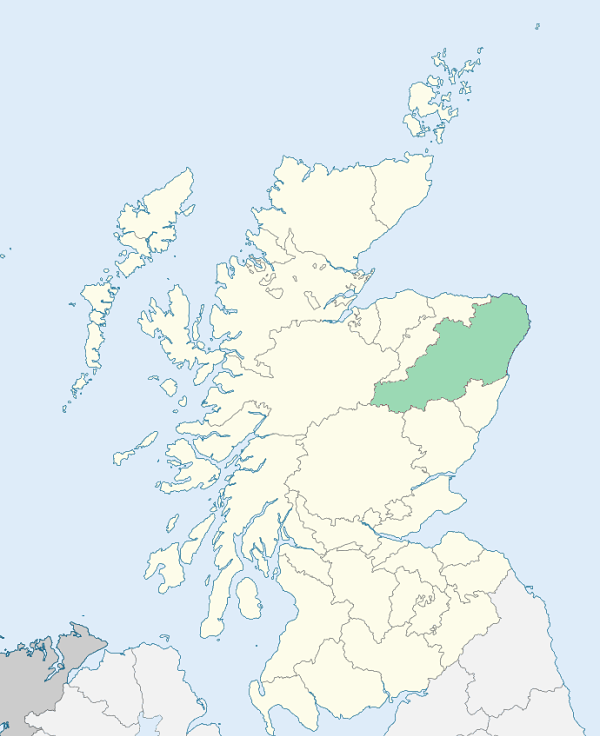
Peterculter is a parish on the southern border of Aberdeenshire. It is bounded by Kincardineshire, and by the parishes of Drumoak, Echt, Skene, Newhills, and Banchory Devenick. (1867: The Imperial Gazetteer of Scotland, by John Marius Wilson).
Angustown, Burnside, Cobblestock, Contlaw, Countesswells, Craigton or Craigtown, Culter, Cults, Eddieston or Eddiestown, Hilltown, Kennerty, Mannofield, Tillioch
Balnagarth, Blair-Devenick, Countesswells, Craigiebuckler, Culter, Fernielee House, Lillybank, Mayfield House, Murtle House, Primrose House
The parish of Banchory-Devenick was situated partly in the county of Aberdeen and partly in the county of Kincardine. No change was made in the county boundary, but the Aberdeenshire part of the parish was transferred to the Aberdeenshire parish of Peterculter. Thus the parish of Banchory-Devenick now consists simply of the Kincardineshire part of the old parish. See affected properties and landholders. (1892: Boundary of counties and parishes in Scotland as settled by the Boundary Commissioners under the Local Government Act, 1889, by Hay Shennan)
PRE-REFORMATION GOVERNANCE:
POST-REFORMATION GOVERNANCE:
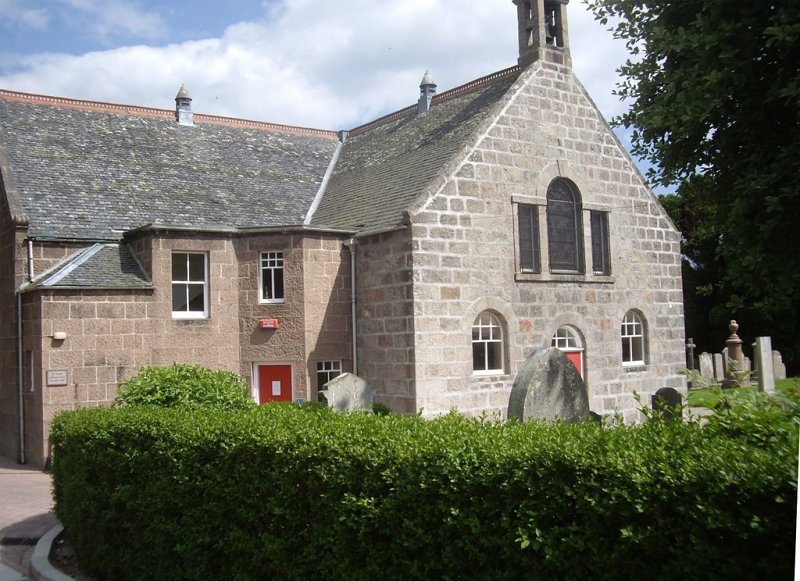
The church of this parish was dedicated to St Peter. It belonged to the Abbey of Kelso. Peterculter was a prebend of Aberdeen. Near the church is St Peter's Well. There is also in the parish a Well of St Bride. A new church was built in 1779.
Disjoined Quoad Sacra Parishes:
Craigiebuckler. Craigiebuckler Church was opened in February 1883. The parish of Craigiebuckler was disjoined from St Machar's, Banchory-Devenick, Peterculter, Newhills, and Rubislaw, 15 March 1886. Its erection and endowment were due to the generosity of John C. Couper of Craigiebuckler.
Includes ministers, licentiates, assistants, readers, and clerks.
Peterculter (QO)
Craigiebuckler (QS)
Cults (QS)
(1928: Fasti Ecclesiæ Scoticanæ, by Hew Scott, D. D.)
Parish registers turned over to the Registrar-General, as a result of the Registration of Births, Deaths, and Marriages (Scotland) Act of 1854. The letters B. D. and M. indicate Births (or Baptisms), Deaths (or Burials), and Marriages (or Proclamations of Banns) respectively. Numbers indicate separate volumes or books. Note: These records are by no means complete or without damage; consult the Detailed List of the Old Parochial Registers of Scotland (1872) to learn more about the condition of the records.
| OPR and RD Numbers | |||
|---|---|---|---|
| Date Range | Name | Number | Type |
| 1643-1854 | Peterculter | 231 | OPR |
| 1855-1891 | Peterculter | 231 | RD |
| 1892-1967 | Peterculter, East | 231-1 | RD |
| 1892-1967 | Peterculter, West | 231-2 | RD |
| 1968-1971 | Peterculter | 231 | RD |
| 1972-2008 | Peterculter | 324 | RD |
| 2009 | Aberdeenshire, Peterculter | 324 | RD |
| 2026 | Aberdeen City Council; Culter Community Council | ||
(2009: Parishes and Registration Districts of Scotland - Old and New, National Records of Scotland)
Local community councils (2026) are provided as a potential source of additional information for settlements within the original boundaries of the parish. (Source)
Statistics from informal and official censuses
Anderson, Christie, Coutts, Duncan, Lawson, Milne, Reid, Smith, Thomson, Watt
Note: Names appearing in research materials, other than censuses. Simple names (First name, surname only) have been omitted unless they appear as owner/proprietor of large properties. All women's names, and men's names with occupations, military ranks, or peerage titles are included.
By the Reverend Mr George Mark, Minister.
"At present, there are 220 families in the parish; 456 males, and 546 females, or 1002 souls. Of artificers or handicraftsmen, there are in the parish 2 smiths, 5 wrights who perform house carpentry, cart-work, plough-work, &c., 4 millers, some of whom perform cooper-work, &c., 6 gardeners, 4 shoemakers, 12 weavers, 10 tailors, and one fuller, who scours and mills cloth, and can practise dyeing.
In this place it is rare to see a person intoxicated with liquor. I do not mean here to affirm, that we are free from excess of every kind. All classes exceed in the use of tea and tobacco, particularly of the latter, as it is consumed in snuffing, chewing, and smoking. This last species of coarse luxury is too much practiced by both sexes. I have known some persons so much enslaved to it, that they carried their tobacco-pipe with them on Sunday, for the purpose of smoking on the way to and from church.
The people are, in general, active, sober, and industrious, of a humane and peaceable disposition, decent in their behaviour, and come to church clean and decent in their dress. In some, perhaps, the features of the selfish principle may be too plainly discerned."
(This section contains excerpts, at times restructured or paraphrased, from an article appearing in Statistical Account of Scotland, Sir John Sinclair, 1791-1799)
Primary Sources:
Statistical Account of Scotland (1791-1799), Volume 16, p. 358
New Statistical Account of Scotland (1834-1845), Volume 12, p. 105
See Parish Page Sources for all source information and links.