Cumnock
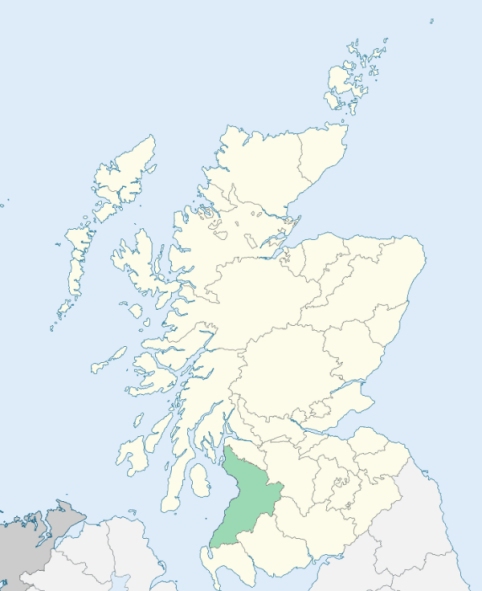
Old Cumnock is a parish in the eastern part of Kyle, Ayrshire. It is bounded on the east by Dumfriesshire, and on other sides by the parishes of New Cumnock, Ochiltree, Auchinleck, and Muirkirk. (1867: The Imperial Gazetteer of Scotland, by John Marius Wilson).
Cumnock, Garallan
Glasnock or Glaisnock, Logan House
PRE-REFORMATION GOVERNANCE:
POST-REFORMATION GOVERNANCE:
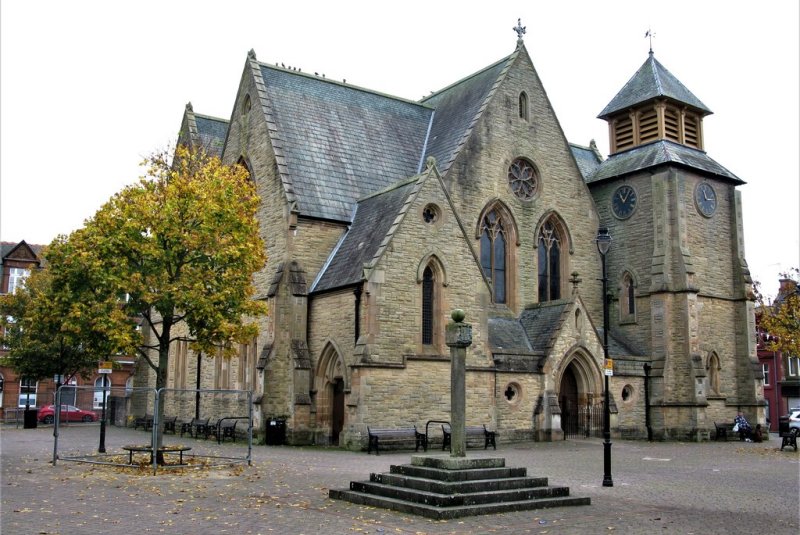
The rectory of Cumnock was a prebend of Glasgow. Its church was dedicated to St Conal. There was a chapel in the parish at Borland. On St Matthew's Day, the 21st of September, a yearly fair was held at Cumnock. The parish church was rebuilt in 1754, and again in 1867.
Includes ministers, licentiates, assistants, readers, and clerks.
(1928: Fasti Ecclesiæ Scoticanæ, by Hew Scott, D. D.)
Parish registers turned over to the Registrar-General, as a result of the Registration of Births, Deaths, and Marriages (Scotland) Act of 1854. The letters B. D. and M. indicate Births (or Baptisms), Deaths (or Burials), and Marriages (or Proclamations of Banns) respectively. Numbers indicate separate volumes or books. Note: These records are by no means complete or without damage; consult the Detailed List of the Old Parochial Registers of Scotland (1872) to learn more about the condition of the records.
| OPR and RD Numbers | |||
|---|---|---|---|
| Date Range | Name | Number | Type |
| 1704-1854 | Old Cumnock | 610 | OPR |
| 1855-1888 | Old Cumnock | 610 | RD |
| 1889-1968 | Old Cumnock | 610a | RD |
| 1889-1968 | Patna | 610b | RD |
| 1969-1971 | Old Cumnock | 610 | RD |
| 1972-2005 | Old Cumnock | 682 | RD |
| 2006-2008 | Old Cumnock, East Ayrshire | 682 | RD |
| 2009 | East Ayrshire, Old Cumnock | 682 | RD |
| 2026 | (Old Cumnock) East Ayrshire Council; Cumnock Community Council Netherthird and District Community Council | ||
| 2026 | (Patna) East Ayrshire Council; Patna Community Council | ||
(2009: Parishes and Registration Districts of Scotland - Old and New, National Records of Scotland)
Local community councils (2026) are provided as a potential source of additional information for settlements within the original boundaries of the parish. (Source)
Statistics from informal and official censuses
Anderson, Baird, Brown, Miller, Murdoch, Murray, Richmond, Robertson, Smith, Wilson
Note: Names appearing in research materials, other than censuses. Simple names (First name, surname only) have been omitted unless they appear associated with large properties. All women's names, and men's names with occupations, military ranks, or peerage titles are included.
By the Reverend Thomas Miller, D. D..
"The population (1791-1792) was 1632. There were 787 inhabitants in the village and environs, of whom 374 were male and 413 female. There were 845 inhabitants in the country part of the parish, of whom 400 were male, and 445 female. Overall there were 774 males, and 858 females, of whom 410 were under age 10. There were 1332 of the established church, and 300 Seceders.
The people, particularly those in the manufacturing line, and women servants, emigrate to Glasgow, Paisley, and Kilmarnock. And of late some of them have gone to Catrine and Muirkirk. But these emigrants have not materially affected the general population.
There are in the parish 10 shopkeepers, 4 innkeepers and stablers, 9 carpenters, 3 cart and mill wrights, 3 coopers, 12 masons, 9 smiths, 28 weavers, 33 shoemakers, 15 tailors, 7 stocking weavers, 2 waulkers, 1 tanner, 1 gardener, 3 millers, 5 carriers, 8 carters for coal and meal, 35 day labourers, 2 skin and wool dealers, 3 lint dressers, 3 butchers, 2 bakers, 18 colliers and coal heavers, 44 male domestic and farm servants, and 72 female domestic and farm servants.
The manufactures in the village are weaving, shoemaking, tanning, dying, &c. There are 6000 pair of shoes and 100 pair of boots manufactured per annum. The manufacturers and tenantry in general have little or no stock worth mentioning; they are in consequence moderate in their expences, strangers to luxury, but with the country in general, acquiring a taste for dress, which, with other slight symptoms of progress in civilization, will probably in time be an incitement to their becoming more industrious."
(This section contains excerpts, at times restructured or paraphrased, from an article appearing in Statistical Account of Scotland, Sir John Sinclair, 1791-1799)
Primary Sources:
Statistical Account of Scotland (1791-1799), Volume 6, p. 407
New Statistical Account of Scotland (1834-1845), Volume 5, Section I, p. 475
See Parish Page Sources for all source information and links.