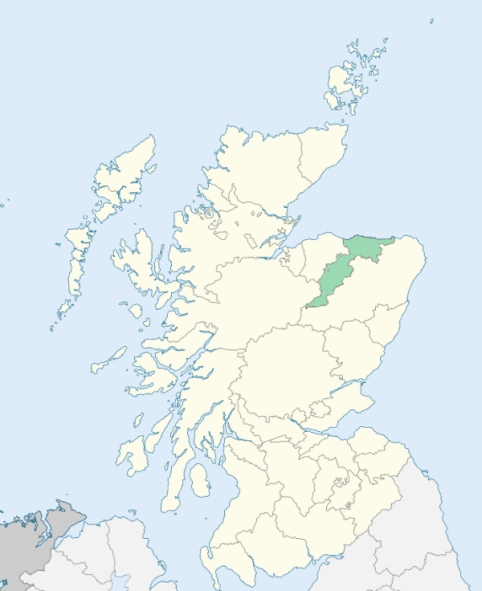
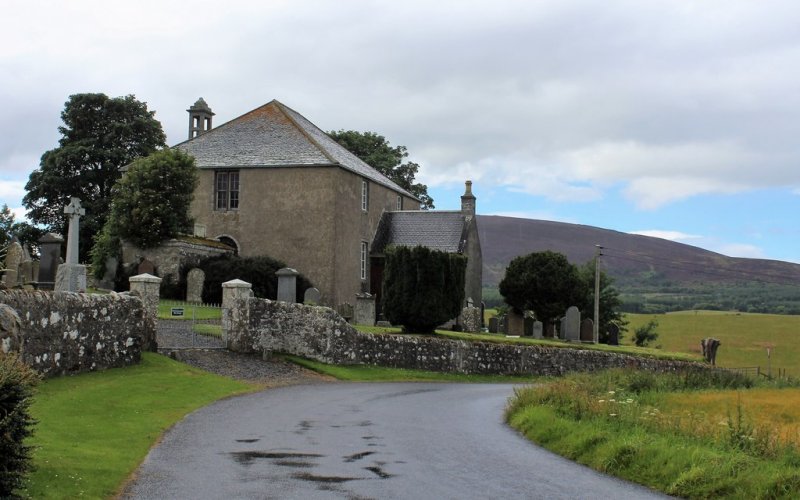
Ordiquhill is a parish in the north-east of Banffshire. It lies about midway between the market towns of Banff and Keith. It is bounded by Fordyce, Boyndie, Marnoch, and Grange. (1867: The Imperial Gazetteer of Scotland, by John Marius Wilson).
Claymires, Corncairn, Cornhill, Glenbarry, Gordonston, Glenforkie, Ordiquhill
PRE-REFORMATION GOVERNANCE:
POST-REFORMATION GOVERNANCE:
There was of old at Ordiquhill a chapel of St Mary. In 1622 the parish of Ordiquhill was disjoined from Fordyce. Fairs of St Cuthbert, St James, and St Marnock were held at Ordiquhill. There were here also Wells of Our Lady (on the farm of Auldtown) and of St John.
Includes ministers, licentiates, assistants, readers, and clerks.
(1928: Fasti Ecclesiæ Scoticanæ, by Hew Scott, D. D.)
Parish registers turned over to the Registrar-General, as a result of the Registration of Births, Deaths, and Marriages (Scotland) Act of 1854. The letters B. D. and M. indicate Births (or Baptisms), Deaths (or Burials), and Marriages (or Proclamations of Banns) respectively. Numbers indicate separate volumes or books. Note: These records are by no means complete or without damage; consult the Detailed List of the Old Parochial Registers of Scotland (1872) to learn more about the condition of the records.
| OPR and RD Numbers | |||
|---|---|---|---|
| Date Range | Name | Number | Type |
| 1704-1854 | Ordiquhill | 163 | OPR |
| 1855-1967 | Ordiquhill | 163 | RD |
| 2009 | Aberdeenshire, Banff | 293 | RD |
| 2026 | Aberdeenshire; Cornhill and Ordiquhill Community Council | ||
(2009: Parishes and Registration Districts of Scotland - Old and New, National Records of Scotland)
Local community councils (2026) are provided as a potential source of additional information for settlements within the original boundaries of the parish. (Source)
Statistics from informal and official censuses
Brown, Cowie, Duncan, Gray, Johnston, Lauder, Milne, Robertson, Stewart, Watt
Note: Names appearing in research materials, other than censuses. Simple names (First name, surname only) have been omitted unless they appear associated with large properties. All women's names, and men's names with occupations, military ranks, or peerage titles are included.
By the Reverend Mr Robert Ogilvie.
"There are, at present, 517 souls in the parish, and, of these, 130 below ten years of age. The number of males and females is nearly equal. There are 452 examinable persons in it, 6 Seceders, about as many Methodists, two Roman Catholics, and one Episcopalian. There are but few handicraftsmen; and, at present, only 3 apprentices. The number of inhabitants has continued for these hundred years past, nearly what it is at present.
The people are, in general, modest, sober, and of a religious deportment; and, though few of them may be said to be rich, yet there has not been any begging poor, belonging to the parish, in the memory of man. About 30 years ago, there were only 3 hats, and 3 watches in the parish, being those of the proprietor, the minister, and the schoolmaster; but now almost every labouring servant has his hat, and watch, his English cloth coat, his white thread stockings, &c."
(This section contains excerpts, at times restructured or paraphrased, from an article appearing in Statistical Account of Scotland, Sir John Sinclair, 1791-1799)
Primary Sources:
Statistical Account of Scotland (1791-1799), Volume 6, p. 348
New Statistical Account of Scotland (1834-1845), Volume 13, Section I, p. 79
See Parish Page Sources for all source information and links.